

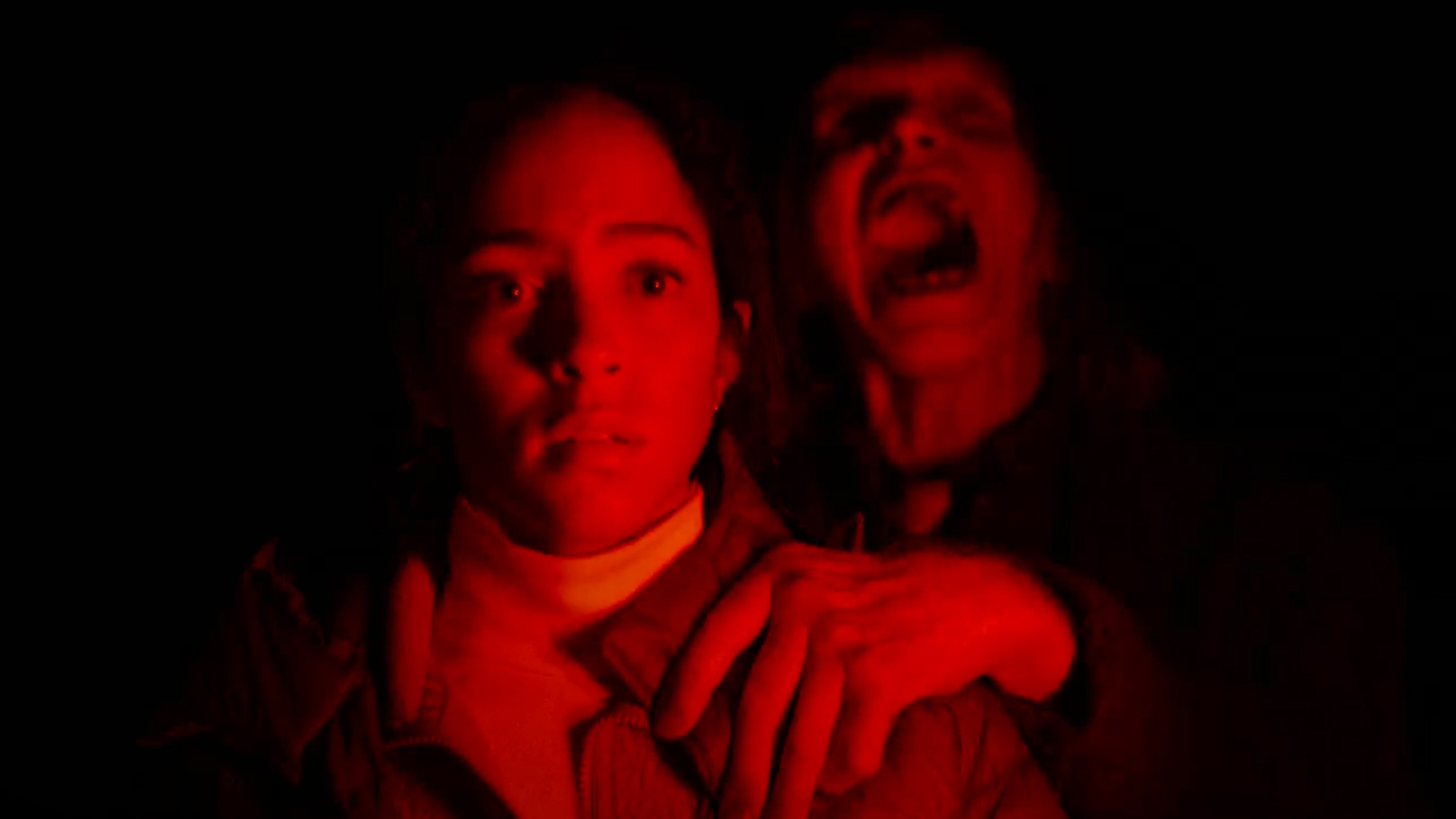

“Sometimes when you get haunted, it’s like stepping on gum. You… take it with you.” So said famous (and infamous) demonologist and ghost hunter Ed Warren, of The Conjuring fame, in the 2013 original. In the new horror film Passenger, two young hopefuls, Maddie (Lou Llobell) and Tyler (Jacob Scipio) give up their Brooklyn loft and join the van life, a modern sub-culture of simplification and serious upward mobility. Along the way, they encounter a car crash and stop to help, their first mistake, particularly according to the (unbeknownst to them) rules of van life. After the police are called, the couple takes off again, only now, apparently with someone or something joining them.

Courtesy Paramount Pictures
Odd things start happening, like banging on the outside of the van with no one in sight. Feeling watched, pursued. And then there are the three slash marks on the side of their van. When visiting a gathering of like-minded travelers at a place called Burning Van (an allusion, of course, to the Burning Man yearly festival in the desert), Maddie meets an older woman roadie named Diana (Oscar-winner Melissa Leo) whose warmth and experience makes Maddie open up about her recent trepidations, both of van life in general and of the recent strange energy around the van. Picking up on the implications, Diana somberly warns her not to drive at night. “People don’t take trips,” she opines. “Trips take people.” Finding Tyler at the event, she is shown that he hired someone to clean the slash prints off of their van. Maybe everything will be okay.
Of course, things only escalate as they drive toward whatever their immediate and long-term future may be in the new vagabond life. Maddie stumbles upon a book featuring information on The Hobo Code, which includes signs and symbols that travelers would use to communicate before the highways were put in, signs warning of danger or assuring safety, etc. Among these signs is the three-slash mark on their van: You’re in danger.
Courtesy Paramount Pictures
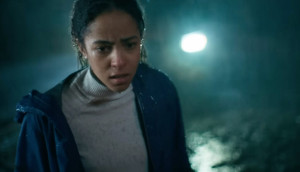
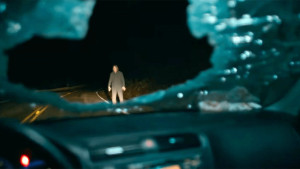
Maddie has a steadily increasing dread that something isn’t right, and it isn’t until a romantic campout in the woods complete with a makeshift drive-in movie put together by Tyler that he realizes something is seriously, deeply wrong. A figure is glimpsed in the near distance multiple times watching them before vanishing. Then, in a particularly visually striking sequence, the presence flits in and out of the black and white projection on the screen of Roman Holiday, with the faces of Audrey Hepburn and Gregory Peck flickering upside down against the trees and dark foliage as Maddie uses the projection light as a flashlight to try to see if someone is in the woods stalking them.
Inevitably, there are sequences (including the above-mentioned) that make the audience wonder why, given the circumstances, the characters would make the decisions they do, such as camping out in total isolation after having unsettling experiences and even being warned by veteran roadies. Of course, horror movies need horror sequences, and while most of the film pulls these off to great effect, several scenes could have and should have been changed to make more logical sense while still creating scares. This is a minor complaint in what is overall a very frightening film.
The relationship between Maddie and Tyler is developed well, and it is in the above scene when it becomes clear that they may not be as well suited as initially appearing; Maddie finds she longs for a grounded home life, one she never had growing up, while Tyler is still outrunning a troubled home he grew up in, embracing the nomadic lifestyle. However, they have no time to reflect on this, as the presence haunting them builds in energy and force.
Courtesy Paramount Pictures
Several recent and current horror films have delivered compelling stories with little to no fanfare or cliches, fresh new actors not burdened by the knowability of stardom, and solid direction that doesn’t rely on cheap thrills and jump scares. Passenger is among these, relying on characters we care about and tight, mounting dread that creates scenes unlike those of previous horror films. It’s a refreshing new trend, one I hope continues and restores the reputation of the horror genre. Additionally, Passenger takes the plot in a direction that has been very much missing from not only the horror genre but film in general: a spiritual one. It unflinchingly revolves its premise and solution around Catholicism and particularly Saint Christopher, patron saint of lost travelers. This element felt earned and serious, not tossed in, ridiculed, simplified or preachy. Whatever one’s beliefs, the inclusion of this in the film lends it a similar power The Conjuring has, lifting the threat to the heights of demonic intrusion and numinous intervention, which creates a high-stakes final act. Whether you’re looking for a thrill ride or something deeper, Passenger offers both in a tight, roller coaster ride of a movie.
Passenger is now playing in theaters.


Leave A Comment