

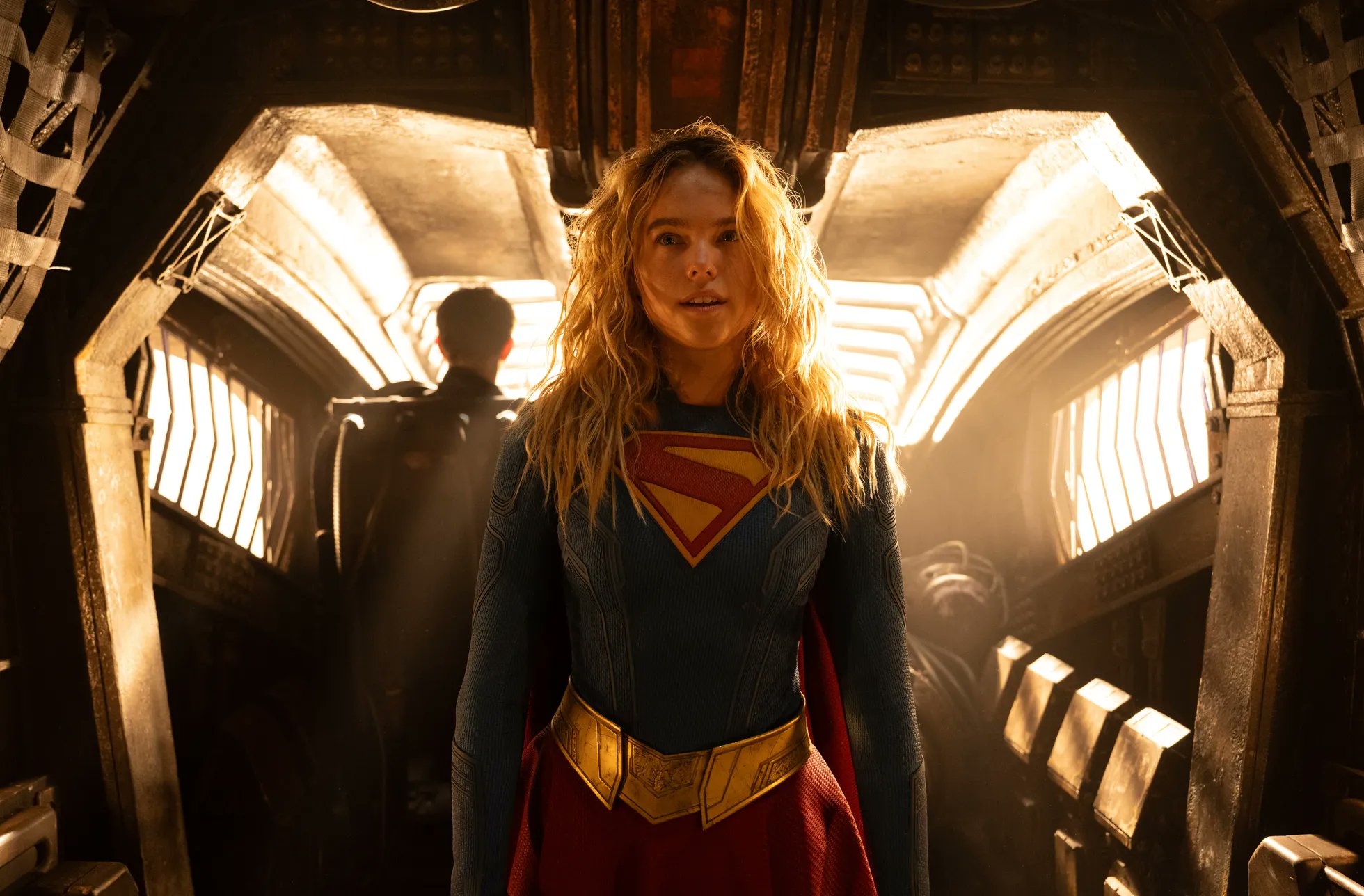

Supergirl marks the second film in James Gunn’s DC universe, following last year’s superlative Superman (which made my top 10 last year). Produced by Gunn and directed by Craig Gillespie, the film represents a noticeable step backward in execution and energy compared to the richness that made Superman so memorable. Even so, Supergirl remains an exciting, fun, and entertaining superhero spectacle, filled with strong moments that keep it engaging despite its shortcomings.
Gillespie has crafted a heroic piece of work—one that I hope empowers girls by giving them a strong, independent superhero who shares the same powers as Superman. Gillespie and screenwriter Ana Nogueira bring wit, edge, and spunk to the material, infusing it with energy and humor. Like Superman and Wonder Woman, Supergirl stands as a symbol of empowerment, resilience, strength, identity, and belonging. The film brings a smile to your face the moment you see the “S” symbol appear. Craig Gillespie has impressed filmgoers before with films such as Lars and the Real Girl, I, Tonya, and Dumb Money, and he once again delivers a flawed but satisfying movie that provides the escapist thrills.
Milly Alcock plays the title character, first introduced in a memorable cameo in Superman (2025). In Supergirl, she steps fully into the spotlight as Kara Zor‑El, a young Kryptonian who survived the destruction of her home world and now struggles to find her place on Earth. The film follows Kara as she is drawn into a conflict involving a rogue faction of intergalactic warlords seeking to exploit Kryptonian technology hidden on Earth. Along the way, she must confront her grief, her anger, and the legacy of her cousin, Superman, while forging her own identity as a hero.
 Courtesy Warner Bros.
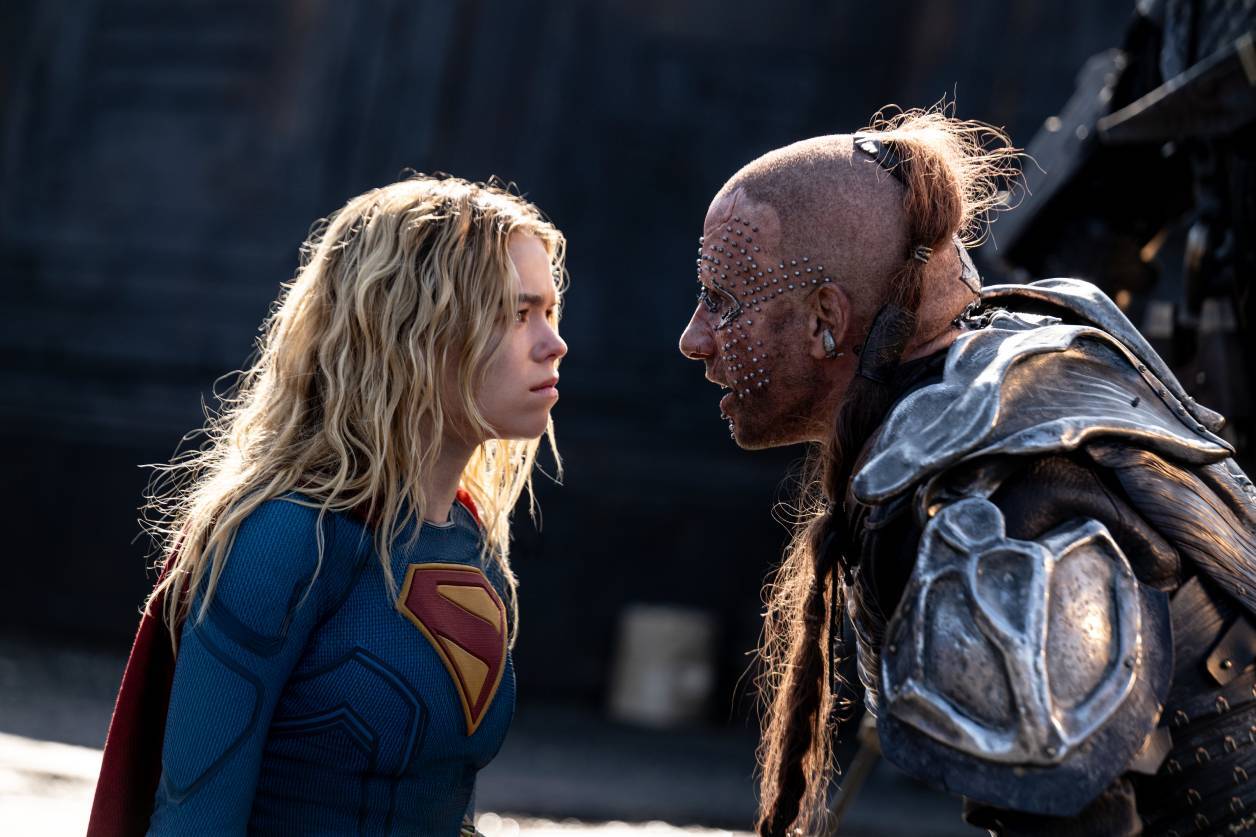
As Kara’s mission intensifies, the notorious intergalactic bounty hunter Lobo crashes into the story—quite literally—when he arrives on Earth under contract to capture her. His chaotic, larger‑than‑life presence throws the film into a wild second‑act detour, blending brutal action with dark humor. Initially an antagonist, Lobo becomes an uneasy ally once he realizes the warlords pursuing Kara plan to wipe out entire star systems, including ones he enjoys causing trouble in. His begrudging respect for Kara grows as he witnesses her compassion and resolve, and their reluctant partnership adds a volatile, unpredictable energy to the film. Lobo’s involvement ultimately forces Kara to confront the moral complexity of her new role as a protector, proving that heroism sometimes means working with the last person you’d ever choose.
As Kara’s mission expands beyond Earth, the notorious intergalactic bounty hunter Lobo, played with wild, unrestrained charisma played superbly by Jason Momoa barrels into the story when she encounters him on a remote, war‑torn planet at the edge of known space. Their first meeting is explosive—Lobo has been hired to capture her, and the planet becomes the battleground for their brutal, darkly comedic clash. But once he discovers that the warlords pursuing Kara intend to seize Kryptonian technology capable of destabilizing entire star systems, Lobo reluctantly shifts from adversary to uneasy ally. His chaotic presence injects a volatile, unpredictable spark into the film, and his begrudging respect for Kara grows as he witnesses her resolve and compassion. By forcing Kara to navigate the moral gray zones of interstellar conflict, Lobo’s involvement deepens her journey toward becoming a hero who protects not just Earth, but the wider universe.
One of the film’s most gripping early sequences is the robbery scene, where Kara intervenes to protect a frightened young girl named Maya (Eve Ridley), a runaway who becomes an emotional anchor throughout the story. When a gang of armed thieves storms a crowded transit hub on a distant colony world, Kara—still unsure of her place among humans—instinctively shields Maya from the chaos. The moment is staged with sharp tension and a burst of heroic clarity: Kara’s raw power collides with her compassion as she disarms the attackers with both ferocity and restraint. This encounter not only showcases her emerging identity as a protector but also forges a bond between Kara and Maya, whose vulnerability and quiet resilience mirror Kara’s own struggle to belong. Their connection adds a human heartbeat to the film’s cosmic scale, grounding Kara’s journey in something intimate and deeply felt.
 Courtesy Warner Bros.
Kara, meanwhile, has a smaller mission; her powers begin to intensify once she becomes like an aunt or role model for Maya. Kara begins the film lost, angry, and unsure of her place in the universe. She often resorts to booze, partying, and alcohol. She carries the trauma of Krypton’s destruction, the weight of being sent away from her family, and the frustration of living in the shadow of her cousin, who seems to have adapted to Earth far more easily than she ever could. She’s powerful, but she doesn’t yet know what to do with that power — or who she wants to be.
Her emotional arc truly ignites when she protects Maya during the robbery scene. This moment forces Kara to confront the truth she’s been avoiding despite her pain; she wants to protect people. Maya becomes a mirror for Kara — a vulnerable girl searching for belonging, just as Kara is. Through Maya, Kara begins to understand that heroism isn’t about perfection or legacy; it’s about compassion.
When Kara leaves Earth and encounters the warlords and Lobo, her arc expands from personal struggle to cosmic responsibility. Lobo challenges her in ways no one else does — morally, physically, and emotionally. Their uneasy alliance forces Kara to navigate the gray areas of justice, pushing her beyond the simple idea of “good vs. evil.”
Through brief flashbacks, we see Superman (David Corenswet) appear as Kara’s distant cousin once she arrives on Earth. Although he can’t speak Kryptonian and communicates only in English, he still offers her enough warmth, guidance, and steady support to help shape the woman she ultimately becomes. These moments also highlight the contrast between their upbringings: Kal‑El, raised gently by loving human parents, and Kara, hardened by the trauma of watching Argo City slowly die. His presence in the flashbacks becomes a quiet emotional counterweight to her present‑day journey—reminding her of the compassion she once knew, even as she barrels across alien worlds on a violent quest to save Krypto and confront Krem. By the time Kara returns to Earth in the film’s closing moments, their bond feels like a tether pulling her back toward the idea of home, grounding her amid the chaos she’s endured.
Courtesy Warner Bros.
While Supergirl soars on the strength of its heroine, the film stumbles when it comes to its villains. Krem, played by Matthias Schoenaerts, is the film’s central villain — a ruthless, ego‑driven brigand whose murder of a Maya’s father and attack on Krypto sets Kara on her revenge‑driven journey across the galaxy. Despite his brutality and the horrific acts, he commits with the Brigands, Krem is ultimately a thin and generic villain that doesn’t match Lex Luthor’s menacing charismas that shined so well in last year’s Superman.
Milly Alcock infuses Supergirl with a vibrant, magnetic presence, capturing a mix of humble displacement and luminous innocence that makes her instantly endearing. At the same time, while she full of speed and dazzle, and flat-out amazing. Some of the action sequences don’t quote leave the impact of last year’s Superman and retread back to Zach Synder’s slow-motion choreography. Supergirl bursts with exuberance, and its tight 100‑minute runtime is a welcome relief in a genre that so often drags itself beyond the two‑hour threshold.
This summer has seen moviegoing rebound to levels not reached since before Covid, and the momentum shows no signs of slowing—especially with Nolan’s Odyssey on the horizon. For now, Supergirl is drawing mixed reviews, but it’s impossible to ignore how much of the backlash feels manufactured, driven by the usual film‑bro corners of the internet who bristle at female‑led superhero stories. These films are consistently held to harsher standards than their male‑fronted counterparts, scrutinized for flaws that audiences routinely overlook elsewhere. Even so, Supergirl is poised to find its audience. As the noise fades and viewers engage with the film on its own terms, it will almost certainly grow in appreciation over time.
SUPERGIRL is now playing in theaters everywhere.




I prefer not to