

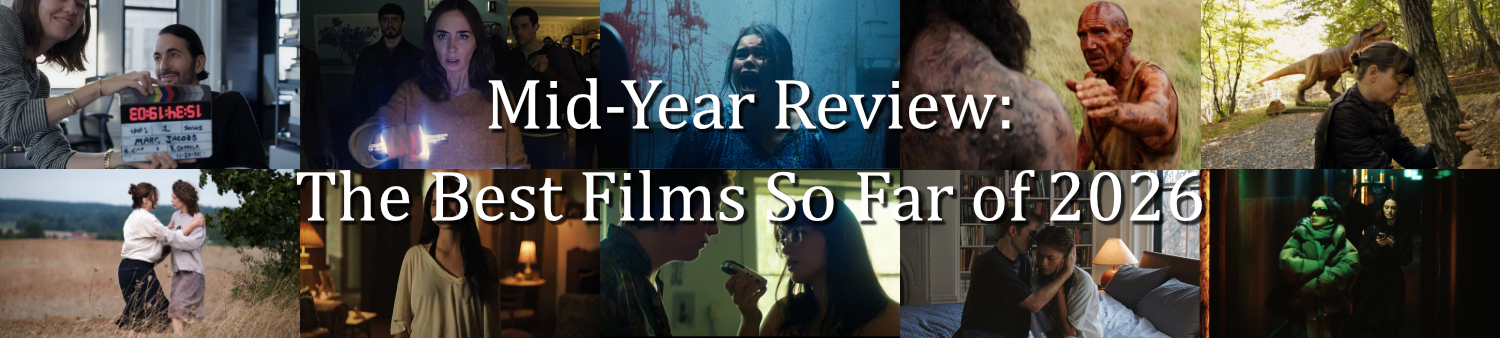
So far, 2026 has been a breakthrough year for cinematic underdogs, championed by indie filmmakers and surprise hits like Obsession and Backrooms. Exhausted by repetitive IP franchises, an oversaturated streaming market, and transparent cash grabs, audiences are increasingly looking for something real. Thankfully, smaller films are seizing the momentum and grabbing the spotlight. From the chilling tension of Obsession and The Drama to Sofia Coppola’s intimate documentary Marc by Sofia, here are the finest films of 2026 so far.

1. Obsession (d. Curry Baker)
Written, directed, and edited with razor-sharp precision by Curry Barker, Obsession (2026) is a masterclass in escalating psychological dread. The film takes the classic “Monkey’s Paw” trope and strips it of all camp, centering its terror around a desperately relatable mistake: a music store employee named Bear (Michael Johnston) using a supernatural toy—the “One Wish Willow”—to force his co-worker and crush, Nikki (Inde Navarrette), to fall in love with him.
What follows is not a standard supernatural haunting, but a agonizingly intimate descent into emotional horror. The brilliance of the film lies in how it subverts traditional monster mechanics; Nikki isn’t possessed by a demon, but rather by the curse of a stolen free will. Michael Johnston plays Bear with a perfect, tragic blend of naiveté and mounting regret as he realizes the nightmare he has unleashed. Meanwhile, Inde Navarrette delivers a powerhouse, deeply unsettling performance. She seamlessly shifts Nikki from a vibrant friend into a terrifyingly hollow, violently codependent shell who will mutilate anyone—and anything—that threatens her artificial bond with Bear.
Barker’s tight pacing and claustrophobic framing ensure that the tension never drops, refusing to let the audience blink as a harmless crush spirals into bloodshed. By grounding its supernatural premise in the very real, toxic human impulses of possessiveness and control, Obsession transcends standard genre fare. It is, without a doubt, the defining horror film of 2026.
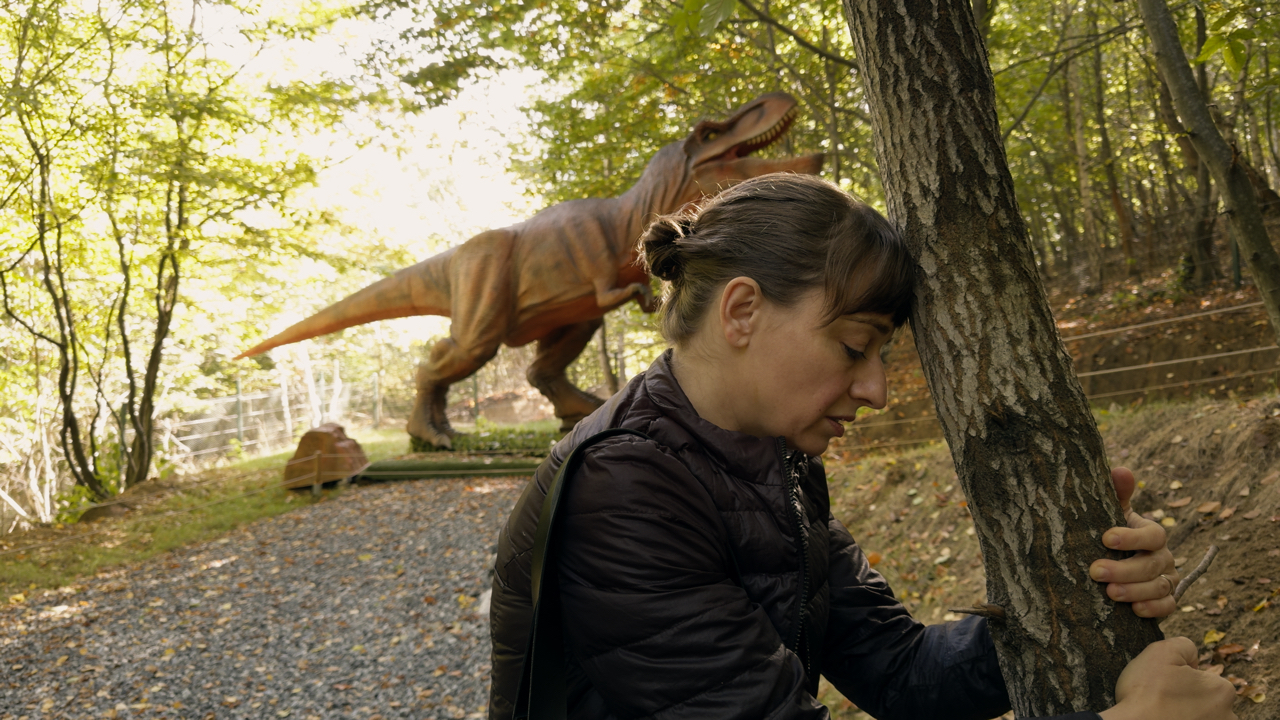
2. Kontinental ’25 (d. Radu Jude)

3. The Drama (d. Kristoffer Borgli)
An uncomfortable narrative about discomfort, Kristoffer Borgli’s The Drama is nonetheless a wrenching framework thanks to the director’s immense skill for anxiety-inducing drama, dark humor, and raising uncomfortable questions in a society where so many are so easily triggered and hold so much moral superiority and righteousness. In the end, this is a film about cancel culture, victimhood, and sensitivity—common themes Borgli has explored before in Dream Scenario and Sick of Myself. While those films explored the terror of being known by everyone, The Drama is about being known by the one you love the most and facing the consequences.
There’s a specific kind of bravery in taking actors with the cultural weight of Zendaya and Robert Pattinson and letting them be messy, unsettling, or even unlikable. A lot of modern studio films feel like they’ve been through a car wash of focus groups until every sharp edge is buffed out, but The Drama feels like it was allowed to stay dangerous. The fact that it’s being labeled a “comedy of discomfort” while being compared to Bergman shows exactly how potent this film really is—it’s not trying to cater to anyone. It’s creating a space for those hard, wrenching conversations that most movies are too scared to touch. This is the first great film of the year.

4. Disclosure Day (d. Steven Spielberg)
As Steven Spielberg’s sixth feature film involving extraterrestrials—and his first since War of the Worlds (or arguably, Indiana Jones and the Kingdom of the Crystal Skull)—his latest project titled Disclosure Day offers brilliant ideas on what defines humanism and empathy. It provides a rich subtext on how we treat the unknown. Though Spielberg first explored these concepts nearly five decades ago in Close Encounters of the Third Kind and E.T., his latest work still evokes a sense of wonder, backed by breathtaking filmmaking.
Disclosure Day reaches a spellbinding, emotionally resonant crescendo in its third act. The narrative sophistication elevates dramatically, delivering a wondrous climax that evokes the profound, bittersweet closure of Close Encounters and A.I. Artificial Intelligence. Balancing intellectual depth with pure blockbuster thrills, the film possesses a deliberate, deeply personal energy, feeling like a passion project Spielberg has been orchestrating for decades. Ultimately, Disclosure Day proves that Hollywood’s greatest populist auteur has not forgotten how to deliver an awe-inspiring spectacle—one that once again possesses both a massive heart and a formidable brain.
5. Marc by Sofia (d. Sofia Coppola)
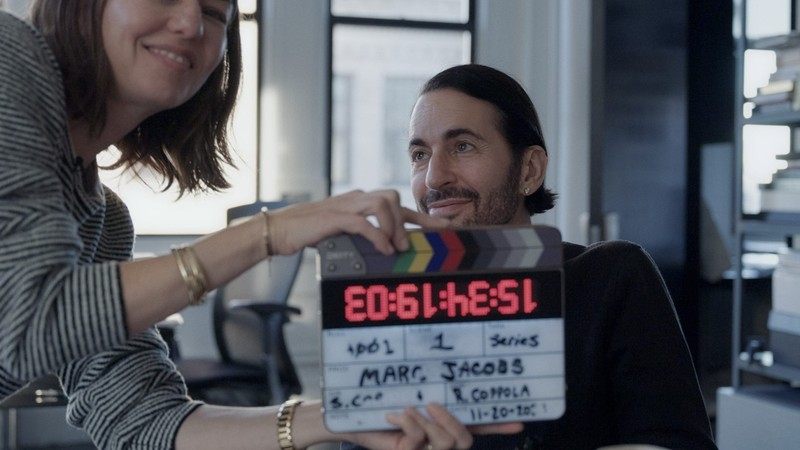
Sofia Coppola’s documentary Marc by Sofia is like a scrapbook turned into celluloid; it gives an insider’s view of the fashion world that is personal, passionate, artful, and always insightful. Focusing on the renowned designer, this artistic and uplifting documentary should be embraced by any viewer looking to understand the industry better.
Like the 1995 documentary Unzipped, which followed fashion designer Isaac Mizrahi, this film made me appreciate the sheer amount of creativity poured into not only fashion design, but the creative process as a whole. It brilliantly captures everything from the high-stakes fashion shows to the intense collaboration involved, ranging from Jacobs’ own creative team of pattern makers and makeup artists to the hair stylists and striking models who bring his artistry to life on the runway.
While watching the film, I was constantly reminded of Paul Thomas Anderson’s Phantom Thread. Just as PTA explored the creative obsessions of dressmaking, Coppola examines Jacobs’ own obsessive attention to detail—from the exact gauges of knitting needles and fabric swatches to selecting the right jewelry, stage props, and even perfecting the nails and eyelashes of his models. The film’s greatest strength is how the 30-year friendship between Sofia and Marc gives the project a deeply personal edge; because both are artists, Coppola is naturally drawn to the perfectionism and anxieties that creators must navigate. Among the film’s strongest segments is when she dives into Jacobs’ legendary 1993 “grunge collection” for Perry Ellis, which feels like a magnificent time capsule over 30 years later. Marc Jacobs has spent decades defining pop-culture milestones, and Coppola has successfully delivered a warm, inviting chronicle of a true creative pioneer.

6. 28 Years Later: The Bone Temple (d. Nia DaCosta)
The fourth installment in the 28 Days Later film series and part of the double bill that is a direct continuation of 2025’s 28 Years Later, the post-apocalyptic horror film based on Alex Garland’s screenplay 28 Years Later: The Bone Temple weighs in on the bleakness, intensity, and horror twice as much as its predecessors, and it stays consistent with its artistry and craft within its world-building. Nonetheless, Garland and director Nia DaCosta (Hedda, Candyman) have managed a new film that is every bit as excellent as 28 Days Later and 28 Years Later, without losing any consistency or narrative flow. Moreover, series newcomer DaCosta keeps the vehemence and spirit alive. Danny Boyle (28 Days Later) had directed the original 28 Days Later in 2002 as well as last year’s third installment, 28 Years Later, and was expected to deliver the bleakness, an uncanny sense of dread, and madness that made the original such a monumental piece of cinema. DaCosta also brings a sense of humor to the dread, and she continues to be a rich stylist, which has been displayed before in her previous endeavors like Little Woods, Candyman (2021), and Hedda. She continues to follow these footsteps, doing her best with her directing skills to continue the post-apocalyptic madness while bringing some newfound wit, dark humor, and some keen emotional depth as well.

7. Mile End Kicks (d. Chandler Levack)
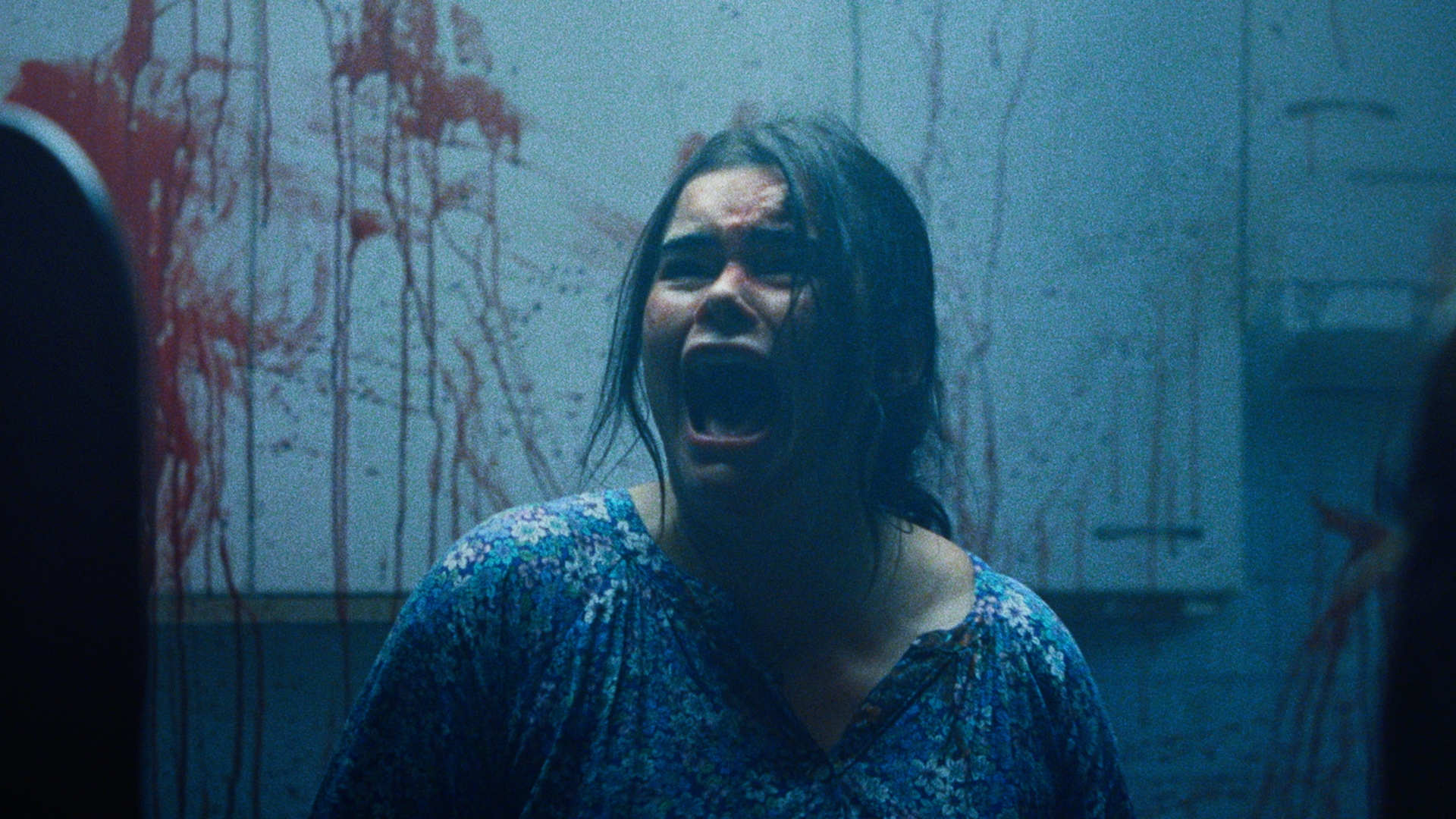
It’s quite remarkable seeing actress Barbie Ferreira evolve over the years since she made a splash on the controversial and equally celebrated HBO series Euphoria. Since the show, she has continued to go from strength to strength, especially when playing flawed, lonely, but compelling characters in films such as Bob Trevino Likes It and the impressive Faces of Death relaunch; she also turned in a standout supporting performance in Jordan Peele’s Nope.
She’s like a female Gen Z version of Paul Giamatti. When you see her in a film, you know she’s going to bring nuance to the role with a mix of humor, wit, and sadness. In fact, I really hope Alexander Payne writes a character for her one day, because that would be a dream match. And even though her recent films appear to be targeted more toward the 20–25 crowd, she brings such a rich authenticity to the material. Her emotions are so universal that they should gain a wider appeal; I can confidently say that audiences older than 35 or 40 should still check out Chandler Levack’s sophomore feature, Mile End Kicks.

8. The Moment (d. Aidan Zamiri)
Pop star Charli XCX was catapulted into the mainstream with the release of her spectacular 2024 album “brat”. Having worked in the industry for over a decade, Charli’s mainstream success felt like a long time coming. The London-based singer/songwriter/365 Party Girl became a household name around the world and had such an influence over pop culture, the summer of 2024 was deemed “Brat Summer”. Having been one of the more self aware and insightful pop stars in recent years, Charli’s artistic ambitions wouldn’t stop there. After nabbing parts in a handful of film projects set to release this year, her own film, of which she shares a story credit, would prove to be far from the vanity project many pop stars-turned-actors have run into. A brutally honest and prickly mockumentary poking fun at her own self image, Charli’s first starring vehicle is quite singular in its construction. Playing a version of herself amidst the “brat” phenomenon less than two full years ago, this film is a razor-sharp satire on stardom, the pop music industry’s grueling demands and a look at the mental stability of an artist on the brink.
Directed by Aidan Zamiri, who also helmed her now-iconic “360” music video, The Moment is an intelligent and biting mockumentary on the tense relationship between art and commerce. Despite being an exaggerated, fictionalized version of Charli and her skyrocket to mainstream success, The Moment feels authentic due to its insightful commentary and winning sense of deadpan humor.

9. Miroirs No. 3 (d. Christian Petzold)
German auteur Christian Petzold delivers a masterfully restrained, deeply moving psychodrama with Miroirs No. 3 (released globally as Mirrors). The story follows Laura (Paula Beer), a traumatized music student who seeks refuge in an idyllic countryside home with a sympathetic stranger after surviving a fatal car crash. Dealing in Petzold’s signature currency of ghosts, grief, and unspoken history, this modest yet beautifully modulated chamber piece stands as his most emotionally satisfying work to date.
10. The Faces of Death (d. Daniel Goldhaber and Isa Mazzei)

Leave A Comment