



The Samurai and The Prisoner, based on the book by Honobu Yonezawa, is the latest film from Kiyoshi Kurosawa and it is, in every real sense, a masterpiece. Based on the true story of Araki Murashige, here played by Masahiro Motoki. who at times evokes Toshiro Mifune, the film is part mystery and part historical drama, but entirely engrossing. There is not a false note among the very fine cast, a group of actors that keep finding new ways to keep the viewer engaged with the work.
Courtesy Janus Films
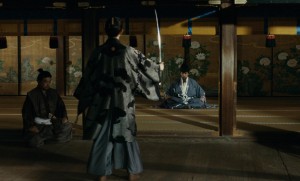
As the film begins, it is 1578 and Murashige has barricaded himself inside his Arioka Castle, which has been laid siege by Oda Nobunaga. As Murashige awaits reinforcements from Mori Terumoto, Oda has sent Kuroda Kanbei as an envoy, to try to dissuade Murashige from his rebellion. Kanbei, against the expected behaviors of samurai and wartime, is thrown into the dungeon rather than executed or returned unharmed. This act is indicative of Murashige’s thinking.
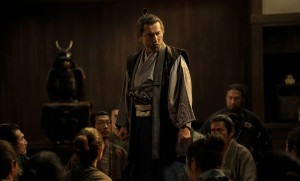
Indeed, in three separate incidents, Murashige proves himself hesitant to kill. This is not out of cowardice or a belief in peaceful resolution but rather that he sees no point in killing when it achieves nothing but satisfying a code of expected behavior. As the story continues, Murashige, and to an extent, Kanbei, become detectives in a series of events over the next year. These events challenge Murashige’s belief in his actions and confuse those around him.
Courtesy Janus Films
The first event is very much a locked room mystery, while the second and third are more straightforward. Each underscores both the good and the bad, the effective and the ineffective, with Murashige and his leadership. Against these mysteries is a set of smaller, no less important or potent, character and cultural pieces. You get a brief glimpse into the time when Christianity was not an automatic death sentence in feudal Japan, at the ways women held and used power among the daimyo and the ways in which religion and war make cruel bedfellows.
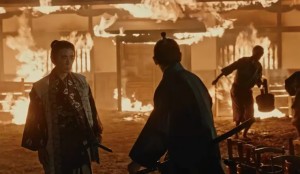
The film, on top of these themes, is gorgeously mounted. The sets, costumes, makeup and photography, are on a scale equal to if not surpassing some of Akira Kurosawa’s late works, like Ran and Kagemusha. Yet, it is its own thing, despite feeling similar to certain classics. The acting, for one, is more immediate, slightly more modern, than that of the other Kurosawa’s samurai works. There are also elements of Tarkovsky, and even Kore-eda and Mike Leigh.
This last is quite surprising yet it is Leigh’s lived in worlds, full of characters that have known one another for years, and inhabited these spaces we see them in, for just as many, that this film often reflects. You can truly believe that these are not just actors on a set, but living, breathing characters. Leigh’s Topsy Turvy is among the gold standards for creating a fully believable and immersive world drawn from real life. Kiyoshi Kurosawa is working from a similar blueprint, taking exhaustive detailed pains to draw in his audience.
Courtesy Janus Films
As the film builds to its conclusion, one may get a sense of where it is heading, and yet when you arrive there, it is no less thrilling for it. Indeed, it is a testament to how well constructed and logical the work is. It is a film that does not rely on just plot but a perfect marriage of plot, story and character, to give the viewers a stunning look inside a very specific culture and period of history. The film allows each of the major characters a moment to shine, and for relationships to be clear. By the time the credits roll, you will be satisfied with what you have witnessed and, perhaps, want to learn more. One of the year’s great achievements in cinema.
The Samurai and the Prisoner is now playing in select theaters.


Leave A Comment