

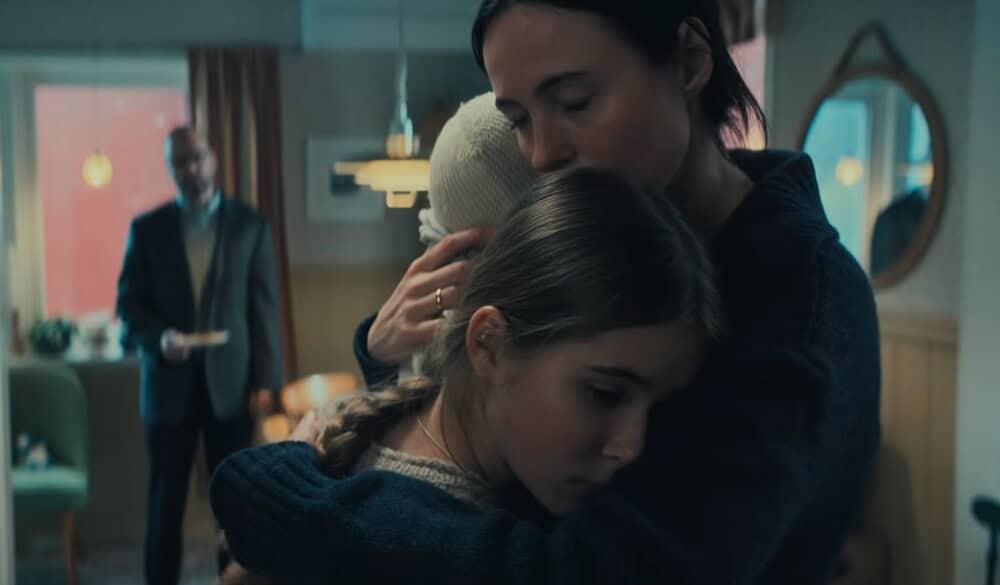

Cristian Mungiu’s Palme d’Or-winning masterpiece Fjord stands as the Romanian auteur’s most complex, absorbing, and brilliant work to date, which is a staggering achievement considering a filmography that already boasts seminal international classics like 4 Months, 3 Weeks and 2 Days, Beyond the Hills, and R.M.N. What sets this film apart and cements it as Mungiu’s crowning achievement is its remarkable, superb craft and absolute commitment to remaining brilliantly neutral. From the impeccably composed long takes to the razor-sharp narrative structure, every single element is assembled with clinical precision and undeniable artistic mastery.

Courtesy Neon
Rather than taking a heavy-handed stance or handing down easy resolutions, Mungiu operates as an unsparing observer, leveraging his trademark stark realism to craft a meticulous procedural that lays bare complex moral conundrums, ethical dilemmas, and the subtle mechanics of human prejudice. Mungiu’s realism strikes again with devastating force, capturing the texture of everyday life, institutional friction, and lived human behavior with an authenticity that feels almost documentarian. It is a deeply personal, masterfully executed work that forces us to look inside out at our own biases while examining both the dangerous overreach of government authority and the quiet tragedy of trying to force ancient belief systems into the modern world.
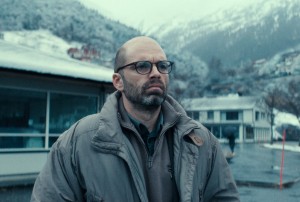
The narrative unfolds with calculated control, leaning on a tense, naturalistic pacing that pulls you in from the opening frames and never releases its emotional grip. The story centers on a small, tightly knit community thrust into turmoil after an administrative and legal conflict escalates into a public crisis. At the core of the procedural narrative is a dispute involving local religious tradition, bureaucratic state regulations, and a family caught in the crossfire. Sebastian Stan delivers a stunning, transformative lead performance as a father anchored in traditional values, whose stubborn refusal to yield to state oversight sets off a tragic chain reaction. Playing opposite him as his wife, Renate Reinsve grounds the family’s side of the struggle with a quiet, heartbreaking vulnerability, embodying a mother trapped between devotion to her husband’s convictions and the overwhelming urge to protect her children from annihilation.
Opposing their world is an extraordinary supporting ensemble that populates every corner of this high-stakes community, including sharp turns from state officials and local figures charged with enforcing modern civic compliance, all contributing to an immersive, brilliantly cast tapestry of clashing ideologies.

Courtesy Neon
From the beginning, Mungiu establishes the plot points with total accuracy, starting with a seemingly minor regulatory violation during a traditional ceremony. As the state steps in with heavy-handed legal action, the story systematically follows the escalating bureaucratic process. The courtroom scenes are framed with incredible dramatic weight, relying on Mungiu’s signature unbroken takes where legal rhetoric clashes against raw human emotion. Yet, as the legal battle turns into a full-scale social crusade, the narrative pivots to reveal the devastating collateral damage occurring behind closed doors, where the strain on Stan and Reinsve’s marital foundation becomes unbearable. In one of the film’s most distressing plot developments, the stress of these conflicting dogmas falls entirely on the younger generation, culminating in harrowing scenes with the troubled teenage daughter who ultimately slits her wrists in a desperate cry for help.
Mungiu shows the kids hanging out together in quiet, unvarnished moments, contrasting their innocent search for connection against the rigid ideological warfare waged by the adults around them. Through this narrative arc, Mungiu delivers a devastating truth: when uncompromising belief systems collide with unyielding state power, it is always the children who suffer the most.
What makes Fjord such an extraordinary piece of cinema is how every single moment is infused with profound humanism and technical perfection. Mungiu’s superlative script avoids easy villains or convenient heroes, recognizing that every character operates out of a genuine, albeit deeply flawed, conviction. By capturing the dialogue and procedural friction with uncompromised realism, the film exposes how easily institutional overreach can alienate citizens, while simultaneously illustrating the friction that occurs when traditional cultures resist modernity. The film’s restraint and craft are its greatest strengths; by maintaining its neutral stance, it serves as an expertly calibrated mirror to our own societal divides.
Courtesy Neon
Rather than demanding total acceptance or forcing consensus, Fjord advocates for something far more urgent and fundamental: the necessity of open dialogue, active listening, and the willingness to confront our own internal prejudices. It is a profoundly moving, essential film that sparks a critical conversation for our modern world, marking Mungiu as a true master at the absolute height of his storytelling powers.
Fjord opens in select theaters on October 9th.


Leave A Comment