

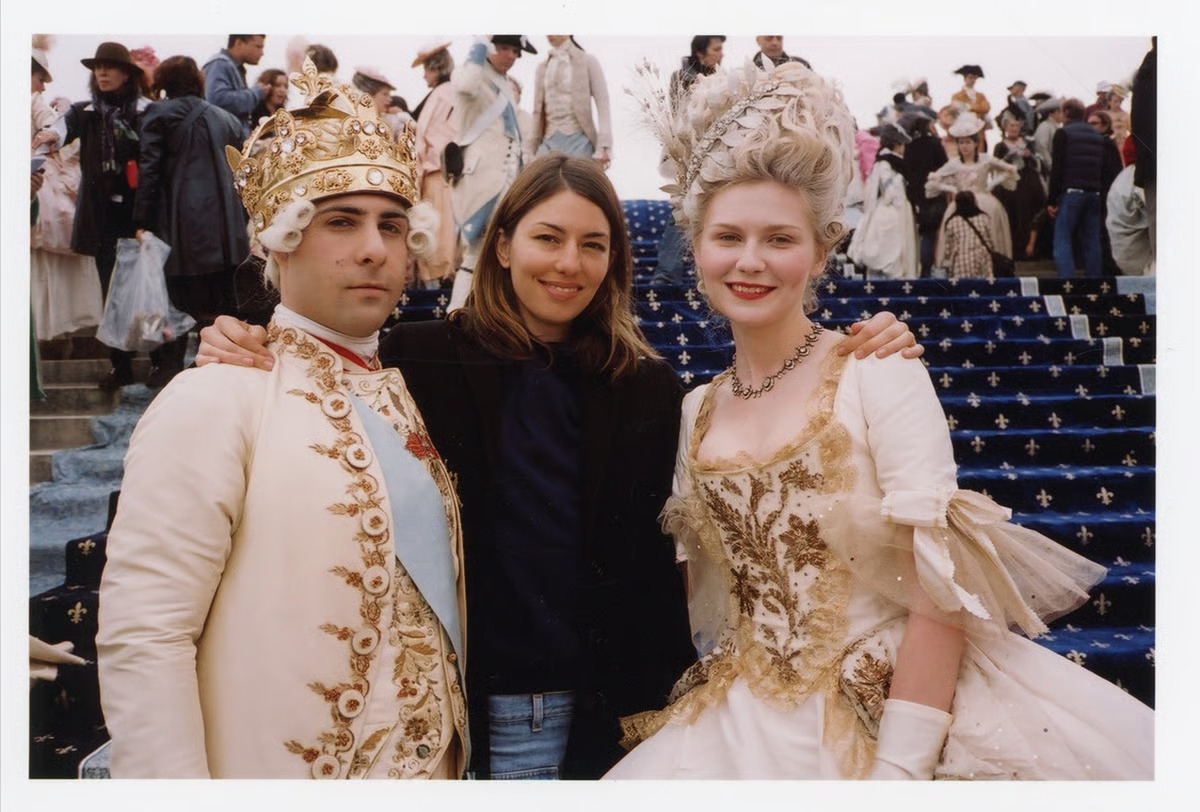

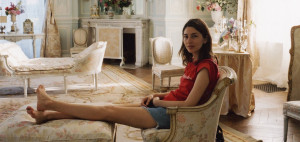
Courtesy Mubi
That opening immediately draws you in with its absorbing nature, highlighting how much that world and those creative bonds mean to me. Eleanor Coppola has walked this path before, famously chronicling her family and her husband Francis Ford Coppola during the grueling making of Apocalypse Now with her legendary documentary Hearts of Darkness: A Filmmaker’s Apocalypse. That stands as one of the greatest films ever made about making a movie, and it is extraordinary to watch her recapture that exact behind-the-scenes spirit with the exceptional Making Marie Antoinette.
The documentary starts right on set on day one, plunging us straight into the action as Sofia Coppola steps onto the floor of this massive, lavish production. She had just stepped off the heels of her massive independent successes with Lost in Translation and The Virgin Suicides, which were smaller, intimate indie movies. In many ways, Sofia was the ultimate underdog directing this scale of project, thrust into handling a massive budget, a huge cast and crew, lavish historical locations, stunning costumes, elaborate wardrobe and hair, and endless background extras.
The sheer logistical constraints were staggering. Every single shooting day was squeezed by massive prep times, where strictly two full hours of each day were lost just getting actors into their intricate period wardrobe, corsets, wigs, and makeup. That left Sofia, cinematographer Lance Acord, and the crew with only a slim window of actual filming time each day to capture complex setups. Just like there were immense psychological and physical challenges for Francis on his giant productions, Sofia faced grueling hurdles of her own, including coming down with a debilitating case of bronchitis during the shoot while remaining steadfast to keep production moving forward.
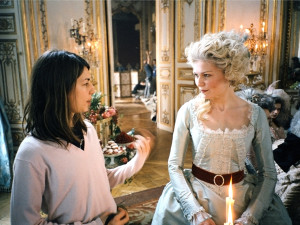
Courtesy Mubi
There were also plenty of stressful moments in the production where she was tested or pushed back against by her crew members. While she and Lance Acord shared a brilliant artistic collaboration, they did at times butt heads. A key highlight in the documentary occurs during a party scene where Sofia insists on filming strictly from Marie Antoinette’s internal perspective as she locks eyes across the room with the handsome Swedish officer Count Axel von Fersen, played by Jamie Dornan. Lance wanted to shoot it from a broader, more traditional coverage angle, leading to a standstill where they couldn’t come to an agreement on the floor. Sofia stood her ground flat out, insisting that the subjective camera perspective was essential to her vision, working directly with Kirsten Dunst to ground that exact emotional beat.
Despite being an indie filmmaker navigating an unfamiliar studio apparatus, Sofia managed to bring the entire production in right on schedule and on budget which is a remarkable achievement that paved the way for the film to blossom into a modern classic. When Eleanor interviews Sofia toward the end of the documentary, a fascinating moment occurs where Sofia states flat out that she will never make another period piece and will stick strictly to smaller, contemporary character pieces. Of course, film history shows she eventually returned to historical canvases with The Beguiled and Priscilla, but she maintained those hard-won lessons by keeping those later projects far more scaled back and intimate.
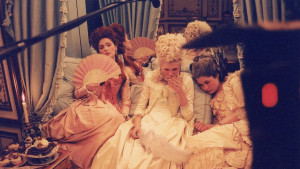
Courtesy Mubi
Beyond the technical triumphs, the documentary shines as a lovely tribute to mothers and daughters, and to the creative synergy of the Coppola family. One of the most heartwarming moments features Roman Coppola on set offering steady moral support and acting as both a protective brother and an essential producer. Eleanor notes with immense pride how her children show up for one another amidst the chaos of a movie set. Eleanor also opens up personally about putting her own artistic pursuits on the back burner to raise her children and support her family, yet this documentary proves how she still carved out time to produce extraordinary, lasting art of her own. Ultimately, Making Marie Antoinette is an essential work on female filmmaking, creative passion, and singular artistic vision, capturing the true spirit of independent cinema inside a grand studio landscape.

Leave A Comment