

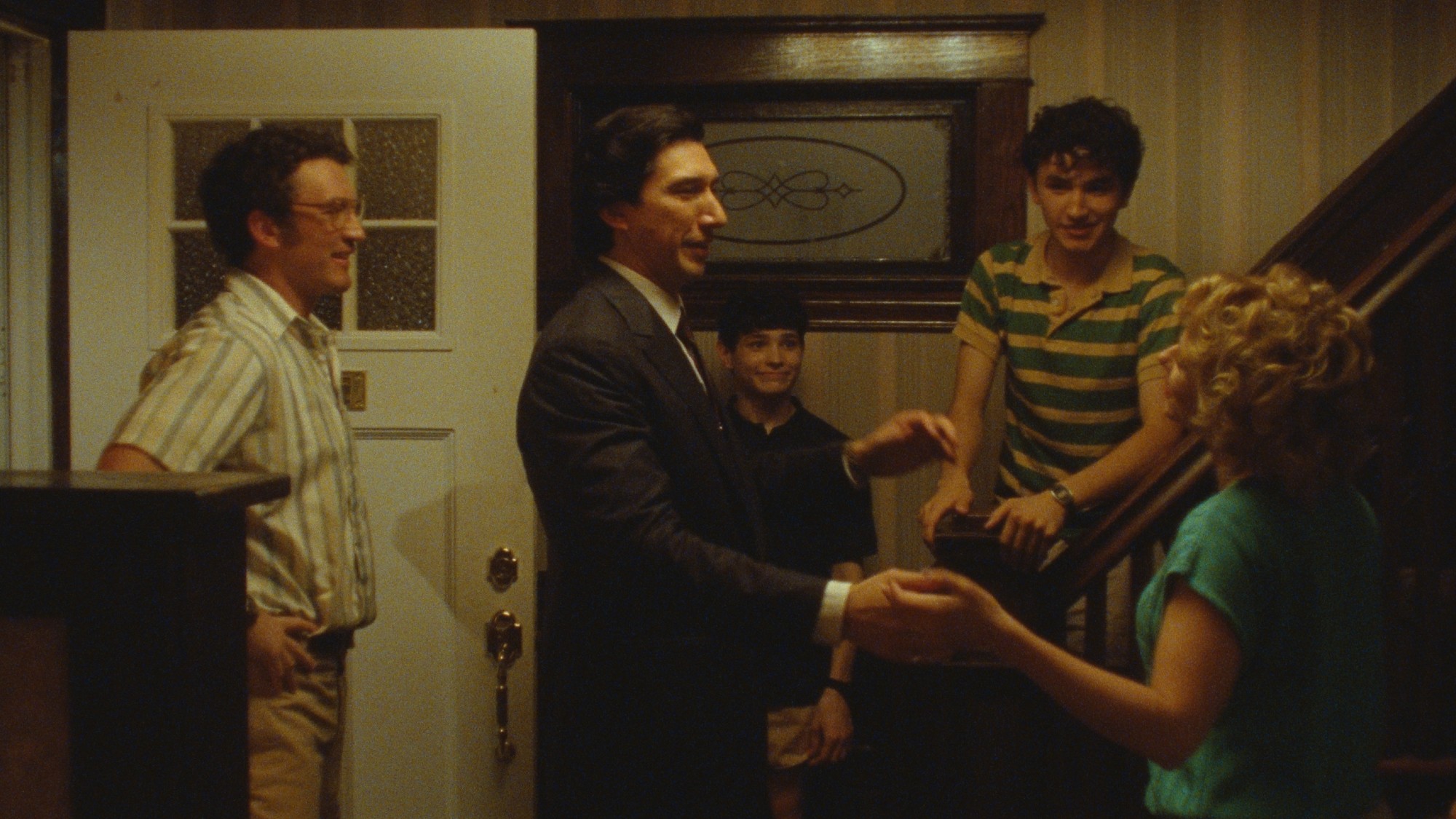

James Gray has spent a remarkable career carving out a distinct cinematic space where genre mechanics dissolve into profound human truths, dating all the way back to his striking 1994 debut, Little Odessa. Across a peerless filmography, he has continually returned to the crucible of brotherhood, seamlessly fusing the pulse-pounding architecture of crime dramas with the intimate, aching gravity of human drama. He has always transcended standard thrillers into something deep, humane, and transcendent, exploring family dynamics and working-class survival against the gray asphalt of Queens and Brooklyn. And yet, he manages to knock it out of the park once again with his ninth feature, Paper Tiger, an authentic and devastating human crime thriller that stands proudly as one of his greatest accomplishments yet. Acting as a spiritual companion piece or rather, the closing movement of an informal trilogy that began with Little Odessa and continued through We Own the Night as this picture follows brothers navigating their precarious place within the Russian crime mafia with even more maturity, grace, and emotional resonance.
Courtesy Neon
From its opening frames, Paper Tiger feels as though it was made in a completely different era, echoing the gritty, street-level naturalism of 1970s crime classics from Sidney Lumet, John Avildsen, and William Friedkin. Gray has always made movies like he belongs to a past generation of masters, prioritizing tactile atmosphere and moral ambiguity over flashy superficialities. What elevates the script beyond standard genre fare is the extraordinary depth of its character writing, which refuses easy archetypes and forces the audience to care deeply about every flawed decision these people make. The film centers on Gary (Adam Driver), a retired cop and current entrepreneur who has walked away from active police work, though he still retains a complicated, lingering respect from the department. Having taken different routes to find money, even when it means sliding underground and engaging in questionable, high-stakes maneuvers—Gary pulls his brother Alwin (Miles Teller) into the fold to handle some electrical side work. But when the Russian mafia inevitably sinks its claws into their operations, a suffocating wave of paranoia takes hold, testing the limits of family loyalty.
Courtesy Neon
The exchanges between the actors are razor-sharp, driven by the phenomenal, grounded chemistry between Driver and Teller. Gray’s writing allows their scenes to breathe with lived-in history; you feel every ounce of shared childhood, unspoken resentment, and fierce devotion beneath their everyday dialogue, creating an emotional resonance that lingers long after the tension subsides. Their brotherly dynamic is fraught with a lifetime of friction, leading to fierce bitterness, regret, and a desperate pursuit of atonement. Driver brings a weary, grounded authority to Gary, a man whose attempts to protect his bloodline only pull them deeper into a quagmire. Teller matches him beat for beat as Alwin, capturing the jittery, high-wire tension of a sibling in over his head, making you ache for both men even when their choices push them toward disaster. Yet, the film’s masterclass in acting arrives via Esther (Scarlett Johansson), Gary’s wife, who faces a horrifying personal crisis as she slowly begins to lose her eyesight to devastating results. Johansson delivers the standout performance of the feature and one of the greatest of her entire career in which she imbues Esther with a raw, wrenching vulnerability. It genuinely baffles any critical shortsightedness that some have chosen to fixate on her period-accurate perm; that specific hairstyle and unglamorous styling allow Johansson to completely shed her movie-star aura and anchor herself entirely within the working-class despair of the narrative. Her performance reaches a heart-stopping peak during a riveting, terrifying late-night home invasion sequence where the Russian mob breaks in to psychologically torture them by snapping pictures and rearranging furniture which leads to a confrontation where Esther’s quiet, steely defiance anchors the entire scene.
Magnifying the dramatic impact is Gray’s sublime visual style, which reunites him with cinematographer Joaquin Baca-Asay, who previously lensed Two Lovers and We Own the Night. Captured on gorgeous 35mm film, the lighting is lived-in, shadowy, and organic, bringing an artful, poetic eye to the working-class milieus of New York. The pacing and spatial awareness are expertly managed all the way up to the blistering finale in the tall grass sequence. Heavily influenced by the atmospheric weeds of films like The Weeds and the cinematic heritage of The Godfather, this climactic sequence is brilliantly choreographed using familiar, haunting geographic locations that Gray previously probed in his earlier masterworks, turning a simple patch of earth into a harrowing theater of judgment.
Courtesy Neon
Threaded throughout this tension is the quiet tragedy of the next generation where the young sons living through the fallout, trying to navigate the wreckage of their fathers’ choices. Because Gray invests so much empathy into every member of this fractured household, every blow lands with devastating weight. It is a massive relief to get adult-oriented, uncompromising cinema like this in the modern landscape. Marking a triumphant return to form, Paper Tiger stands right up there alongside The Immigrant, Two Lovers, and The Lost City of Z as top-tier James Gray, proving once again that his poetic, deeply humane lens on the American experience remains unmatched.
Paper Tiger is now playing in theaters.

Leave A Comment