

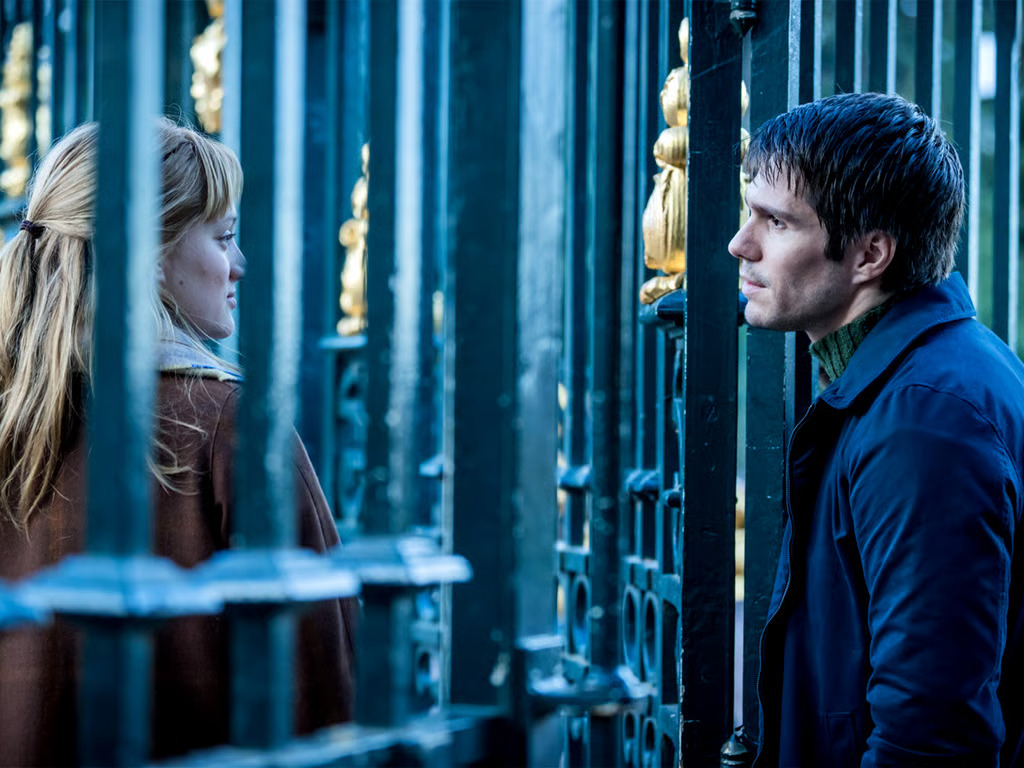

Two Pianos is the new, highly melodramatic work from the French writer-director Arnaud Desplechin starring Francois Civil as a pianist, brough back to his hometown of Lyon, by his former mentor, Elena, played with steely reserve by Charlotte Rampling. The film is one in which you have to allow yourself to be taken by its rhythms, or you will sink under the waves of its often-breakneck speed and ridiculous twists and turns. In lesser hands, particularly the lead actor, the audience would be forgiven for wanting to punch their screen and him.
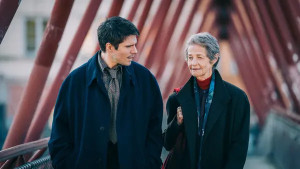
Courtesy Kino Lorber
Instead, this mess of a coward and layabout, a gifted musician who has wasted his time and talents, becomes someone identifiable and, despite some wretched discoveries, someone we become invested in learning not only more of, but perhaps rooting for him to at least become a better person. Yet, to get there, we must fight our way, as an audience, through an absurd set of plots and character deviations in order to arrive at the otherwise fine ending. The journey, ultimately, is more entertaining than it first appears. It is also far more outlandish.
This is opera, in a sense, with everything heightened. Every moment is loud, large and the absolute for that point in time for each character, either emotionally or intellectually. Each and every scene serves to further one or the other. It could be overwhelming, if both the makers and actors were not so light and assured, committed and talented.
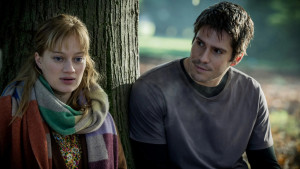
Courtesy Kino Lorber
This is a film that could be accused of being very French, but not in the New Wave sense of the term. Nor in the Jean Pierre Jeunet way. It is much more in keeping with other modern film makers, though not as self-serious as the works of Gaspar Noe nor as subversive as Claire Denis or Leos Carax. In a sense, it shares more in common with an Oliver Assayas film, with the emotional highpoints and intellectual points turned up to eleven.
In an Assayas, that would not work, and there are moments it makes this film wobble, but as it works toward its conclusion, which while not earth shattering, is immensely satisfying, one may feel they have both had a good time and learned something about these people. Fascinatingly, these are also people whom you might not want to spend time with in real life, because they bring so much baggage and are so concerned with themselves. There is safety in viewing them from a distance and, at times, even a strange romance.
Indeed, the scenery, photography and score all serve to enhance the mood of the piece, which seems to be a pixelated journey of discovery and awakening. Within its frames, cuts and cues is a story about lovers, friends and competitors, yearning for freedom and choice, striving to find a balance between career achievement and personal satisfaction. It is a pity that such an ambitious and otherwise well-crafted film never rises beyond the level of very good.
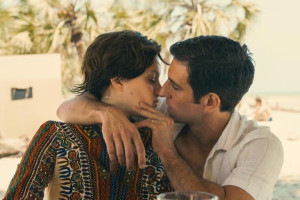
Courtesy Kino Lorber
What does work the most, though, are the performances by Civil and by Valentin Picard, a child actor of extraordinary depth and perception. His turn, as Simon, anchors the more operatic moments in excitingly assured and unexpected ways. He is preternaturally good here, holding his own against Civil and Nadia Tereskiewicz, who plays his mother. Indeed, there are times where the film flags in terms of the script being merely serviceable, yet the acting elevates it in ways that it might not truly deserve. Throw in a marvelously fun turn by Hippolyte Giradot as Max, the manager of Civil’s Mathias, and you have proof of what a director trusting his cast can do.
Two Pianos is now playing in select theaters.



Leave A Comment