

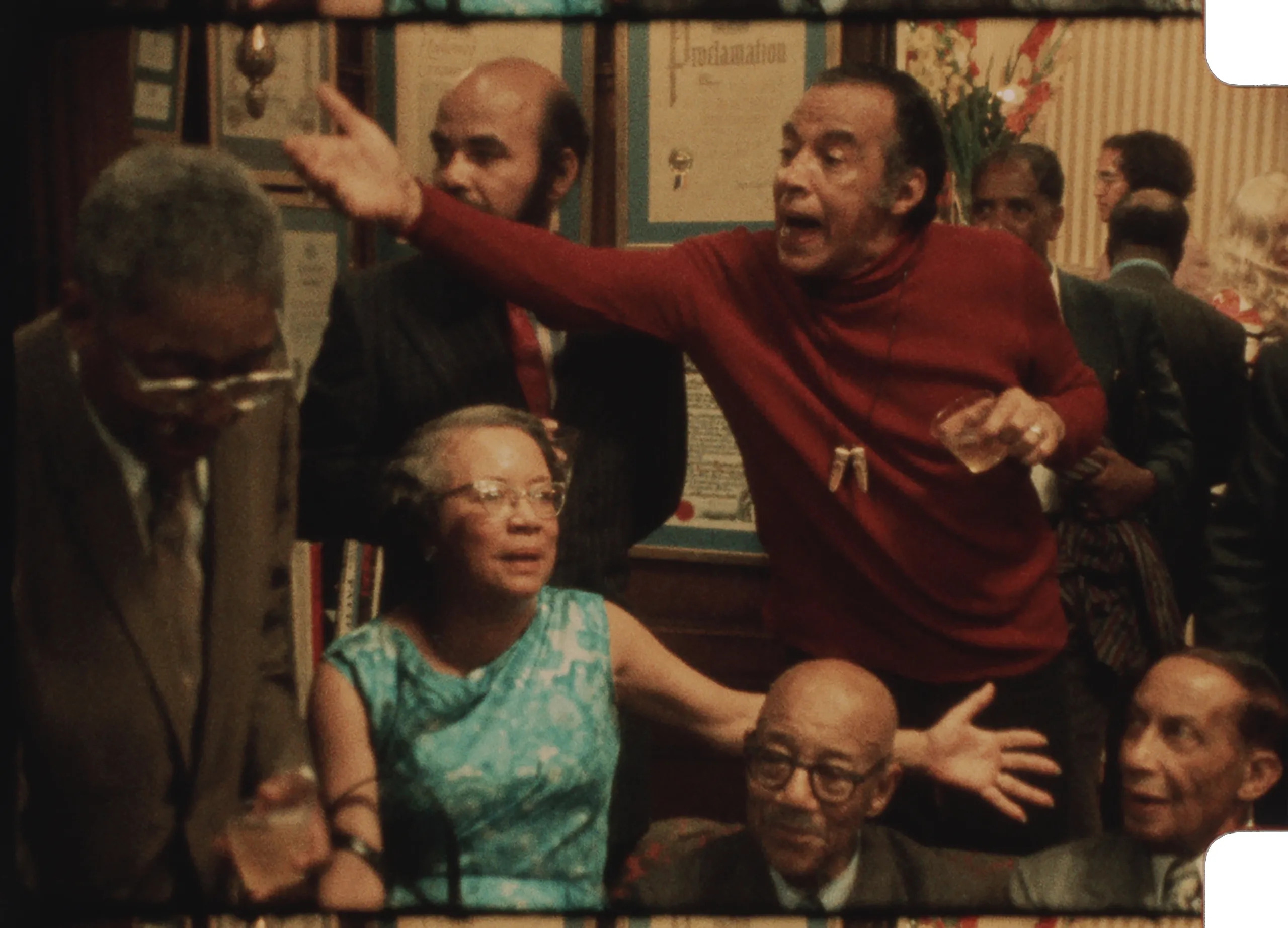

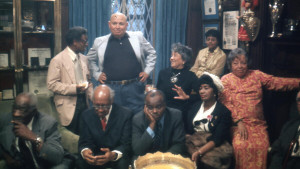
William Greaves is one of the preeminent documentarians of all time. Over the years, he would be asked if he ever had an unrealized project, and would say “Well, I shot a party at Duke’s house that I don’t know if anyone will ever see.” That was the Harlem residence of the composer, Duke Ellington, and the party was conceived and hosted by Greaves, in February of 1972. On that day, he brought together essentially all the remaining lights, political, artistic and others, still remaining from the Harlem Renaissance, and let them talk.
Courtesy Neon
The resulting footage, called Once Upon a Time in Harlem, now put together by his son, David, who had served as a camera man in 1972, and his grand daughter, Liani, who serves as a producer, has been restored, edited and fully arranged into an often-brilliant rumination on genius and struggle. These are giants in their own words, with faces and stories that need to be told and heard. While Greaves occasionally facilitated conversation, the conversations feel largely natural, as would be expected from people who had known each other, off and on, for four or five decades, despite many of them having not been in direct contact for quite some time.
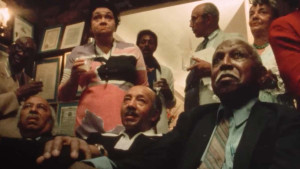
Sometimes, documentaries like this can feel like talking heads, especially to modern audiences accustomed to more of a thematic investigation of big ideas or mysteries. Yet, there is great value in recording history, with as little comment as possible, and giving space to thoughts and feelings, and to arguments. We see men and women, some of whom were born shortly after the Civil War, or who had parents that were born as slaves, talking about what their lives were like, and what brought them to their passions and places.
Courtesy Neon
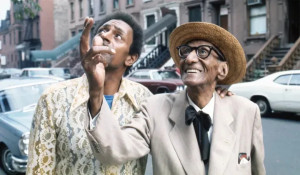
Each man and woman has a unique story, but all wound up in Harlem some ninety plus years ago, because they were driven to find a community where they could express themselves in ways they could not anywhere else within the United States. Indeed, that is one of the great points of the film. Are they Black? Negro? African? African American? Are they American?
Did they create art that was American first, and something else second, or was it the opposite, or, maybe, it both did and did not matter. By the end, you may see and feel many different points of view. Do not forget that these men and women were, or are, the founders of much of the arguments about such cultural questions to this day. And, if they were or are not, many of them knew men and women who were, such as Marcus Garvey, Booker T. Washington, W.E.B.Dubois and even Frederick Douglas. These are people whom some had as parents those that were among the first to become public figures in the post-Civil War era.
Courtesy Neon
As a student of world history and from a cultural perspective, this is an absolute cannot miss work. It may seem a simple thing to point a camera, turn on a microphone and let genius play out, but it also takes a special kind of genius to know when to shoot, and what to keep, what to do to get the words to flow. There are many musicians and poets among the speakers, but Greaves plays his role as facilitator as surely as any musician would their best instrument, creating a poetic testament that will far outlast all of us. That his son and grandchild have been able to finish the work is, and this is a word this author rarely uses, miraculous. We should all be thankful and grateful it took place and that we have finally been granted permission to experience this. Do yourself a favor, and check it out for yourself.
Once Upon a Time in Harlem is now playing in select theaters.

Leave A Comment