



Kenneth Branagh’s 2017 adaptation of the classic Agatha Christie novel Murder on the Orient Express did a capable enough job at bringing the iconic story to life for a modern age and introducing audiences to the character of detective Hercule Poirot (Kenneth Branagh) and his mustache. Although the murder mystery genre has since been upended by Rian Johnson’s deconstructionist Knives Out, Branagh retains his more classical approach to the sequel, an adaptation of Christie’s 1937 novel.
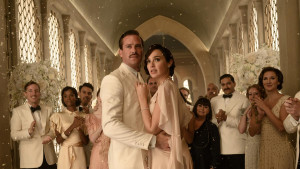
More so than Branagh’s first adaptation, Death on the Nile has all the panache and sophisticated craft to pull together an immensely entertaining whodunnit. Opening with a rather stirring black-and-white prologue that establishes the origin of Hercule Poirot — and his infamous mustache, Branagh establishes a more rooted emotional backbone for this sequel. We find Poirot on a much-needed vacation in Egypt where he finds his way aboard a wedding party for newlyweds, Linnet (Gal Gadot) and Simon (unfortunately, Armie Hammer). Aboard a river steamer with the party that includes a guest list full of ex-lovers, shady relatives and a noticeably seething former best friend to the bride, Poirot is thrust back into detective mode when someone is found murdered and it’s up to him to snuff out the killer.
Branagh’s Death on the Nile is more exciting and engaging compared to the rather stiff Orient Express. Despite the overlong set up, the first body doesn’t drop until at least the hour mark, Branagh and editor Una Ni Dhonghaile manage to keep the pace at a fine enough rhythm to not overstay its welcome.
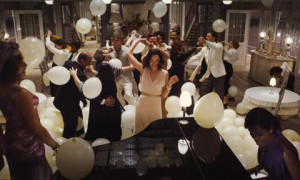
Shot in luscious 65mm, Branagh and cinematographer Haris Zambarloukos mesh old-school stylings with modern filmmaking sensibilities to winning results. A dazzling early sequence set at a blues club is one of the films biggest highlights as Branagh’s camera swoops in-and-out of the set with some impressive camera movements. It’s unfortunate that CG artificiality comes through on a few occasions, snapping you out of the reality Branagh and his production team work so effectively at establishing.

There’s a more playful tone here, and the script by Michael Green allows for some savory exchanges and tension among the many ensemble members. Green’s script has a greater sense of wit than in the previous film. Branagh also uses his ensemble much better here than in Orient Express. Despite the PR disaster that plagues this cast, they are strongly put together.
Branagh turns in one of his better recent performances, with Poirot given more humanity this time around. He and Annette Bening particularly seem game to commit to the film’s melodrama.
Gal Gadot is as luminous as ever, bringing some vulnerability to the role, even when her chemistry with her onscreen husband is more than flat. If co-star Armie Hammer’s problematic presence is off putting — the film has been sitting on the shelf since 2019 — it makes the role of the leering, smarmy gold-digging husband to Gadot’s Linnet easier to despise.
Sophie Okonedo really shines as Salome Otterbourne, a sultry blues singer who commands every frame and line given to her. Emma Mackey is a dynamic screen presence as the femme fatale-like Jacqueline de Bellefort. Surprisingly, Russell Brand is sort of terrific playing the wimpish doctor, the ex-lover to the bride. Tom Bateman gets a bigger spotlight here in an expanded role from the first film.
Whether you’ve read the classic novel and know the mystery going in, Branagh’s whodunnit is still a fun ride from beginning to end. Death on the Nile surpasses expectations set by its predecessor and manages to be a thoroughly entertaining and finely-crafted adaptation the classic story.



Branagh is a dull director
‘Death on the Nile’ was pretty good, I love such drama (solvable) and the costumes are to DIE FOR!!!
Orient Express wasn’t so good but we all know that. The trap is to watch them both lol.
I don’t like CGI. It just makes me want to take a bathroom break during that time. I still loved the film, I would probably create a party using the characters.
I may need your help. I’ve been doing research on gate io recently, and I’ve tried a lot of different things. Later, I read your article, and I think your way of writing has given me some innovative ideas, thank you very much.