


Do not believe anyone that tells you 2025 was a weak year for cinema. In many respects, 2025 was an embarrassment of riches for many different genres and styles of storytelling. We’ve been treated to a variety of cinematic treasures that reflect our current fraught political landscape, offer an escape from our current reality and important, vital pieces of cinema that speak to different cultures around the world. Even in a year that saw the potential merger of one of our classic film studios, the output from many studios in both original films and films from existing franchises or IP should be enough to warrant hope for the future of cinema. As the new year rages on, we take a look back at the greatest films of 2025 as judged by DeFacto film critics Noah Damron and Adam Ferenz.
Noah Damron’s Picks

Courtesy Warner Bros
1. One Battle After Another (d. Paul Thomas Anderson)
The film of the year might also be the film of the decade. Paul Thomas Anderson’s latest stroke of genius is a towering feat of storytelling. PTA accumulates a lifetime of film influences and directorial craft and channels them into this comedic, scarily timely and thrilling action epic. The editing is so incredibly propulsive, latching the audience onto every single beat and tiny gesture. The performances are perfectly calibrated all around. DiCaprio is channeling something both hilarious and deeply melancholic with Bob’s fear that his attempts to change the world have failed and now his only child is left to reckon with those failures. Teyana Taylor is a firecracker of screen presence and charisma. Sean Penn immediately enters the pantheon of all-time great screen villains. His Colonel Lockjaw (great name) is a horned up psychopathic predator who walks around as if he’s got a literal stick up his ass. He has the cold, calculated stare of a great white and is just as deadly. This is a film that speaks to this very moment in time, depicting a white supremacist military police state that is able to bypass bureaucracy and disappear anyone they set their sights on. Very few films are able to have their finger on the pulse of modern-day America like Anderson’s latest. Sometimes you see a film that immediately screams “classic” and One Battle After Another is certainly one of those films.

Courtesy Warner Bros
2. Sinners (d. Ryan Coogler)
Ryan Coogler’s bold, bloody and dazzling genre masterpiece is filmmaking at its highest peak. An original, soulful film that feels like a filmmaker at the height of their powers, Sinners defies genre conventions and manages to be both a satisfying horror film, and a daring insight into the battle for the soul of black art and the soul of America for that matter. There is great care and emotion behind the film, as evidenced by a mid-credits epilogue that is both moving and poetic. Michael B. Jordan, in not one but two outstanding performances, proves he is one of our very best modern film stars. If there is an award for the single best sequence of the year, the “I Lied to You” musical number that showcases different generations of blues influences, both past and present, coming together and existing in the same space, is at the very top of that list. On face value, Coogler’s film offers endless thrills, but this is an ambitious genre hybrid with real depth and a vibrant sense of place. A singular and transcendent blend of blues music, genre storytelling and historical fiction, Coogler’s epic is the kind of bold swing that further benefits the rest of modern cinema.

Courtesy Focus
3. Hamnet (d. Chloe Zhao)
An enchanting portrait of the power of art and its potential to heal, Chloe Zhao’s Hamnet is a film that fills your heart with love then rips it out of you, stomps on it, then gently places it back inside. Jessie Buckley’s fearless performance has rightfully garnered the attention of awards voters as her depiction of a mother overcome with grief is one of the more heart-wrenching feats of acting I’ve seen in years. In the wake of the death of their son Hamnet, Paul Mescal’s William Shakespeare turns to his art as the only way he knows how to grieve, creating Hamlet, his most famous work as a way to honor and tribute his fallen child. This act of keeping the name of his son alive through his art, leaving his memory imprinted on literature for eternity is depicted as one of the strongest acts of love human beings are capable of. Don’t trust anyone that doesn’t cry during the final 20 minutes. If there are only a handful of incredible films this year, Hamnet is certainly one of them.

Courtesy Warner Bros
4. Weapons (d. Zach Cregger)
Zach Cregger’s ambitious and masterfully directed follow-up to his hit 2022 sleeper Barbarian is one of the most rewarding film experiences of the year. Weapons is an impeccably crafted story that bobs and weaves in unpredictable fashion. Cregger’s ability to effortlessly blend frightening horror, comedy and melancholy within a tragic story is a feat in itself. The film’s biggest magic trick lies within the miraculous performance from deserved Oscar-nominee Amy Madigan that is both terrifying and quietly aching with pathos. This is a narratively rich, but ultimately thrilling genre movie that beams with wit and striking filmmaking. Cregger allows elements to be scary and abstract, not withholden to show-boating ideas. The images of the children fleeing their homes in the middle of the night, arms out like wings and springing into the night remains thoroughly unsettling and haunts over the remaining runtime. Cregger’s central mystery can be frustrating, but intentionally so. He withholds certain pieces of the puzzle for long periods of time, later presenting a full picture that adds up to something that didn’t have to be inevitable. Cregger uses his masterful genre sensibilities to craft a film whose horrors feel like the manifestation of American suburbia’s most piercing fears.

Courtesy Neon
5. The Life of Chuck (d. Mike Flanagan)
Mike Flanagan’s latest Stephen King adaptation about a man’s life told in reverse is one of the more unique and open-hearted films in recent years. A film whose surprises are best left to be experienced rather than spoiled, Flanagan has crafted his most emotionally profound feature film, one that feels like his ultimate thesis as a storyteller. One of the most exhilarating and life-affirming sequences of the year shows Tom Hiddleston’s titular Chuck on his way to a business meeting where he stops in front of a crowd and begins to dance to a street drummer. This sequence shows the great joy of rejoicing in the busy moment of life. Flanagan’s elegant direction brings out the well-earned sense of earnestness that only few filmmakers are capable of achieving. If ever there was a film to walk into completely blind and have your heart fully surrendered, The Life of Chuck is that film.

Courtesy Sony
6. 28 Years Later (d. Danny Boyle)
An unexpectedly tender and formally distinct cinematic treat, Danny Boyle’s return to the rage-infected wasteland of 28 Days Later is both challenging and breathtakingly humane. In my first viewing of 28 Years Later, I was transfixed by Boyle’s punk attitude, with assaulting visuals and staccato-style editing, but was struggling to grasp the more human center. The last scene also felt whiplash-inducing largely due to my own expectations. After several repeat viewings, I can safely say that Boyle and writer Alex Garland’s return to this world is so distinctly and formally experimental and deeply, profoundly moving. Like many, I was expecting to see another film in the same vein and style of 28 Days, but Years is much more of a coming-of-age film centered around a child confronting mortality and a world you don’t understand. Boyle and Garland masterfully sideswipe audience expectations with a film that confronts living in a world without your parent’s guidance; a world filled with literal swinging dick alphas and monsters of all different shadings. Yet the humanity shown by Ralph Fiennes’ Dr. Kelson is one of the most poignant examples of remembrance I’ve seen in any recent studio film. We’ve already gotten the terrific follow-up 28 Years Later: The Bone Temple, but it’s the seismic emotional power of Boyle’s film that leaves a lingering imprint.

Courtesy Netflix
7. Train Dreams (d. Clint Bentley)
Clint Bentley’s adaptation of the Dennis Johnson novel is breathtaking and shattering in equal measure. Within a 100-minute span, we feel as though we’ve lived through an entire lifetime of joy, loss, regret, pain and wonder. The camerawork feels meticulous yet spontaneous and Joel Edgerton gives the performance of his career. Special shoutout to Nathaniel Arcand who makes minutes of screen time feel substantial as does William H. Macy. I have not read the novel, but Clint Bentley does an impeccable job of showing how the world may change, as do its people, but the joys and pain of life stay exactly as they were. Train Dreams had me on the verge of tears throughout its entire second hour.

Courtesy Neon
8. It Was Just an Accident (d. Jafar Panahi)
A flat-out incredible piece of work from Iranian filmmaker Jafar Panahi. A masterfully told film handled with tonal precision with sly punctuations of humor that range from absurd to anxiety-inducing. There is a stand-out scene in the middle of the film that feels like Panahi is working out his feelings of anger and righteousness at the Iranian regime in real time. Panahi’s compositions are impeccable yet flourish in their simplicity. Mariam Afshari is crushing in the film’s stunning final confrontation. Had no clue where it was going and it closes on a stunner of a final moment.

Courtesy MTV Documentary Films
9. Predators (d. David Osit)
Director David Osit’s searing and humane documentary about the hit 2000’s series “To Catch a Predator” is the most unforgettable piece of non-fiction cinema all year. What Osit does so brilliantly is the way he is able to look at the basic concept of that show and the television culture at that time, and thoroughly peels back its layers and confronts the morality that often goes by unnoticed. Osit takes the viewer and, little by little, pokes through any predeterminations one might have about the show and its greater morality and confronts the viewer with empathy for everyone involved. This is an incredible showcase of highlighting human complexities and daring us to question our own complicity in wanting to exploit humanity at its worst. The climactic interview with “To Catch a Predator” host Chris Hansen is simply stunning. It may not have all the answers, but it’s not trying to, and only seeks to understand.

Courtesy A24
10. Eddington (d. Ari Aster)
By most regards, 2025’s most divisive film, Ari Aster’s modern western paints an absurdly vivid portrait of early Pandemic-era hysteria. Skillfully infusing western tropes and iconography into a satirical take on American division akin to Kubrick’s Dr. Strangelove, Aster’s film would prove to be eerily prescient in the months after its release. The film’s weary travelers include a rugged sheriff overcome with ego and conspiracy-brain, molding himself into something of a bum outlaw. Gung-ho and Bitcoin-obsessed deputies, a virtue-signaling liberal Mayor and a mysterious gunman who arrives on a private jet. Aster stages maskless one-on-one conversations like quickdraws, with ideologies as weapons and sequences the film through the unstable eyes of Joaquin Phoenix’s Joe. This is a confronting and stirring reflection of 2020’s America that is squirm-inducing in all the right ways.
Runners Up:

Courtesy Neon
No Other Choice (d. Park Chan-Wook)
The latest stirring work of artistry from South Korean master Park Chan-Wook, No Other Choice is yet another film that feels completely dialed into the world we live in now. Lee Byung-hun brilliantly portrays a man driven to such desperation after losing his job at a paper factory that he sets out to eliminate his competition in order to secure a much-coveted new job. The anxieties of the middle class and the severe cruelty of corporatism weigh heavily on this comedic thriller that deftly balances humanity, tragedy, laugh-out-loud comedy and nail-biting suspense. With some of the filmmaker’s most distinct compositions and experimental transitions, No Other Choice is a film that is destined to resonate for generations to come.

Courtesy Willa
The Voice of Hind Rajab (d. Kaouther Ben Hania)
A real-time portrayal of the attempted rescue of young Hind Rajab, a five-year old girl trapped in a car under fire in Gaza, The Voice of Hind Rajab is a soul-shattering and tragically urgent film. Director Kaouther Ben Hania infuses such humanity in her depiction of everyday Red Crescent volunteers who attempt everything in their power to try and save this little girl from unspeakable atrocities. As Gaza continues to be hit with bomb after bomb and the attempted genocide of the Palestinian people stills rages on, The Voice of Hind Rajab serves as a powerful and important reminder of what cinema is capable of.

Courtesy A24
Marty Supreme (d. Josh Safdie)
Josh Safdie’s first solo film since splitting with his brother, director Benny Safdie, Marty Supreme is an exhilarating odyssey of the destructive pursuit of greatness. Starring Timothee Chalamet in the role that will likely result in his first Oscar win, Safdie’s portrait of an egotistical table tennis player striving to become the best in the world is an incredibly thrilling piece of cinema. Chalamet disappears as Marty Mauser, commanding every extravagant frame composed by Safdie and cinematographer Darius Kondji. Like Marty, the film is in constant chase of greatness that when it gets there, it doesn’t exactly know what to do. Yet the experience rarely falters. In the future, I would like to see Safdie switch up the formula he’s been operating in with films such as this, Uncut Gems and Good Time, but there is no denying the electrifying trip that is Marty Supreme.
Courtesy Focus
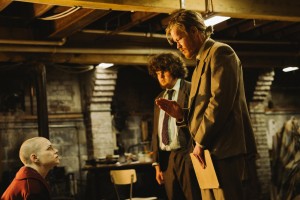
Bugonia (d. Yorgos Lanthimos)
After his weakest film in Kinds of Kindness, it’s a relief that Greek film god Yorgos Lanthimos is able to continuously surprise with this claustrophobic, yet thoroughly cinematic thriller. Emma Stone proves that there is nothing she cannot accomplish as an actor. What a miraculous performance. This might also be my favorite Jesse Plemons role. I love how bleak, yet simultaneously thrilling this gets, while retaining a sense of humanity in its characterizations. You’re never quite sure where the ending is going to go and by the time you feel as though you’ve figured it out, Yorgos pulls the rug out from under the audience.

Courtesy Netflix
Frankenstein (d. Guillermo del Toro)
A dazzling and equally heart-breaking epic. Nearly all of Del Toro’s films have centered around the fraught relationship between fathers and sons and children finding some semblance of hope or acceptance in a brutal reality which makes Mary Shelley’s classic text the perfect outlet for Del Toro’s storytelling. Jacob Elordi is flat-out extraordinary as The Creature, infusing both pathos and brutality to the character. The work Elordi does with just his eyes is simply captivating. Mia Goth was born to be in a Del Toro film and her wardrobe alone demands to be seen on the big screen. Just a gorgeous film overflowing with heart and staggering craft.
Honorable Mentions:
Avatar: Fire and Ash (d. James Cameron)
Blue Moon (d. Richard Linklater)
Jimmy and Stiggs (d. Joe Begos)
Keeper (d. Osgood Perkins)
On Swift Horses (d. Daniel Minahan)
One of Them Days (d. Lawrence Lamont)
The Perfect Neighbor (d. Geeta Gandbhir)
Sirat (d. Oliver Laxe)
Sorry, Baby (d. Eva Victor)
Superman (d. James Gunn)
Warfare (d. Alex Garland & Ray Mendoza)
Adam Ferenz’s Picks

Courtesy Warner Bros
1. One Battle After Another (d. Paul Thomas Anderson)
The best film of the year and one of the best films in Paul Thomas Anderson’s long career, this loose adaptation of Thomas Pynchon’s Vineland is a rollercoaster throwback that is so well crafted as to beggar belief. This is a film that remembers what motion and showing, rather than telling, are all about. Every member of the cast inhabits their roles in such a way that you cannot envision anyone else playing these parts. It is funny, dramatic, exciting and thought provoking, often all at once.
Courtesy Focus
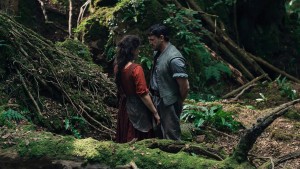
2. Hamnet (d. Chloe Zhao)
Jessie Buckley should win two Oscars for this film. Based on the novel of the same name, this tale of the marriage of Shakespeare to Agnes, and how they raised and lost their family, is one of the most emotionally wrenching works to come along in a long time. Every performance is near perfect, and the craft and artistry on display are exquisite. This is not the only film I will recommend, from this year’s list, that one bring a tissue.
Courtesy Neon
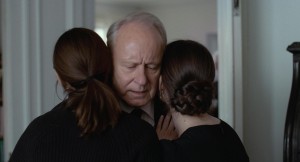
3. Sentimental Value (d. Joachim Trier)
Joachim Trier’s latest film is a triumph about the ways in which trauma, however unintentional, feels both profound and even generational and how very difficult it is to even acknowledge it. With a cast featuring several of the best in the world, including Renate Reinsve and Stellan Skarsgard, this story of an actress and her director father working toward an understanding is a quietly great film that grows on you because of how it lingers long after you are finished watching it.

Courtesy Netflix
4. Train Dreams (d. Clint Bentley)
A quiet film of immense gravity, this film tells the story of a logger and how his life unfolded from the late 19th century through to the mid 20th. With the best work Joel Edgerton has ever done, and blessed by the most gorgeous photography of the year, this film-based on the short novel by Dennis Johnson-and from the team that wrote 2024’s Sing Sing, is one of the most triumphant tone poems in the last five years of cinema.

Courtesy Neon
5. No Other Choice (d. Park Chan-Wook)
Park-Chan Wook is the best director South Korea has ever seen, and it is not even close. He is one of those talents that can do it all, and usually does. This is with each and every film, from his Vengeance trilogy through to this latest masterwork about a displaced paper-factory supervisor who decides to kill the competition in order to secure a new position. With all the style and depth Wook has come to be renowned for, No Other Choice treads a thin line between celebrating and simply demonstrating, truly despicable acts. Lee Byung-hun is sensational as the killer. Westlake has rarely been adapted as well.

Courtesy A24
6. Marty Supreme (d. Josh Safdie)
Josh Safdie’s hyperkinetic character drama about an egoist table tennis player features a career defining performance by Timothee Chalamet as Marty Mauser. Along with Odessa A’zion, he forms one of the years most dynamic duos. Marty is a character with charm and arrogance in equal measure. He is not unlike the lead of Catch Me If You Can. You will both love and loathe him. This is not Forrest Gump, because it is more about the arc than grand moments. It is easily one of the most unexpected joys of the year.

Courtesy Neon
7. It Was Just an Accident (d. Jafar Panahi)
Jafar Panahi’s newest masterpiece features perhaps the years single best scene, and a bunch of tonal shifts that could be off-putting to some viewers. Yet, for those whom it works, this is a film with a rare power to scare you and make you laugh, in near equal measure. Taking on current and long running issues in his home country of Iran, Panahi has crafted a film of rare power.

Courtesy Neon
8. The Life of Chuck (d. Mike Flanagan)
The best King adaptation in years, and the best of Mike Flannagan’s non-television work, this is a film that may touch your soul. It is about damn near everything and is as joyous and heart-wrenching as life itself. This is a film about ideas, and with very subtle yet powerful messages.

Courtesy Searchlight
9. Is This Thing On? (d. Bradley Cooper)
Bradley Cooper’s best film is also the best work of Will Arnett’s film career, and features a standout Laura Dern. This story, drawn from the life of John Bishop, may on the surface feel overly familiar. The disintegrating marriage material could drive some to dismiss this, as will the emerging standup sections. Yet, those scenes have an authenticity to them that many will not grasp. It is a film with, perhaps, a limited audience, and yet it is still one of the great film achievements of the year.

Courtesy Willa
10. The Voice of Hind Rajab (d. Kaouther Ben Hania)
A brilliant docu-drama that is nearly perfect in execution and tone. To say more than that this film uses the actual calls made when the five year old girl Hind Rajab called for help one brutal day in Gaza, would be to spoil the power of the viewing. Go in cold. Bring a tissue.
Runners Up:

Courtesy Lionsgate
Fairyland (d. Andrew Durham)
Based on a memoir, this story of a gay man moving to San Francisco in the 1970s, features Scoot McNairy in the best performance of his career. The film is alternately touching and hilarious, with a lot of truths contained therein. The third act is worth the price of admission.

Courtesy Warner Bros
Sinners (d. Ryan Coogler)
Ryan Coogler has done something special, here. He did not so much reinvent horror as he grew it up. This is a film that works easily well as horror and crime picture. It is a film that plays on themes of anger, community, race and culture. It may cause some to become angry. That is fine. Great art does that, sometimes.

Courtesy Netflix
Nouvelle Vague (d. Richard Linklater)
Richard Linklater did two great films this year, but only one of them featured Zoey Deutch, here playing Jean Seberg in one of the performances of the decade. More than a recreation of the French New Wave, this film is a love letter and an embodiment of that moment in time.

Courtesy Neon
The Secret Agent (d. Kleber Mendonça Filho)
A 70s film made in the modern era. This is a film that may not fit together perfectly, but it is the imperfections which make it great. Featuring a knockout supporting cast and a smart script, this film set in the waning days of the military dictatorship in Brazil, is an epic that proves the large within the every day.

Courtesy Mubi
Sound of Falling (d. Mascha Schilinski)
A film that is less about the story and plot, than it is about a sense of time, place, character and emotion. It is cinema as sensory experience, and something that is very special indeed. There are touches of classic German cinema, but also hints of Lynch and Bergman.
Honorable Mentions:
The Alabama Solution
The Baltimorons
Blue Moon
Bugonia
Caught By the Tides
Highest 2 Lowest
Left-Handed Girl
Little Amelie
Sirat
Universal Language



Great lists!
Some very good choices by both Noah and Adam ( except for the propaganda film)
Fantastic stuff here, gentlemen!