


2002, if nothing else, was a stellar year for genre reinvention. While audiences were lining up in doves for fantasy epics and superheroes way back in 2002 with The Lord of the Rings: The Two Towers, Harry Potter and the Chamber of Secrets, and Spider-Man, there were many other genre-driven films that finally found their audience in the years to come. All around, 2002 was a stunning year for cinema, a year that offered so many great memories of many titles that live in our memories and subconscious because of how the filmmaker’s transcended genre. These artists did it in very effective and humanistic way. Here are the following 16 haunting films, which I haven’t been able to get out of my mind since the first time I saw them, which was 20 years ago. Each of these films holds great staying power and plays extremely well on repeat viewings. Here are the best films of 2002:

1. Gangs of New York (d. Martin Scorsese)
Years later this film is still being championed today. Martin Scorsese’s gigantic historical epic combines great passion, rich history, and bold vision that captures a portrait of American history that many filmmakers have failed to go. With its astonishing directing, stunning art-direction, elegant camera movements, along with an uncanny and masterful performance by Daniel-Day Lewis, Gangs of New York is Scorsese’s sprawling magnum opus that advances the epic genre that unfolds with Scorsese’s trademark stylistic touches, from whip pans to elegant tracking shots. What s truly remarkable about this picture is how bold and ambitious the film is. To this date it remains Scorsese’s most ambitious.

2. Adaptation. (d. Spike Jonze)
An audacious mishmash of satire, character study, self-indulgence, and the creative process, director Spike Jonze’s and writer Charlie Kaufman’s adaptation is nothing short of brilliant with its meta-adaptation of Susan Orlean’s non-fiction book The Orchid Thief. It’s a crazy film, so crazy that Charlie Kaufman writes himself into his own story as an insecure screenwriter, played by Nicholas Cage in one of his most skillful performances of his career. Cage also plays Donald Kaufman (who is credited as co-writer in Adaptation), a fictional character who is inspired by Charlie’s screenwriting, and ends up taking screening classes to develop a formulaic thriller. Charlie, on the other hand, is struggling to adapt Orlean’s screenwriting, which takes the film on a highly inventive journey filled with meta genius and equal amounts of pure human pathos. Structurally and thematically, Adaptation is an essential moment of its time that’s still innovative today. With a highlight performance by Nicholas Cage, as well as layered performances by both Meryl Streep, who plays Susan Orlean, and Chris Cooper, who plays Orlean’s subject, a orchid conversationalist and poacher named John Laroche.
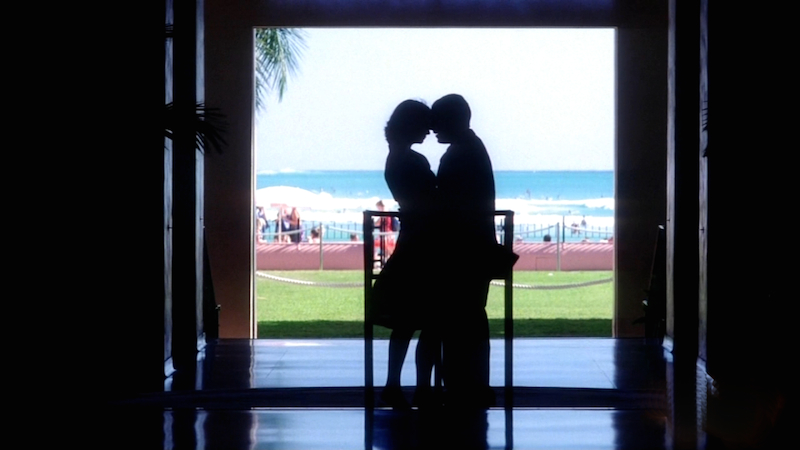
3. Punch-Drunk Love (d. Paul Thomas Anderson)
Oddly charming and whimsical with its off-beat humor and a melancholic exploration of loneliness being empowered by the power of love, P.T. Anderson’s follow-up to his sweeping 1999 masterpiece, Magnolia, didn’t disappoint. P.T. Anderson once again delivered a artful portrait of an outsider in Punch-Drunk Love, which feels like an abandoned subplot that didn’t make it into the final draft of Magnolia. The film explores the anguish and isolation of a warehouse business owner named Barry Egan (Adam Sandler), who deals in a supply chain of plungers, holds a lot of anger issues, and is quick tempered from the constant harassment that he still endures from his older sisters.
In his most complex and sympatric performance of his career, Anderson weaves some affecting psychological and emotional details into an energetic and vibrant film topped by Sandler. Anderson was inspired by an article he read about a business owner who found a fine-print loophole in Healthy Choice’s frequent flyer mile campaign that encouraged him to spend over $3000 on pudding that led to one million frequent-flier miles, which is basically free flights for life. With a bold stylistic visual style that consists of mostly hues of blue and a brisk pace of 95 minutes, this is easily one of P.T. Anderson’s most enjoyable films of his career. It’s also one of his most tender, as Barry is a loner, who is quick-tempered, lashes out at people, and very weak when pressed with confrontation–including the events where Barry calls a sex-phone line number during a lonely night, only to become a victim of distortion and threats. But Barry ends up becoming a transformed person once he encounters Lena (Emily Watson), a co-worker of one of his sisters, with whom he ends up developing a relationship that enables him to become a confident and more secure person. Punch-Drunk Love unravels as a beautiful ode to the need for human connection as it gains sheer emotional resonance and remains one of P.T. Anderson’s most joyful films.

4. Y Tu Mama Tambien (d. Alfonso Cuarón)
Just as Cuarón returned to Mexico with “Roma” after two bigger Hollywood productions (Children of Men, Gravity), he did this as well with the 2002 released film Y Tu Mama Tambien that came right after Great Expectations (1998) and A Little Princess (1995). Clearly Cuarón has personal things to say about his roots. The film was released Unrated, and it’s Cuarón’s most sensual and erotic film of his career. While explicit with full frontal nudity, the film is far from being pornographic or exploitative. The film is very thoughtful and honesty, thanks to the casting of Gabriel Garcia Bernal and Deigo Luna, who both generated their careers here with some fearless and honest performances, but it was Maribel Verdu as Luisa that truly drives the theme and material into a level of maturity, thoughtfulness, and grace. She truly elevates every scene as she teases, drills, observes, and gives the young men lectures about love, dating, intimacy, and romance that they are still novice to. She follows the tropes of the “wiser and sexier older woman”, that Hollywood has drained from us, but here Cuarón elevated that archetype into a character that is sophisticated, complex, gorgeous, and conflicted. Overall, the film is a richly made and engaging road movie that offers great laughs, warmth, and melancholy.
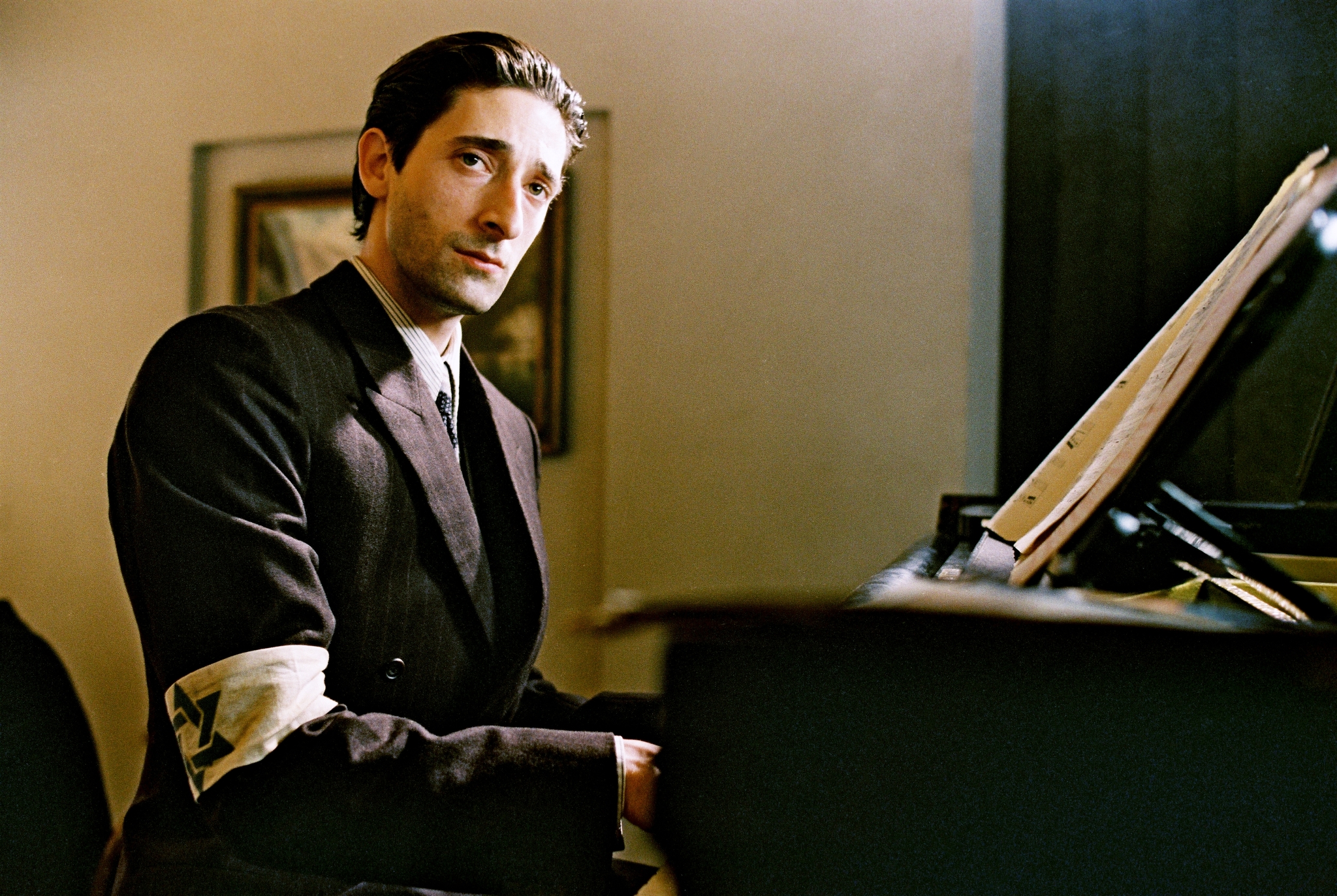
5. The Pianist (d. Roman Polanski)
Revisiting Spielberg’s Schindler’s List should lead everyone back revisiting this masterpiece, and with neo-Nazism and fascism rising around the world, and in America this film should be prioritized viewing in history classes. Roman Polanski’s The Pianist is a triumph of hope and survival. A film about courage, determination, and agony during the holocaust that never once caves into cheap sentiment or manipulation, Polanski’s approach here is quite gripping and harrowing throughout. Adrien Brody’s performance here is also bold and expressionist, a truly haunting and humane work of art.

6. Far from Heaven (d. Todd Haynes)
Todd Hayne’s Far from Heaven is more than a homage to Douglas Sirk, it’s a miraculous reinvention that transcends genre. It’s a ravishing and highly engaging masterpiece that elevates itself into something very authentic with its artifice. In a lesser director’s hands this material could have come off as a pale imitation of Sirk’s, Far from Heaven becomes a cathartic and somber experience. One that examines a resonant commentary about acceptance, class, gender, repression, and prejudice. The film is Hayne’s greatest film in his impressive oeuvre, and it’s a crime how this film wasn’t nominated for more Oscars.
The script, the score by Elmer Bernstein, the cinematography, the colors, the décor, exquisite direction are all top-notch, along with a first-rate performance by Julianne Moore who delivers the performance of her career. The supporting cast is also incredible, especially Dennis Quaid and Dennis Haysbert who both delivers vulnerable and complex performances. Hayne’s deserves great credit for dissecting the façade of 50s America as this film explores individuals exploring uncharted waters about love, identity, and personal freedom. Like a fine wine and as time goes on, Far from Heaven is easily one of the finest films from the 2000s.

7. Talk to Her (d. Pedro Almodovar)
I revisited Pedro Almodovar’s visually sublime and highly intoxicating 2002 film Talk to Her recently just after Parallel Mothers and wow its indeed a masterpiece that truly holds up. Every film buff and lover of cinema needs to watch this film. Almodovar was nominated for Best Director and Almodovar Best Original Screenplay that year. The film is a very intimate, layered, and all around a very thoughtful one that covers many issues about love, friendship, desire, and the line between love and obsession. All around it’s an achingly absorbing film, filled with so many pathos and vibrant colors of deep reds, purples, oranges, and greens. The film is about a male nurse named Benigno (Javier Camara) who is deeply infatuated with a dancer Alicia after he discovers her dancing in a window across the street from his mother’s apartment. Once Alicia is deeply wounded from an injury that leaves her in a coma, Bengino ends up being her nurse. The film also chronicles a woman bullfighter who is also injured and placed into a coma after a bullfight goes awry, she is brought to the same facility, her boyfriend, writer Marco (Dario Grandinetti) ends up building a strong friendship with Bengino where both men exchange their feelings, longings, and emotions they hold for the women they love. The film casts a melancholic spell that remains endless well after the credits have rolled. One of the most delicately rendered and compassionate on-screen odes to longing ever created.
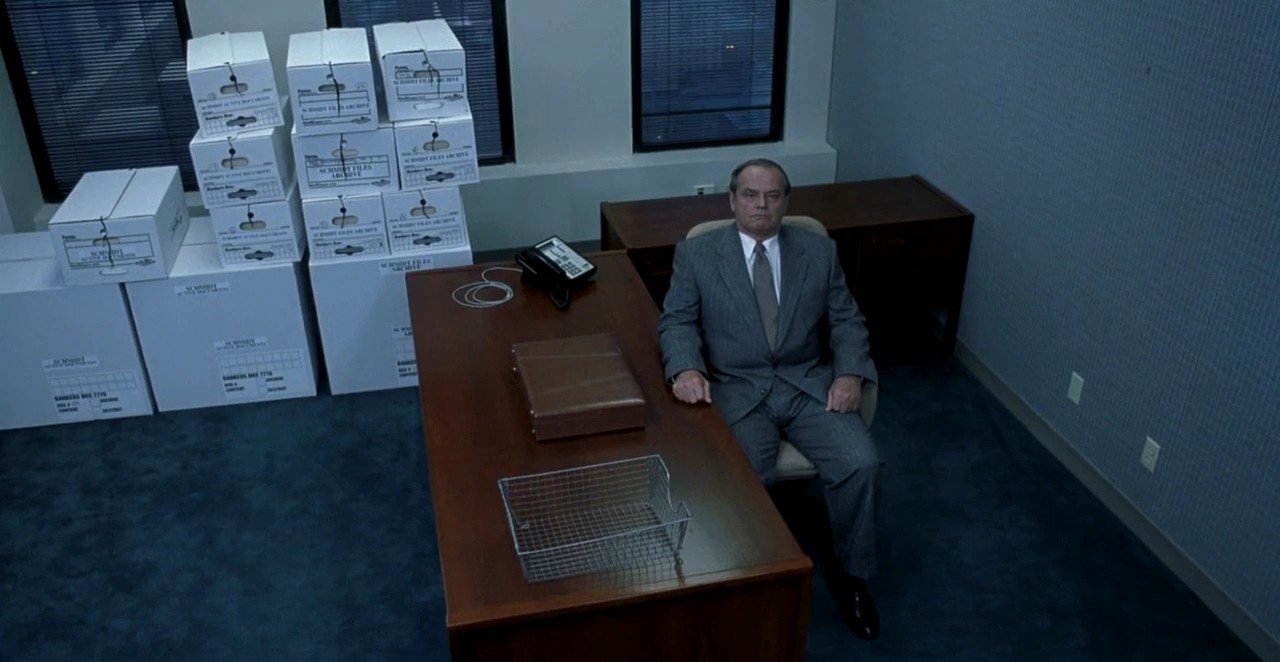
8. About Schmidt (d. Alexander Payne)
Part character study, part road movie, part comedy, and always engaging, Alexender Payne’s (Sideways, The Descendants, Election) About Schmidt-which is based on a novel by Louis Begley and co-written by Jim Taylor—is a poignant film about self-discovery and other existential questions about the true values of life. Even if the main protagonist is deeply flawed and selfish, which features Jack Nicholson as Warren Schmidt, a recent retiree and widower who sets out on a road trip to sway his daughter (Hope Davis) from marrying a waterbed salesman. We spend nearly every scene and frame with Warren as he discovers deeper depths on his journey, which features Nicholson’s most nuanced and somber performance of his career. The very final scene will always remain deeply moving. This is truly a humanistic piece of cinema that will resonate with you for years upon viewing.

9. 25th Hour (d. Spike Lee)
Galvanizing genius Spike Lee’s 25th Hour remains one of his greatest and most underrated accomplishments, exploring a post-9/11 New York City as its backdrop; it’s based on David Benioff’s bestselling novel that he also wrote the brilliant screenplay for. The film’s protagonist is one of Lee’s most complex and fascinating, by presenting Monty (Edward Norton), a deeply flawed character who only has a day left before he’s sent off to prison to serve a 7-year prison sentence in upstate New York for drug dealing. This film is far from a pity party, it’s a contemplative and complex film that holds a lot of intellectual discourse about agony and regret as Spike Lee delivers one of the most gripping films of his career. As always, Spike Lee doesn’t sugarcoat things and presents repressed anger that many of us carry with us in our loathing and prejudices against our friends, family, loved ones, and hometown. Edward Norton delivers his most conflicted performance of his career while surrounded by a first-rate supporting cast led by Barry Pepper, Rosario Dawson, Brian Cox, Anna Paquin, and the late Phillip Seymour Hoffman, who are all given dramatic moments that also take center stage. The result is a ferocious film, but also a deeply personal ode to NYC and a powerful portrait of atonement.
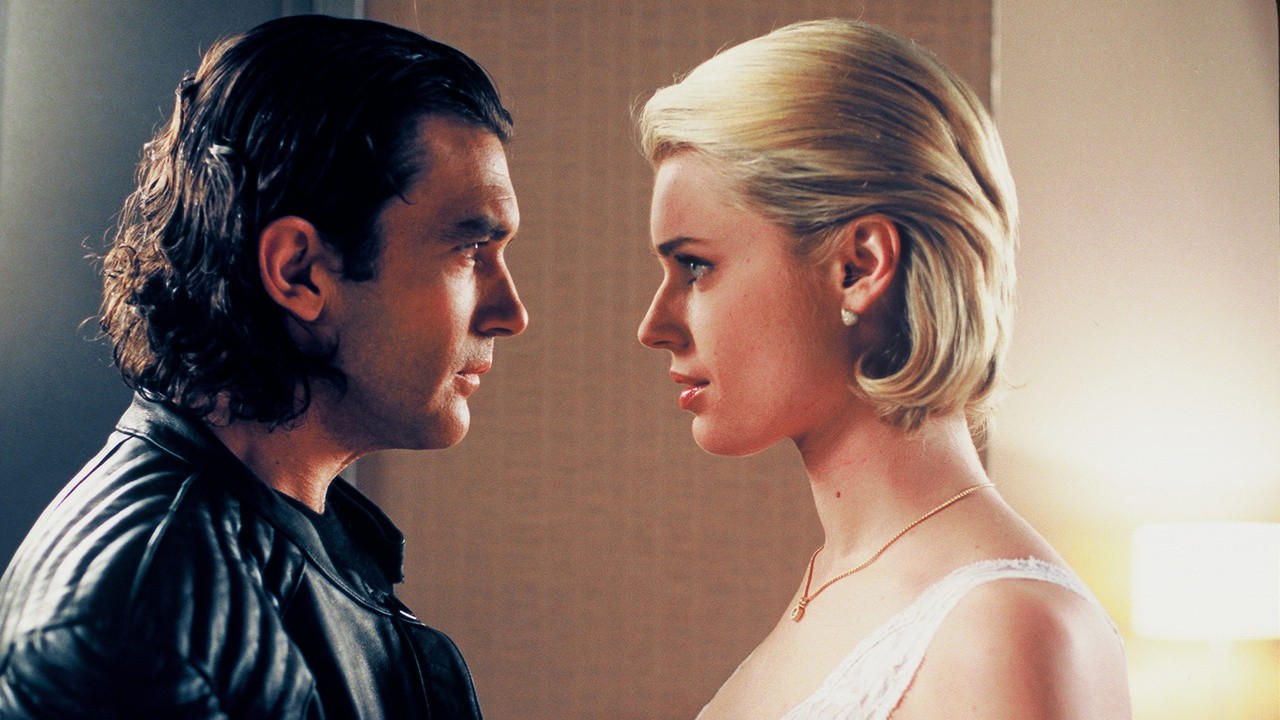
10. Femme Fatale (d. Brian De Palma)
One of Brian De Palma’s most underrated films is also one of his most elegant. It is absurdist, thrilling, and a deconstructionist work of art. The film is a tribute to film noir while also being a self-parody of it. It finds a balance between the ridiculous and self-aware, and the end result is a visually inventive film about mistaken identity, film noir tropes, duality, seduction, and the dreamlike quality cinema holds. It casts a line between what’s real and what isn’t, but in the end, De Palma is celebrating all the artifice of filmmaking. Its technical achievements and set pieces remain breathtaking, as De Palma seamlessly flows the film together with pristine pacing and impeccable craftmanship. Born to play the role of a femme fatale, Rebecca Romijn, as the movie’s center, brings a seductive performance where De Palma allows her to encompass her archetype through a brilliant mix of anxiety and allure, while Antonio Banderas is lured into the web. It’s one of the greatest modern noir films of our era, and more than just another generic genre exercise, it’s a dreamlike experience of cinematic divinity.
Runners-Up in Alphabetical Order
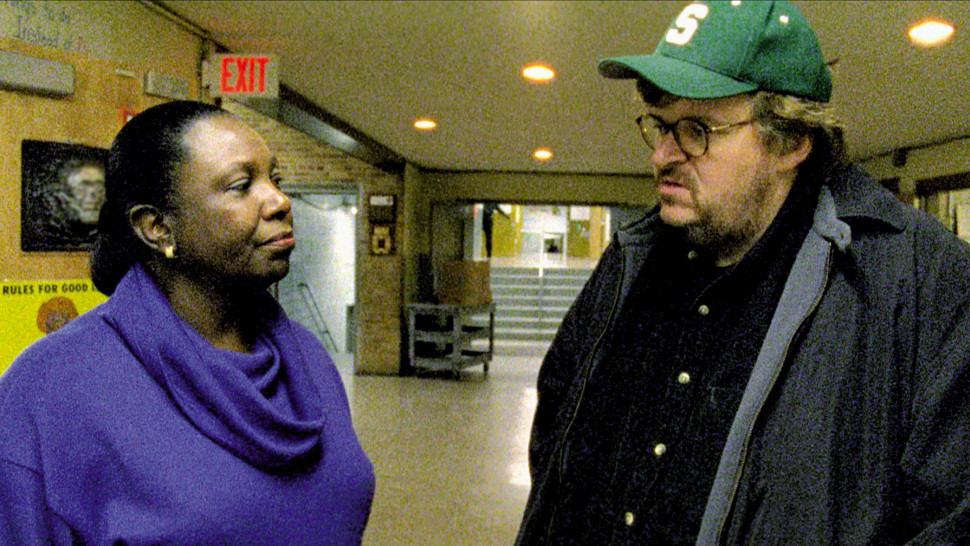
Bowling for Columbine (d. Michael Moore)
One of the greatest documentaries in cinematic history came from polemist and at one time controversial documentary filmmaker Michael Moore. Yet the issues and questions Moore once explored 20 years have sadly reached a level of normalization and the demoralization, he examines society has sadly become even more desensitized to. Bowling for Columbine still remains even more tragic as very little to no progress has been made in preventing and stopping school shootings as nation still lives in a culture of fear and consumption.
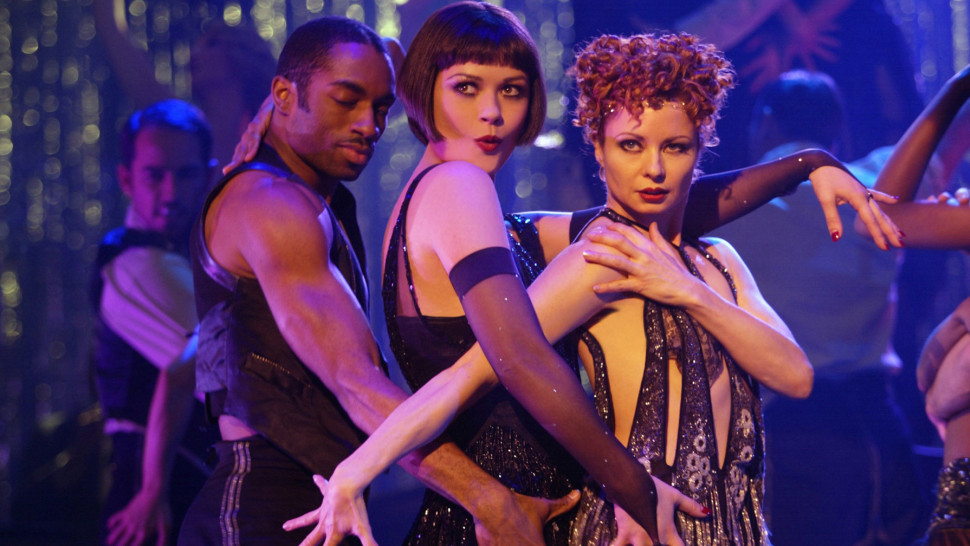
Chicago (d. Rob Marshall)
After winning the Best Picture Oscar at the 2003 Academy Awards, Chicago doesn’t seem quite as celebrated or as discussed as it was upon its release. Then again, what really is anymore unless its Marvel, and a few other usual suspects that have new films out in any given week. So, does it still deserve some praise? Absolutely, it does. Director Rob Marshall pays great tribute to Bob Fosse’s classic musical with a series of great energy and chutzpah, and it becomes clear the entire film is sensational with great musical sequences and astonishing dance choreography. With stunning performances by Renee Zellweger, Catherine Zeta-Jones, Richard Gere, Queen Latifah, and John C. Reilly, who razzle dazzle with their infamy, Chicago is an outright great musical.
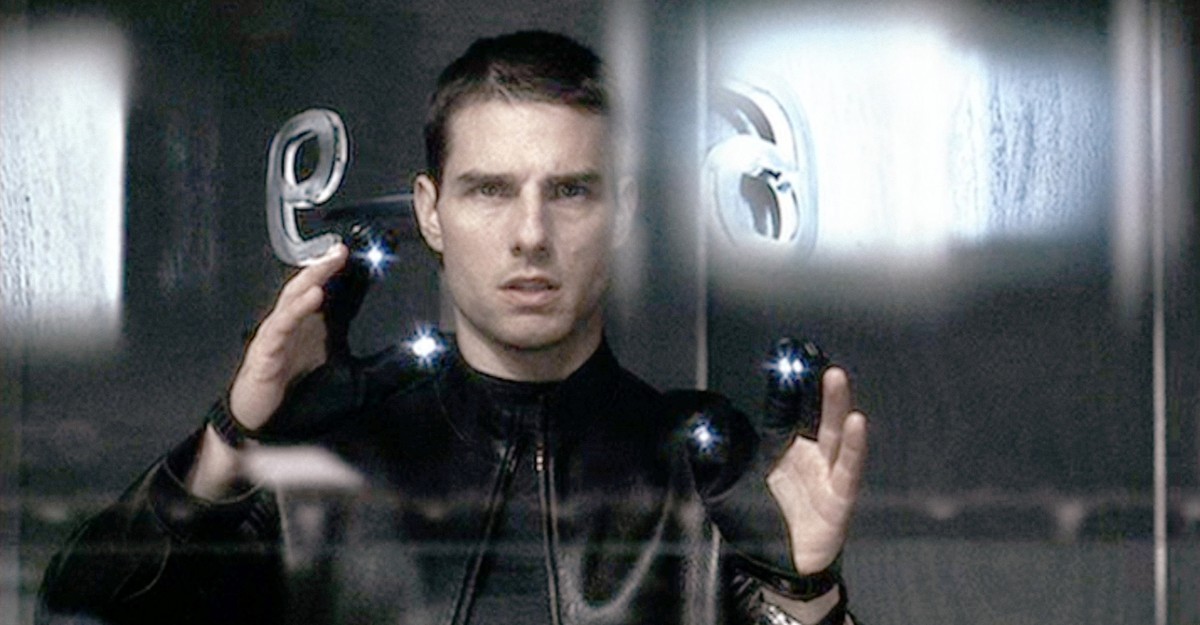
Minority Report (d. Steven Spielberg)
Another thrilling, high-minded sci-fi landmark from Steven Spielberg, based upon the short story by Philip K. Dick as the film become prophetic on many levels on the draconian abuse of the surveillance tech state where everyone is under constant surveillance as murders can be prevented before they actually occur. Spielberg renders the material with visual elegance and exceptional set-pieces with exhilarating results. One of Spielberg’s most accomplished works so far of the 21st century which was also released the same as Catch Me If You Can which is also a very compelling work.

Morvern Callar (d. Lynne Ramsay)
Lynne Ramsay’s sophomore film and follow-up to her artfully made, Ratcatcher is every bit as poetic and observational. It’s also one of her greatest accomplishments. It’s not easy to comprehend the title character’s exact motivations and decisions she makes which is played with raw and subtle emotion by Samantha Morton, but Ramsey’s skills, elegiac rhythms make it elliptical on every level. It’s observation, hallucinatory, and involving. Ramsay pulls a very layered character study and doesn’t deliver all the answers in how people endure grief. All around, it’s a very liberating experience, and part of the greatness of the film is just how mesmerizing the imagery and sensory experience is that plays even greater on repeat viewings.
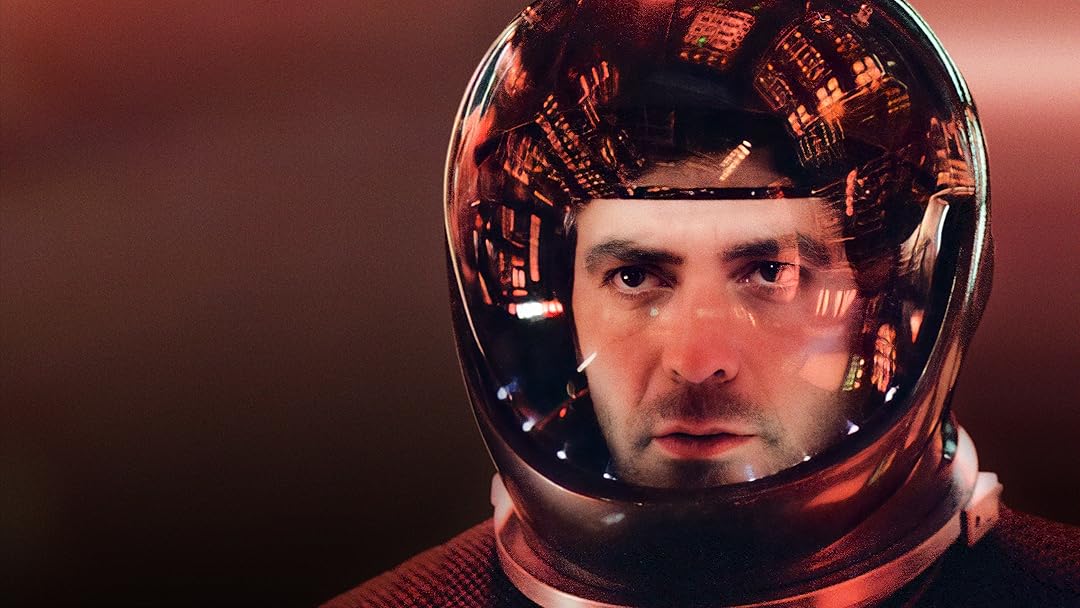
Solaris (d. Steven Soderbergh)
It is baffling to me how Steven Soderbergh’s 2002 Solaris isn’t as celebrated as it should be. For starters, the film is not a remake of Tarkovsky’s 1972 masterpiece, it’s just Soderbergh’s retelling of Stanisław Lem’s novel. Upon its release in the fall of 2002, the film was very polarized by critics and audiences, mainly because it wasn’t a spectacle piece like The Martin, or Aliens, and it’s more of a mood piece. To this date I still feel the film has never received the proper care or attention that it deserves. The film is so ethereal, solemn, and metaphysical on so many deep levels. The editing, production design, directing, and performances are all impeccable. Especially George Clooney who delivers a sophisticated, tormented, and vulnerable performance as Kris Kelvin, a psychiatrist who is sent on a space mission to find answers on a stranded spacecraft, only to find a bizarre encounter with Rheya (Natasha McElhone), who happens to either be a spirit or some other supernatural variation of his dead ex-wife. Artistically and spiritually, Solaris astonishes on nearly every level. It’s easily one of Soderbergh’s most criminally undervalued and beauteous films he’s ever crafted. Just like almost all of his films, Solaris becomes a highly personal and noble labor of love. If you prefer high-minded and intellectual sci-fi, then this one is for you. Cliff Martinez woozy score is a highlight of the decade. Co-Starring Viola Davis and Jeremy Davies.
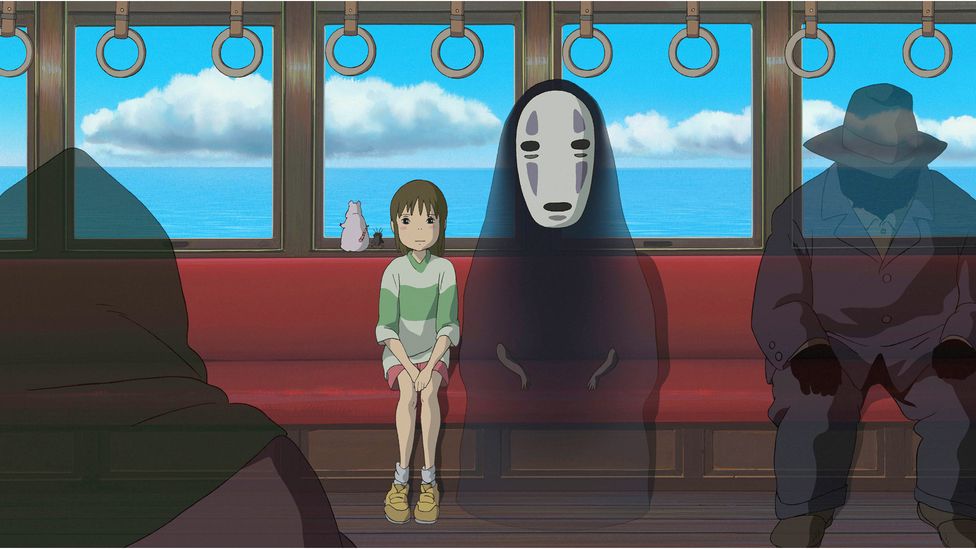
Spirited Away (d. Hayau Miyazaki)
Japanese animated director Hayao Miyazaki (Princess Mononoke, Castle in the Sky) has been one of the most celebrated animated directors now for decades, and he delivered several uncannily breathtaking fantasy films–certainly an iconic auteur of our time and Spirited Away marked another high point right after his greatest achievement of Princess Mononoke. Surreal and fantastical, it has a simple Alice in Wonderland style premise about a young girl entering a fantastical world, but this time it’s made of spirits, dragons, witches, and creatures that all work in a bathhouse. It was a huge critical success upon its US release in 2002, even picking up the Oscar for Best Animated film. The film holds so many breathtaking images and sequences, crossing between reality and dreams, while all reaching strong character depth and self-discovery in this remarkable journey that holds many great themes on consumption, pollution, and supernaturalism.
Honorable Mention in Alphabetical order
13 Conversations About One Thing (d. Jill Sprecher)
Atanarjuat: The Fast Runer (d. Zacharias Kunuk)
Auto Focus (d. Paul Schrader)
Confessions of a Dangerous Mind (d. George Clooney)
Heaven (d. Tom Twyker)
Lovely & Amazing (d. Nicole Holofcener)
Monsoon Wedding (d. Mina Nair)
The Quiet American (d. Phillip Noyce)
Roger Dodger (d. Dylan Kidd)
Signs (d. M. Night Shyamalan)
Unfaithful (d. Adrian Lyne)
Other notable films: 8 Mile, 24 Hour Party People, About a Boy, All or Nothing, Antoine Fisher, Ararat, The Bourne Identity, Catch Me If You Can, Frida, Harry Potter and the Prisoner of Azkaban, The Hours, Igby Goes Down, Insomnia, The Kid Stay’s in the Picture, Late Marriage, The Lord of the Rings: The Two Towers, My Big Fat Greek Wedding, Nicholas Nickleby, One Hour Photo, Panic Room, Personal Velocity, Rabbit-Proof Fence, The Ring, The Rules of Attraction, Russian Ark, Secretary, Sex and Lucia, Possession (2002) Skins, The Son, Spider-Man, A Son’s Room, Sunshine State, White Oleander
Note– 28 Days Later, Bus 174, Cabin Fever, City of God, Gerry, Irreversible, Lilya 4-Ever, The Man on a Train, Raising Victor Vargas, Spider, Ten, Winged Migration were included in my 2003 list.
Twilight Samurai would be included in my 2004 list due to the North American theatrical release.

I’m loving these retrospectives. They’re taking me back and reminding me of films I’ve loved. They’re also subtly reminding me of films that I may have over looked, and films that deserve another viewing. 2002 was a strong year for cinema and there is a few honerable mentions and a couple in Defactos top 10 I just added to my watch list.
No Two Towers or The Hours? Boo
It WAS an amazing year for film! Wow. So many of those I could watch over and over. And the others are just so special in my memories. Thanks.
Here’s my list, Rob.
1. Skins
2. The Good Girl
3. 25th Hour
4. Adaptation
5. About Schmidt
6. Lord of the Rings: The Two Towers
7. The Quiet American
8. Far From Heaven
9. Happy Times
10. All or Nothing
HM: Gangs of New York, One Hour Photo, Punch Drunk Love, Signs, Spirited Away
Great list! Mine would be
1. Adaptation.
2. Punch-Drunk Love
3. 25th Hour
4. Gangs of New York
5. Far from Heaven
6. Talk to Her
7. Bowling for Columbine
8. Two Towers
9. About Schmidt
10. Spirited Away
Excellent list!!
The 2002 Hall of Fame for me would be: Far From Heaven; Talk To Her; Atanarjuat; Chicago; The Pianist; The Hours; The Son; The Magdalene Sisters; The Quiet American; Gangs of New York; Hero; Spider; 8 Women; Spellbound; City of God; Daniel Deronda; Road to Perdition; Whale Rider; In My Skin; Nicholas Nickleby; LOTR: The Two Towers
Note: FAR FROM HEAVEN is my #1 film of the entire decade. In any other years Almodovar’s TALK TO HER, the musical CHICAGO, the Holocaust film THE PIANIST and the drama THE HOURS would be topping any given year.
Thanks for the walk down memory lane! So many great films that year.
Never cared for,Adaptation. The 25th Hour remains one of spike lee’s underrated films. But the real sleeper of 2002 was Atanarjuat, the Fast Runner. Overall a very good year for movies.
I can’t tell you how absolutely thrilled I am that your restrospective now features my own NUMBER 1 film of the NEW MILENNIUM in your own POLE POSITION SPOT!!! I am eleated and smiling broadly!!!!!!!!!!!!
Back in 2002, Far From Heaven moved and impressed me to heights not yet since experienced in a movie theatre. I wound up seeing it multiple times with my wife, close friends and colleagues to the tune of 21 viewings —three-quarters of this total in a local bargain art-house multiplex—yet my exceedingly positive feelings haven’t diminished. It’s a consummate blend of emotion and artistry, while standing as an insightful social document of it’s time. It’s unquestionably the best film of 2002 from any country, and for me it’s the best film of the new millennium. I love your entire list BTW!!!!!!!!!!!!!!
1. Adaptation
2. Talk to Her
3. 25th Hour
4. Far from Heaven
5. Spider
6. Minority Report
7. About Schmidt
8. Lord of the Rings: The Two Towers
9. Punch-Drunk Love
10. Road to Perdition
And in honor of Roger Ebert, Special Jury Award goes to Confessions of a Dangerous Mind
Aw, this was a really nice post. In thought I wish to put in writing like this additionally ?taking time and actual effort to make a very good article?but what can I say?I procrastinate alot and by no means seem to get something done.
Some excellent choices. Never cared much for Adaption and I think that Atanarjut the fast runner should be in the top 10. But otherwise great list
This is a great list, Robert.
Here is my list:
1. Y Tu Mamá También.
2. Far From Heaven.
3. Talk to Her.
4. Adaptation.
5. Spirited Away.
6. The Two Towers.
7. Punch-Drunk Love.
8. About Schmidt.
9. Catch Me If You Can.
10. Signs.
Your article helped me a lot, is there any more related content? Thanks!
Thank you for your sharing. I am worried that I lack creative ideas. It is your article that makes me full of hope. Thank you. But, I have a question, can you help me?