



A triumphant return to the rich aesthetics and enchanting artistry of Martin Eden, Scarlet is Italian director Pietro Marcello’s second narrative feature to grapple with Europe’s past. The film unwinds with some pokey pacing but achieves some emotional and visual grandeur along with some emotional payoffs that make it a compelling piece of cinema. While a step back from his adaptation of Jack London’s classic 1909 book titled Martin Eden, Scarlet still impresses with its exquisite cinematography and a satisfying third act where the human drama ends up satisfying in spite of the film’s uneven tonal shifts and melodramatic detours.
Just as the filmmaker’s 2020 masterpiece, Martin Eden, captured pre-World War II Italy, where we saw glimpses of the rise of Italian fascism conflicting with the Communist revolution of that era, Marcello’s latest film is once again a period piece with a luminous setting that is every bit as much an evocation of a historic era, that being post-World War I-era France, as experienced by a very small group of individuals within a small rural French village trying to grapple with daily life struggles on the rural countryside.
 Courtesy Kino Lorber
What felt like a cinematic breakthrough with Martin Eden was just how Marcello adapted a classic film and made the whole material feel refreshing. For starters, the film transported the viewer back to an era, and Marcello utilized super 16mm film stock, in which he also used archival footage to establish the setting. Yet with all of these archaic methods and tools, it felt revelatory, and to this date, I stand by the statement that Martin Eden was one of the most accomplished films to be released in the U.S. in 2020.
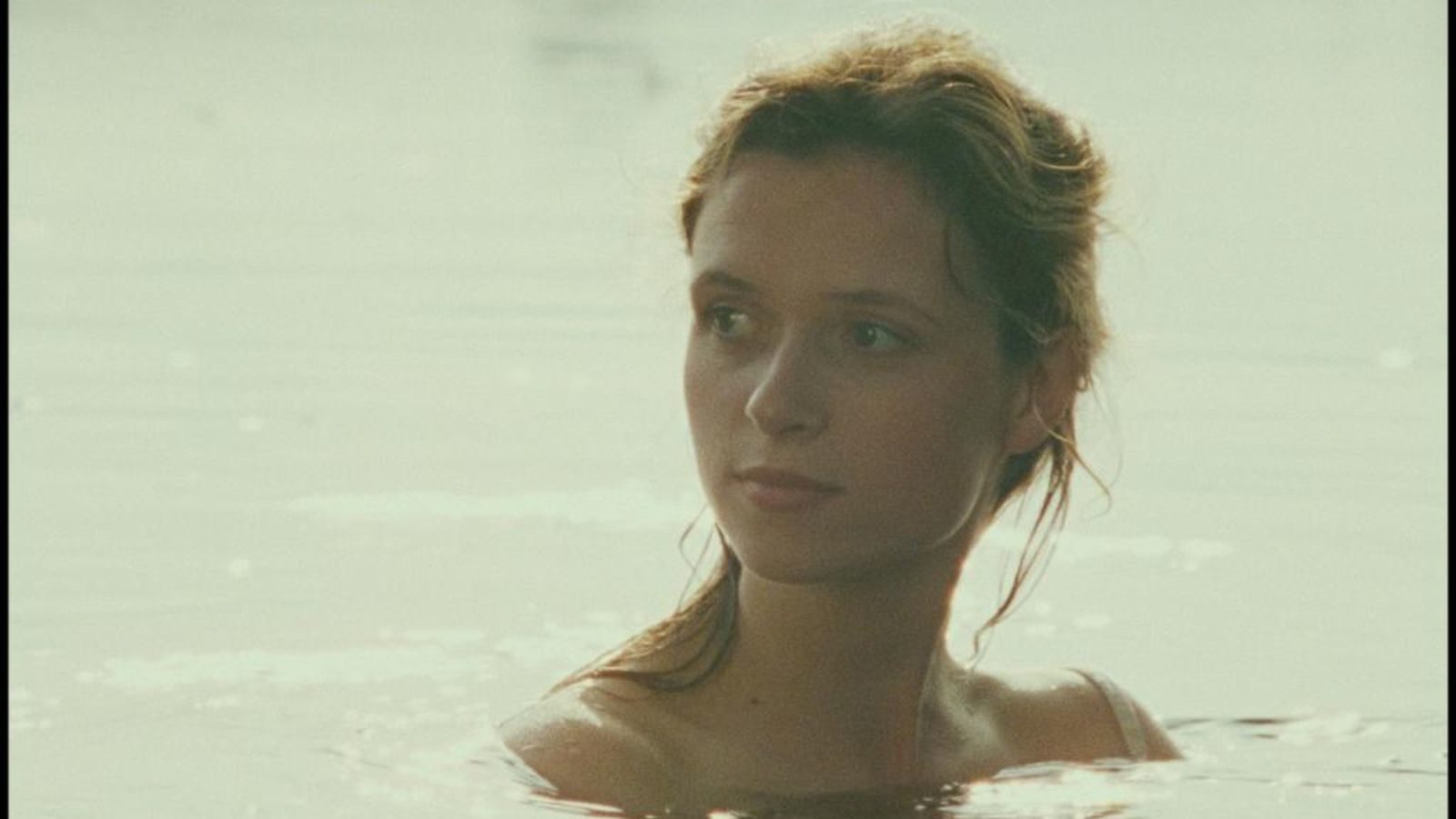
Marcello utilizes similar aesthetics and tools in Scarlet, a Carl Dreyer-style period piece about a young woman raised by her ailing and depressed father during the aftermath of World War I. The setting, along with the super 16mm cinematography, gives the film a very ravishing tone with the scope and tone of a novel. The film also holds elements of magical realism and rich intimacy that eventually rescue the film from feeling too dry or dramatically inert, which is sadly belabored by these minor shortcomings in the opening 30 minutes or so. Pacing aside, Marcello holds the audience’s attention with innovative juxtapositions and an involving romance, and he effortlessly explores the hardships people within communities endured in the aftermath of the First World War.
 Courtesy Kino Lorber
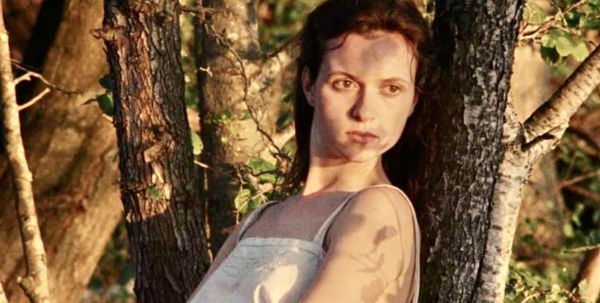
Marcello’s latest takes creative liberties with a wide array of various approaches. There is a mixture of magical realism with realism, and even when the love story feels tacked on, the young protagonist, Juliette (Juliette Jouan), ends up developing a relationship with an older pilot, Jean (Louis Garrel), who crashes from the sky and onto the farm. It ends up being the most engaging aspect of the film. Marcello even does some genre-bending with the film, as he wedges some musical numbers throughout the second act of the film as if it were out of a Jacques Demy musical.
When the film isn’t as sweeping with romance, it has a more distressing subplot that involves Juliette’s ailing father, Raphael (Raphael Thierry). He arrives at the farm after years of being sent off to battle, and as his health declines, he does his best to shy away from it. He discovers that he is now widowed after his wife died, and Julietta has been raised by the local proprietor, Adeline (Noemie Lvovsky). Raphael is very rough around the edges, a man with a strong work ethic who also holds a warm-hearted side. While his age and pain may prevent him from getting carpentry work, he stays persistent and keeps his head up. Eventually, he lands a carpeting job in the village. Meanwhile, he ends up finding that the local village cafe owner holds a dark past of raping Raphael’s wife as he was off in combat, which helps build up some of the film’s tension and build up some effective scenes in the film that hold some tragic results.
 Courtesy Kino Lorber
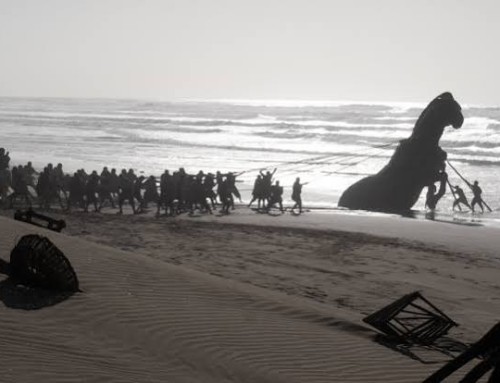
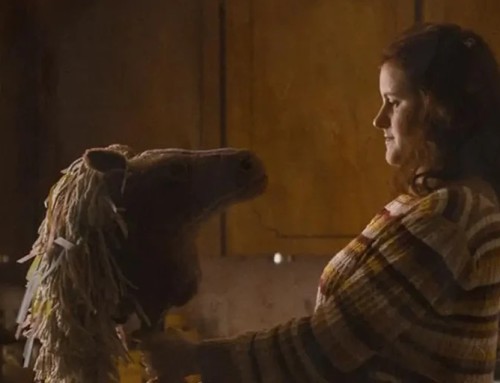
Marcello’s approach might not always work; some of the film veers off with ineffective melodramatic detours, and some of the pacing feels sedated, along with the tone. Where it does work is in how the rural lifestyle is captured in the artistic eye of Marcello, who makes the 1920s French rural lifestyle feel so transportive. The film has a woozy impact that makes you feel as if you are in someone’s woozy daydreams. He shows how people in that lifetime aimed to escape the hardships of that time. Whether it’s the small details of Raphael building small wood toys and sculptures in between his carpentry or his daughter rushing off to the fields to fantasize and yearn about a better life, this is all thanks to Marcello and cinematographer Marco Graziaplena, who together employ their rich tools of grainy 16mm film stock, natural light, landscape cinematography, and an endless number of other intoxicating images. All around, Scarlet is quite an emotional involvement, one that’s a meditation on fantasy, regret, trust, and love, and the agonies that period brought to ordinary people.
SCARLET opens in limited theaters Friday, June 9th.




Good review
A film shot on film, gorgeous imagery, a compelling romance, sounds like Pablo is doing a date night with himself.
I liked Martin Eden quite a bit, so I hope to see this! Thanks for the review!
Absolutely on my list to look out for now. Sounds fantastic 🙂
Great cinematography work with the right casting for the storylines. I seen the trailer when it came out but never seen the film. It has an audience for it.
I need to start digging through my watchlist to make make room for this!
Great review .sounds like an interesting movie I would like to see .cool to check out films in a different time frame
Sounds promising
Good review, Rob! Will add this to my watchlist!
I wish to get across my love for your generosity giving support to visitors who really need help with the theme. Your special commitment to getting the solution throughout appears to be really significant and has always empowered individuals just like me to arrive at their objectives. Your invaluable useful information can mean a lot to me and extremely more to my fellow workers. With thanks; from each one of us.
I am just commenting to let you know of the terrific encounter my friend’s child gained viewing your site. She mastered such a lot of issues, which included how it is like to possess an amazing teaching style to make a number of people with ease gain knowledge of specified grueling subject areas. You undoubtedly exceeded readers’ expectations. Thanks for rendering these informative, trustworthy, informative as well as unique tips on the topic to Sandra.
I simply wanted to compose a message to be able to appreciate you for all the great instructions you are placing here. My long internet lookup has finally been honored with wonderful strategies to exchange with my family and friends. I ‘d assume that many of us website visitors actually are truly endowed to exist in a magnificent place with so many marvellous individuals with helpful principles. I feel truly blessed to have discovered the website and look forward to some more pleasurable minutes reading here. Thanks a lot again for a lot of things.
After examine a couple of of the weblog posts in your website now, and I really like your approach of blogging. I bookmarked it to my bookmark web site list and can be checking again soon. Pls check out my website as nicely and let me know what you think.
I have to get across my respect for your kindness in support of men and women that need help on the situation. Your special commitment to getting the message all through turned out to be definitely interesting and has all the time allowed some individuals much like me to achieve their objectives. This helpful facts implies a whole lot to me and further more to my fellow workers. Warm regards; from each one of us.
My husband and i were thrilled Peter managed to complete his preliminary research because of the precious recommendations he made from your very own weblog. It’s not at all simplistic just to possibly be offering tips and tricks that other folks have been making money from. So we recognize we have the website owner to be grateful to because of that. These explanations you’ve made, the easy web site menu, the friendships your site aid to promote – it’s got many astounding, and it’s assisting our son in addition to our family do think this situation is interesting, and that is really serious. Thank you for all!
Oh my goodness! an incredible article dude. Thank you However I’m experiencing issue with ur rss . Don抰 know why Unable to subscribe to it. Is there anyone getting an identical rss drawback? Anybody who knows kindly respond. Thnkx
Thank you for all your valuable work on this web site. Ellie loves going through investigations and it’s easy to see why. My spouse and i learn all of the dynamic method you convey informative ideas via the website and in addition recommend participation from some other people on this issue then my daughter is certainly studying a whole lot. Take pleasure in the remaining portion of the year. You’re the one performing a pretty cool job.
An impressive share, I just given this onto a colleague who was doing a little evaluation on this. And he actually purchased me breakfast as a result of I discovered it for him.. smile. So let me reword that: Thnx for the treat! However yeah Thnkx for spending the time to discuss this, I really feel strongly about it and love studying extra on this topic. If doable, as you develop into expertise, would you mind updating your weblog with more particulars? It is highly useful for me. Large thumb up for this blog publish!
This web page is really a stroll-by for all of the info you needed about this and didn抰 know who to ask. Glimpse right here, and also you抣l undoubtedly uncover it.
WONDERFUL Post.thanks for share..more wait .. ?
Muchos Gracias for your blog article.Really looking forward to read more. Keep writing.
This website online is mostly a stroll-through for all of the info you wished about this and didn抰 know who to ask. Glimpse here, and you抣l definitely uncover it.
Nice post. I study one thing more difficult on completely different blogs everyday. It can always be stimulating to learn content from different writers and apply just a little something from their store. I抎 prefer to make use of some with the content on my weblog whether you don抰 mind. Natually I抣l provide you with a link in your internet blog. Thanks for sharing.
Good post. I learn something tougher on totally different blogs everyday. It’ll all the time be stimulating to read content from different writers and practice somewhat something from their store. I抎 desire to make use of some with the content on my blog whether or not you don抰 mind. Natually I抣l offer you a hyperlink on your net blog. Thanks for sharing.
I’m typically to blogging and i really respect your content. The article has actually peaks my interest. I am going to bookmark your web site and maintain checking for brand spanking new information.
It抯 onerous to find educated folks on this matter, but you sound like you recognize what you抮e speaking about! Thanks