

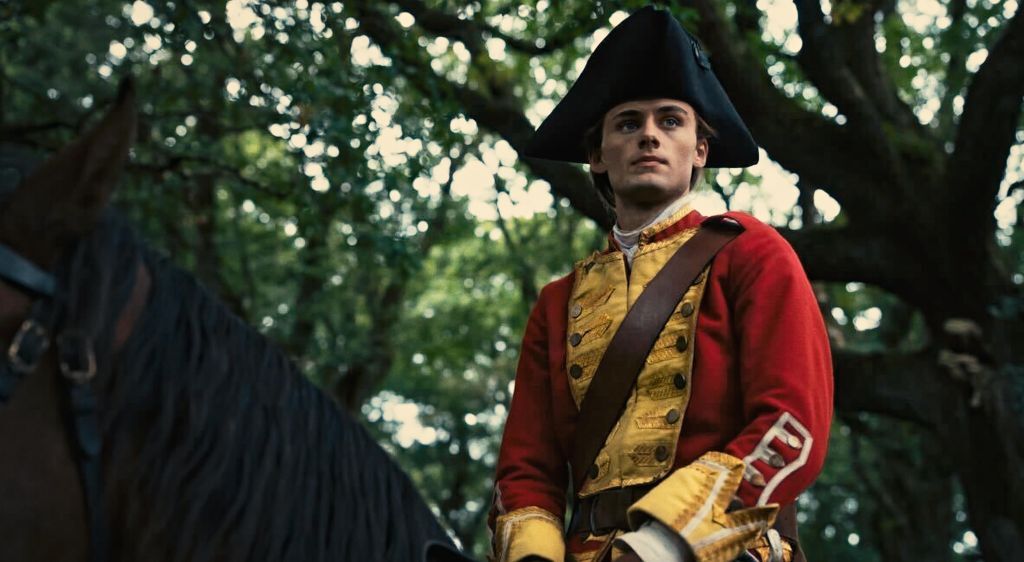

Like every story in history, that of America’s first president George Washington has long since become a mixture of truth, legend, and myth. Schoolchildren hear fables about cherry trees and never lying, while signposts mark the place where he crossed the Delaware. Any film or television series that dares to tackle such historical personages faces the task of approach: do you merge truth and myth or try to get to the objective historical record as much as possible? Is it possible? Which makes a better film? Director Jon Erwin’s Young Washington seems to stick closely to history, not even mentioning the cherry tree bit. And it manages to largely avoid romanticizing its central figure into sainthood, a common trap for many historical films.

Courtesy Angel Studios
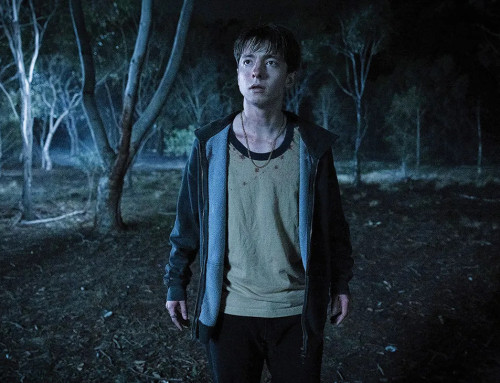
Young actor William Franklyn-Miller takes on the lead role of our first president as a very young man, raised by his widowed mother Mary (the always great Mary-Louise Parker) and half-brother Lawrence (John Foss), who instructs the boy in how to be a gentleman by reading the classics and living by certain values since, because of his father’s death, he is not allowed to attend school. Once grown, he is also excluded from the elite parties and hence opportunities they result in. But his ambitions are high, and using his wits and affable presence, he charms his way into meeting the wealthy and established Fairfax family he longs to be embraced by, headed by Thomas Fairfax (Frasier’s Kelsey Grammer). Making a good impression, he is nevertheless still relegated to the sidelines.

Courtesy Angel Studios
Through Lawrence’s recommendation, George is accepted into the Virginia militia by the governor of Virginia, Robert Dinwiddie (played by the seemingly ubiquitous Ben Kingsley) and is sent as emissary to the Ohio French encampment, telling them that the British are ordering their evacuation. When the French refuse, Dinwiddie appoints George as Major to the Virginian Regiment, joined by local native Mingo warriors and their Iroquois leader, “Half-King” Tanacharison, who earlier had saved George’s life in the Allegheny River and has a personal vendetta against the French leader for the murder of his father. When this vendetta results in an unprovoked attack on the French camp and deaths on all sides, followed by a further defeat on a British garrison George later joins and the death of his beloved brother Lawrence, he steps down from the Virginia Regiment. However, Mary reminds him to learn from his failures and that Providence is guiding him. This gives him back the confidence to re-enlist into the regiment and he joins the fight once more against the French.
The production values and battle sequences are stunningly shot, with gorgeous panoramas of the countryside. The film is produced by Angel Studios, a Christian-focused company, but this does not seem to prevent the filmmakers from portraying the brutality of war. The controversial concept of Manifest Destiny, of a group of people destined by God to win the land they pursue, is dealt with very briefly and subtly; you could miss it. Such themes are developed through the action and the personal convictions of the characters rather than through sermonizing or preaching, so the film will likely be able to reach more people and not estrange those who take issue with its religious foundation or intention. Franklyn-Miller imbues his George Washington with a youthful fire and passion, combining natural leadership skills with a humility that allows him to learn from those around him. A sort of inside joke for the viewers is the knowledge that, while, like everyone else, young George must pay his dues and be doubted by those above him, he eventually reaches the highest office of the nascent country.

Courtesy Angel Studios
We live in a time of unparalleled division and tension, with much scrutiny on exactly what America was envisioned to be and if it has managed to achieve it and for whom. The issue of immigration and colonialism is on everyone’s minds and tongues, an issue inherently about ownership, theft, slavery, and much more. Different factions and political parties see these varied but intertwined topics in markedly contrasting ways, but will we all be able to come together to remember the essential goals that foresaw a sort of utopian future of freedom? Conjuring the potent figure of our first president onto the big screen in 2026 can be regarded as a way of returning to the beginning, the formation of that vision, to address these concerns and questions, and Young Washington delivers this story capably and compellingly.
Young Washington is now playing in theaters.


Leave A Comment