



As the winners write the history books, so much history is left whitewashed, and some communities and individuals only have stories left that are passed on from our descendants. Not all history is recorded in textbooks, through statues, paintings, written records, or deeds. Documentary filmmaker Margaret Brown’s latest film, Descendant, is able to find the truth and amend history after chronicling the journey of the recovery of the slave ship Clotilda in Mobile, Alabama, the last known slave ship that illegally trafficked humans through the Transatlantic Slave Trade during the 1860s that was federally abolished in 1808. Shot just before the COVID outbreak in 2019, Brown’s documentary poignantly examines the essence and persistence of a community that banded together and never gave up on the search for the truth and justice, even when American history or the Federal government never gave the community a fair shake in discovering the truth.
Back in 1860, landowner Timothy Maher was trafficking hundreds of African descendants into Mobile from the Atlantic and through the Gulf into Alabama rivers. To cover-up any evidence of the slave’s identity, Maher burned the ship out in the river until it sank. For the last 150 years, the community has embarked on finding the true identities of who the enslaved people were that were smuggled in.

We never get interviews from any of the Meaher family, but Brown does get a compelling interview with an older white neighbor who admits that his own family were slave owners. He can’t comprehend how a losing side could still have schools, roads, bridges, and monuments named after Confederate generals, while other losing sides in other parts of the world, like Nazi Germany, do not have monuments or schools named after their generals.
As the descendants of the Clotilda begin to organize a museum, it doesn’t take long for local politicians and businesses to capitalize on the discovery for commerce, and more land is bought up very quickly by the ultra-wealthy. This doesn’t stop the organizers from still marching on with the truth, even if it means taking their evidence and story to the National Museum of African American History in Washington, D.C., where one of the curators explains there are much more empowering African American stories of slaves actually winning lawsuits against plantation owners that are left out of the history books. Finally, the survivors and descendants of the Clotilda will have a place in the history books, thanks to the power of Brown’s eye for documentary filmmaking. Its drive becomes a tapestry of hidden history that no amount of new coverage or journalism could ever capture.
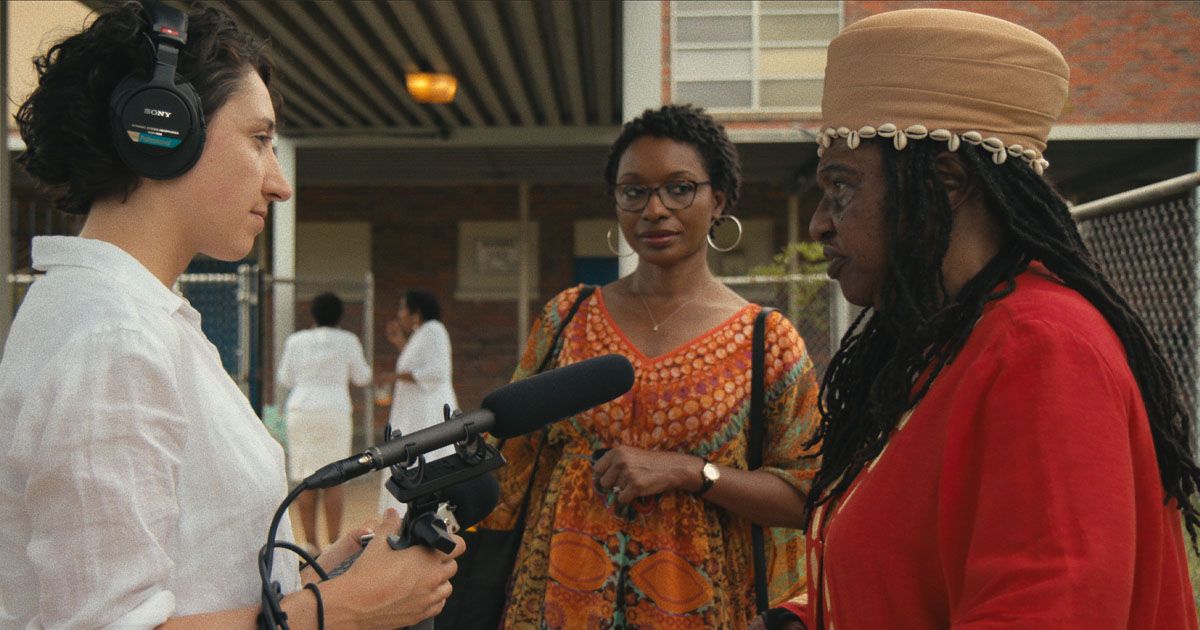
Shot in crisp high-definition video by Brown, who also serves as DP and sound recorder, Brown shoots the locales of Mobile and Africatown with a poetic eye. It almost feels personal and as if it were shot by one of the residents because you can’t help but marvel at most of her shots. One includes a resident looking out at the water that resembles Barry Jenkin’s Moonlight, and the wide shots of the locations, or even simple shots of her subjects walking in hand-held tracking shots feel just as cinematic as any other visually arresting indie you would see.
Essential, potent, and liberating, Brown’s documentary provides relevant insight into the whitewashing of history and how the truth eventually triumphs in the end. The documentary invites us into the shoes of a community whose ancestors before them were forgotten about, and it asks that in order for our society to foster and grow, we must continue to combat social injustices and come to terms with our original sins. We feel the spine and spirit of Brown, and we also feel it through her subjects as well. This is a very hopeful documentary, and it would be a shame if it doesn’t find a wider audience.
Descendant is now streaming on Netflix


Great review. Can’t wait to see it
Definitely a must film to watch. We can learn so much from this documentary, or maybe just say a reminder of how we are as human beings treating each other’s. I heard about this documentary and I’m planning to watch it tomorrow. Great reviews.
Thanks for putting this on my radar! Will watch soon hopefully.
I appreciate the comments given to me. thank you