

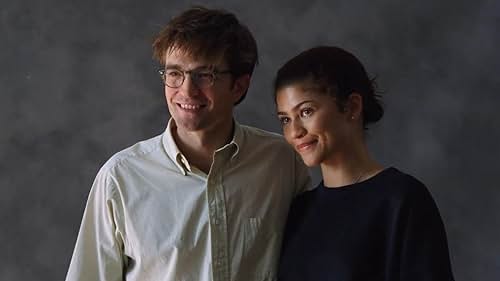

An uncomfortable narrative about discomfort, Kristoffer Borgli’s The Drama is nonetheless a wrenching framework thanks to the director’s immense skill for anxiety-inducing drama, dark humor, and raising uncomfortable questions in a society where so many are so easily triggered and hold so much moral superiority and righteousness. In the end, this is a film about cancel culture, victimhood, and sensitivity—common themes Borgli has explored before in Dream Scenario and Sick of Myself. While those films explored the terror of being known by everyone, The Drama is about being known by the one you love the most and facing the consequences.
With its hyperreal aesthetic and psychological intensity, the film opens playfully as we are introduced to Charlie (Robert Pattinson), a British Museum director approaching Emma (Zendaya), a bookstore clerk, while she reads at a cafe. Emma ignores him, and Charlie, feeling rejected, returns to his table. He then approaches her again; Emma explains that she didn’t hear him the first time as she is deaf in one ear. She convinces him to start over, and the scene flourishes with an instant romantic spark.
Courtesy A24 Films
While walking one night, they notice their wedding DJ, Pauline (Sydney Lemmon), smoking heroin in a public park. Distraught by the incident, they tell their maid of honor, Rachel (Alana Haim), and best man, Mike (Mamoudou Athie), and debate whether to dismiss Pauline as their DJ. Rachel rationalizes that they shouldn’t be so dismissive, as everyone has likely done “bad things” at some point. Over glasses of wine at a winery, they all confess to past transgressions: Mike used his ex-girlfriend as a human shield during a dog attack in Mexico (on her birthday, of all days); Rachel locked her mentally disabled neighbor in a closet overnight; and Charlie confessed that he once cyberbullied a classmate so severely that the boy’s family moved away. Emma, with deep hesitation, ends up confessing to something so troubling that it shocks everyone, especially Rachel. I will not reveal the confession in this review, but it sets the stage for a drama to unravel where Charlie begins to harbor deep doubts about his relationship with Emma.
Alana Haim is masterful in The Drama, utilizing sardonic delivery and unsettled expressions to perfection. She injects a vital energy into the film, as her character, Rachel, acts as a sort of proxy for the audience. When the confessions turn dark, her reactions anchor the absurdity of the situation. It’s that same naturalistic, “I’m over this” charisma she brought to Licorice Pizza, but dialed into a much more psychological, high-stakes environment.

The chemistry between Haim and Mamoudou Athie provides a fantastic contrast to the central Pattinson/Zendaya dynamic; it gives the film an extra layer of social realism that makes the discomfort feel even more grounded. It is rewarding to see her continue to choose these “dangerous,” character-driven projects.
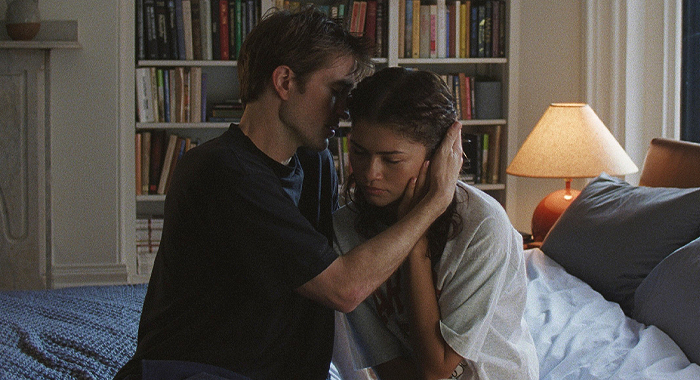
The follow-up to Borgli’s cerebral, acclaimed feature Dream Scenario, The Drama certainly shows growth. It resembles other Bergmanesque films about relationships in crisis—such as Marriage Story, The Nest, Images, and Husbands and Wives—and is richly stylized with abrupt edits that capture the distressing psychological impacts of a relationship in turmoil. It exposes the behaviors and attitudes that deep-rooted relationships can foster: destructive and emotionally crippling. Both Pattinson and Zendaya deliver towering performances, holding many emotionally raw and discomforting scenes together.
Courtesy A24 Films
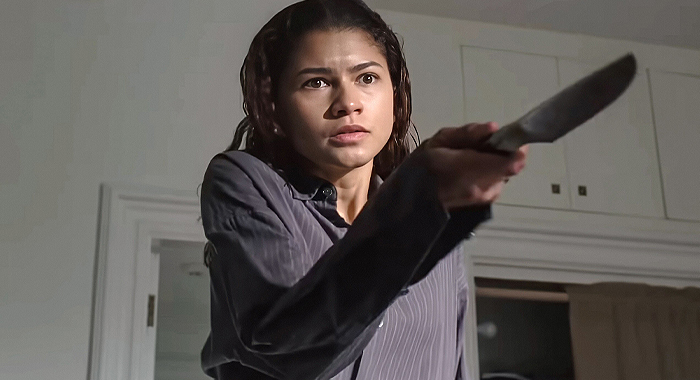
Despite her character’s problematic past, Emma’s complexity eventually becomes the film’s arc. Seeing her judged for a decision made nearly two decades ago raises poignant questions about atonement and redemption. Borgli delivers this with authentic tension; instead of manufactured “cinematic” conflict, he focuses on the type of social and emotional friction that actually keeps people up at night. Like Dream Scenario, the film takes an “anti-safe” approach, tackling “triggering” or taboo topics without a pre-packaged moral lesson, forcing the audience to think for themselves.
Ultimately, The Drama may frustrate and polarize many viewers, but Borgli’s artistry and uncompromising examination of character complexity feel like a genuine breath of fresh air. It is liberating to see a director who made his name with Dream Scenario get this kind of project green-lit, and to see a talented duo like Pattinson and Zendaya do something so fearless. It’s a rare thing when a movie actually trusts its audience enough to let them be offended or uncomfortable. If more filmmakers follow this lead, we might return to that “fearless” era of the 70s, where movies were genuine cultural events because you never knew exactly where they were going to take you. Film composer Daniel Pemberton (who also scored Project Hail Mary) brings a psychological destabilization to the emotions of the film as well.

Courtesy A24 Films
There’s a specific kind of bravery in taking actors with the cultural weight of Zendaya and Robert Pattinson and letting them be messy, unsettling, or even unlikable. A lot of modern studio films feel like they’ve been through a car wash of focus groups until every sharp edge is buffed out, but The Drama feels like it was allowed to stay dangerous. The fact that it’s being labeled a “comedy of discomfort” while being compared to Bergman shows exactly how potent this film really is—it’s not trying to cater to anyone. It’s creating a space for those hard, wrenching conversations that most movies are too scared to touch. This is the first great film of the year.
The Drama is now playing in theaters

This one seems quite interesting
Excellent review of an intriguing, effective and impressively acted film. Your star review is exactly right.
Great review of a film that has definitely piqued my interest, thank you Robert.
I love character driven movies like this. Can’t wait to see it!
An interesting drama that hinges on a revelation by one of the characters. If yiu think about it, what the others did was much worse than what the one character thought about doing, the wedding scene is great. 2.5/of 4 stars
Great review!! I love Robert Pattinson a lot az an actor, so I’ll most definitely be checking this out! It looked so good in the previews too!