

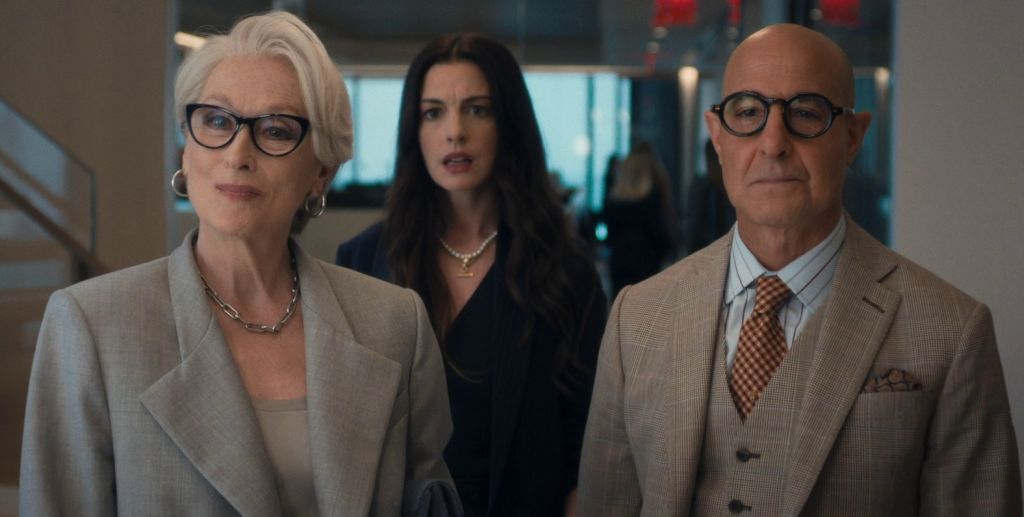

If you order a daiquiri and then expect Dom Perignon, the joke is on you. At the same time, you can have standards regarding the quality of that daiquiri, setting it up against previous attempts and subsequent after effects. The same applies to movies and their almost inevitable remakes, reboots, sequels, and prequels. In the case of the latest, The Devil Wears Prada 2, there are some things one is certain are in store: Fashion, lots of it, flashy and dripping with diamonds and reflecting the flash of the cameras. Crisp, clean interiors that banish the messiness of life that is simply not aesthetically attractive enough to make the cut in the ruthless world of the New York elite. And a dazed, relatively clueless protagonist.
Courtesy 20th Century Studios
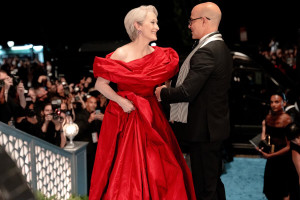
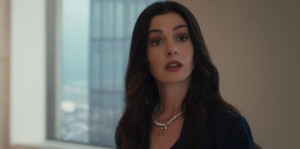
Anne Hathaway is back as the “aw, shucks” plucky Andy Sachs, twenty years later now a journalist who finds out as she’s about to accept an award that her entire magazine has been fired in the face of the new normal – massive cuts to make room for the AI revolution. She seemingly magically finds herself offered a job (explained later) that returns her to the lion’s den that is Miranda Priestly’s office at fashion mag Runway, to help restore the image of both after a bad PR crisis. Miranda, played of course by the one and only Meryl, has no idea who Andy is or was. And who’s surprised? The world, for Miranda, exists merely to provide grist for Runway’s mill and, thereby, hers. (For those who know the first film, we never once glimpse her twin daughters). Miranda is less than pleased to be told by her superiors that she must eat crow and allow Andy to clean up her mess. Alongside amnesiac Priestly is of course her lifelong companion, Nigel, played by the always self-assured laconic Stanley Tucci, veiling his obvious affection for Andy under a thin but still biting cloak of harsh appraisal.
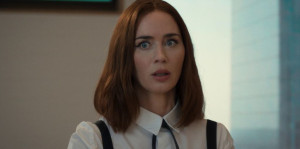
It turns out that Runway is now owned by a different company, which is run by… you guessed it, Emily Charlton (Emily Blunt, maybe the star attraction in both films). The tables have now largely turned, and Emily is in charge of coordinating much of the operation to save Runway. I won’t delve into the details for two reasons: It will give away much of the plot, but maybe the biggest reason is because, to be honest, I had a hard time following the complexities of the inner machinations between the two publications. While the new film delivers on the aesthetic glamor and fun tone, it weighs itself down with unnecessary storylines and slightly dizzying swerves between them. However, the power differentials shift in unseen ways that do offer an interesting examination of the trifecta of Andy, Miranda, and Emily all these years later. We even glimpse a private, tender moment of Emily’s that reveals some of what’s hidden beneath the frost. These fleeting but sometimes moving character moments are often drowned out in the flurry of shifting plot points and exotic locations.
Courtesy 20th Century Studios
In their focused attempts at rescuing the magazine and ultimately Miranda, we are given rare glimpses at cracks in the facade of the ice queen. This both works to make her a fully-dimensional character and also depletes her of the presence that electrified the first one. Rule number one of ANY monster movie: Don’t show too much of the monster. Between her initial amnesia and forced humility in the face of corporate takeover, Miranda becomes much more of a sympathetic figure than she was in the original, excepting a couple scenes toward the end of the latter. As a result, this sequel lacks the tension and tightness that made the first one a memorable experience. Now, Andy seems to want to earn her way into the very cutthroat world she was merely tolerating before in order to become what she had finally become at the start of this. Here, she inhales and steels herself to keep taking the abuse. Andy has not evolved much in twenty years and remains naively blindsided by the cutting insults and overpowering egos surrounding her. One may ask why Andy bothers returning to the scene of abuse and almost killing herself to save a person who displays, repeatedly, that she can barely be bothered to acknowledge her existence. But sequels motivated by nostalgia seem to need the main characters to not have changed that much, otherwise we wouldn’t get the hit of familiarity we’re there for. Therein lies much of the crux for me and I haven’t settled on a verdict yet: Andy barely changes but Miranda is given more dimension.
Like any sub-culture, the world of high fashion has its minions and its detractors, as well as those totally indifferent. I would fall into the latter category, but I can respect the dedication to and love of beauty and art. In a world increasingly tired of ivory tower elites dictating to the rest of the world what now passes as a trend and a must-have, it does still demand hard work, passion, and talent (though who exactly possesses that is subjective). But there exists in both films a vaguely troubling undercurrent arguing that accepting abuse is justified if you really have the above qualities and goals. Aesthetes live by the eye, and as such there is a certain fascist excising of all that does not serve the brutality of achieving the image. Both films depict the law of the fashion jungle accurately, even if by the end of the sequel the edges have been softened by sentimentality. Of course we want to see Andy succeed, but at what cost, and why in this particular world?
Courtesy 20th Century Studios
By the time we get to this sequel, we see a Miranda Priestly facing the end of a career that not only defined her but was her, without which she hasn’t the faintest idea what meaning there is (as she confides in her new boyfriend here, played by Shakespeare giant Kenneth Branagh). And like a handful of other current or upcoming films, including Toy Story 5, The Devil Wears Prada 2 is trying to wrestle with the reality of accelerating technological development and subsequent layoffs and new questions about purpose, meaning, and the future. In the real world, fashion magazine Vogue and its (until recently) director Anna Wintour, both direct inspirations for Prada 1 and 2, are themselves confronting this very thing. Magazines are over, and it is aaaalllll online. What does this mean for the future of the fashion industry? Do you care? Maybe you do. Or maybe you just want to see Andy’s blustering innocence facing off against Miranda and Emily’s witty and cruel insults. You’ll get some of both in The Devil Wears Prada 2, but what you won’t get is the tightrope tension that defined the first one. This daiquiri is tasty but lacks the bite that the first drink delivered.
The Devil Wears Prada 2 is now playing in theaters.

Leave A Comment