

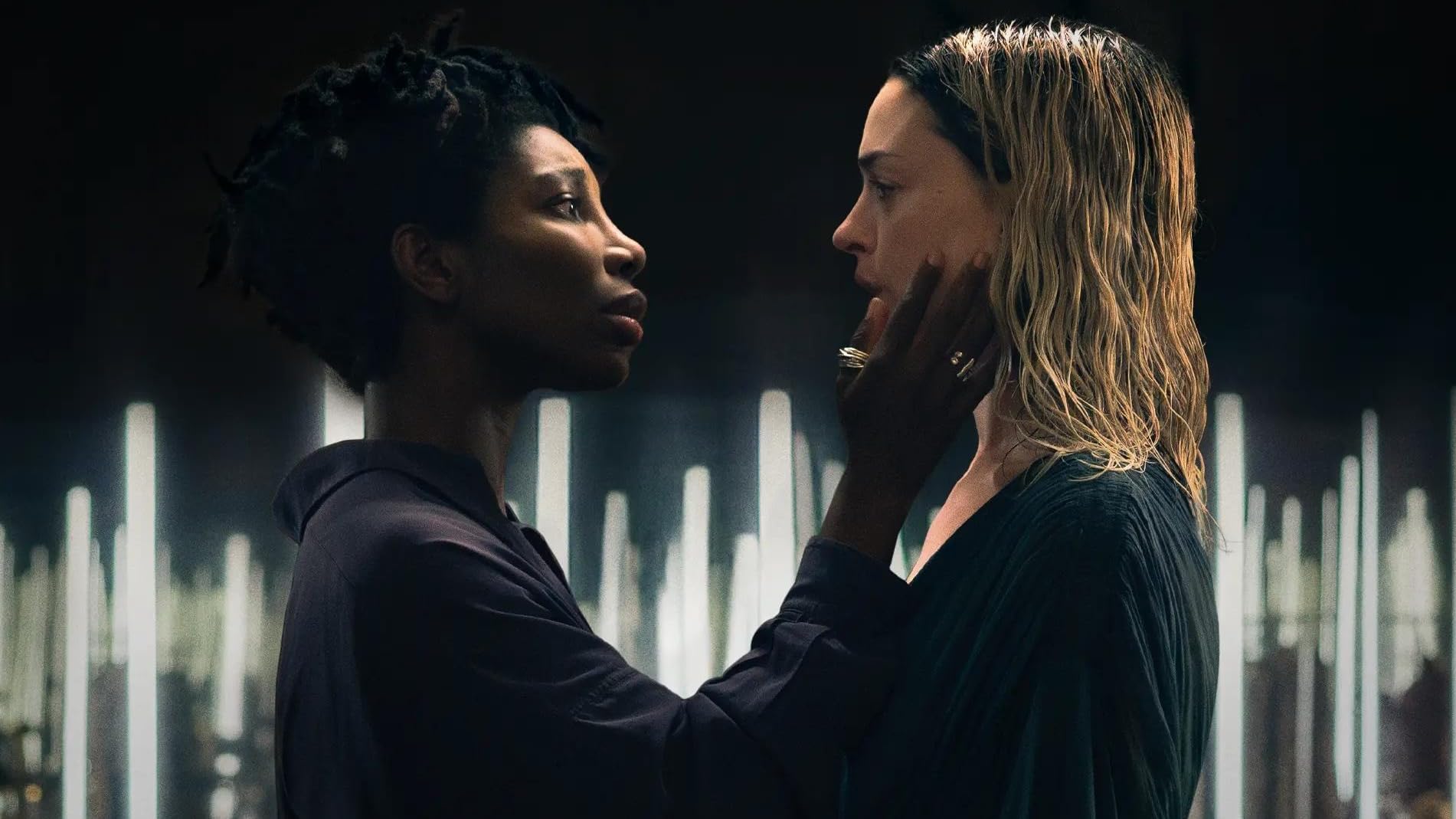

Set at the intersection of pop music and high fashion, David Lowery’s latest psychological thriller aims for the intimacy of a semi-chamber piece. Though the narrative feels slightly uneven, it is ultimately salvaged by Anne Hathaway and Michaela Coel’s raw performances, ravishing cinematography, and an unforgettable score by Charli XCX.
In Mother Mary, a celebrated pop icon (Hathaway) visits her estranged fashion designer, Sam Anselm (Coel), at a remote estate in the English countryside. Arriving on a drizzly night, Mary reveals she is in desperate need of a dress for a concert only three days away—her first live performance since a traumatic on-stage accident that many speculate was a suicide attempt.
Mary claims her current wardrobe “doesn’t feel like her,” but the tension between the two women suggests a deeper motivation. Coel delivers an expressionist performance, radiating built-in affliction and hurt as it becomes clear the two were once romantically involved. Sam reluctantly accepts the commission; she and her assistant, Hilda (Hunter Schafer), immediately get to work on the measurements and design.

Courtesy A24 Films
Sam was once the creative architect of Mary’s onstage wardrobe, including the iconic “religious look” that defined her early success. However, the two haven’t spoken in over a decade; as Mary’s career took off, she became emotionally distant and eventually cut Sam out of her life entirely. To deepen the bitterness, Mary took sole credit for the aesthetic Sam created.
Their reunion adds complex emotional layers as they race to finish the dress before the concert, both secretly seeking closure. Most of their sharp exchanges take place in Sam’s workshop, where they hash out years of resentment—Sam even admits she hasn’t listened to Mary’s music in years. In a pivot reminiscent of Lowery’s A Ghost Story, the film shifts from a dramatic chamber piece into a supernatural horror. It is revealed that both women are haunted by a “red ghost” draped in glowing, flowing fabric. Sam becomes convinced that this specter originated from the deep-seated hostility she has carried toward Mary.

Courtesy A24 Films
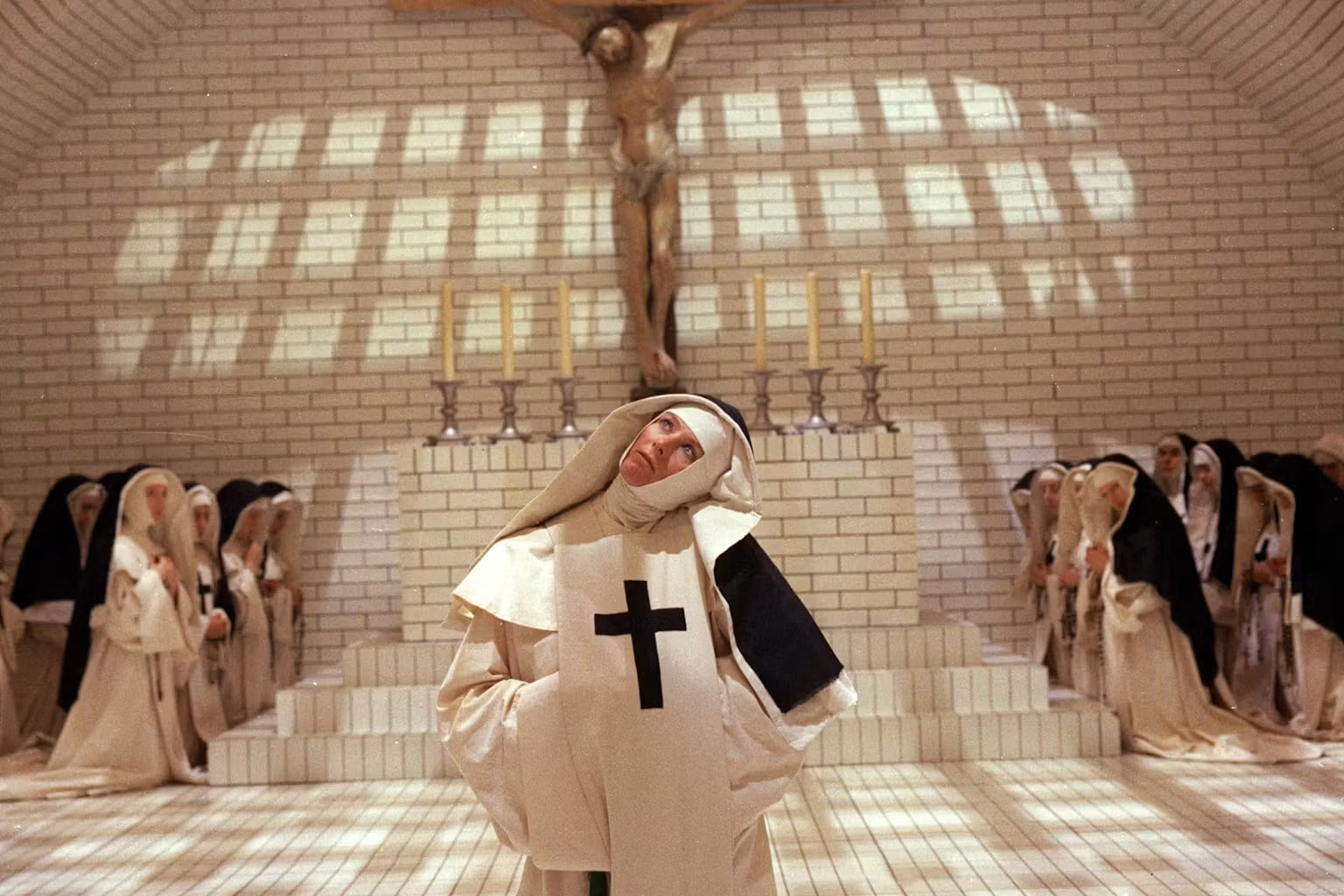
Mary reveals that she has been possessed since the accident, which becomes a metaphor for the burden of her fame and the guilt she feels for betraying Sam. Through flashbacks, we see the spirit’s origins: Mary attends a séance led by Imogen (FKA Twigs), who uses a Ouija board during a ritual that serves as a surreal and atmospheric highlight of the film. Imogen’s possession and FKA Twigs’ ritual dance directly mirror Andrzej Żuławski’s Possession. This connection is foreshadowed earlier in the film when Mary mirrors the dance while performing to her own song—hearing the music only within her mind. Significant psychological stakes are established early on, as these origins provide the gateway for the two women to cast out the spirit. Consequently, the third act transforms the narrative, causing the movie to evolve into an entirely different film.
Lowery delivers another A Ghost Story-style film, illustrating how creators and collaborators are often left invisible even as others reap the benefits of their artistry. The spirit serves as a multi-layered metaphor for this erasure. The onscreen chemistry between Hathaway and Coel is radiant, fueled by passion and superb performances from both leads. While the film uses concert flashbacks to build toward Mary’s traumatic event, the second half pivots into supernatural horror. This shift can feel inconsistent with the pop melodrama that worked so well initially; however, while the script might have benefited from more clarity regarding the spirit’s origins, the final payoff crystallizes Mother Mary into something exciting, refreshing, and memorable.
MOTHER MARY IS NOW PLAYING IN THEATERS


What a come down for David Lowery after A Ghost Story and Green Knight. An incoherent mess with a miscast Anne Hathaway. 2 of 4 stars
I’m curious as I’m a big David Lowry fan, but not rushing
Looks intriguing!