

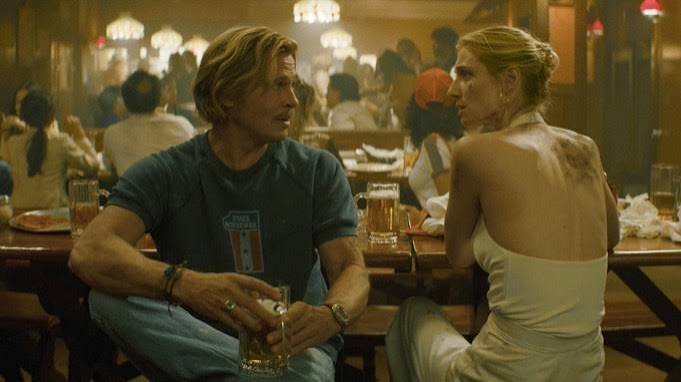

On paper, handing a Tarantino script to David Fincher seemed like a wild pairing, yet it never goes wrong for a single frame. Tarantino’s writing thrives on loose, zigzagging hangout energy, while Fincher is known for surgical precision and icy control, but the two sensibilities never clash. Fincher pays deep respect to Tarantino’s expertly crafted script while honing his own visually arresting style, preserving the tactile 1970s texture that made Once Upon a Time in Hollywood sing. Tarantino brings his boundless passion for the movies, while Fincher brings his own love for television, creating a lived-in world of film and TV lovers where every conversation sparkles and nothing ever feels airless. It’s easy to label this a hangout movie, yet the dialogue is so engrossing that you’re completely captivated. Of course, Fincher has a long history of elevating great scripts, from Aaron Sorkin’s The Social Network to James Vanderbilt’s Zodiac and Andrew Kevin Walker’s Se7en (alongside David Koepp’s Panic Room), and here it genuinely feels as though Tarantino and Fincher are sharing the screen together, propelled by a driving Trent Reznor and Atticus Ross score. As for the online noise about Fincher’s use of AI to clean up background audio, it’s a complete nothing-burger and a distraction from the craft onscreen. Walking out of the theater, my heart was pounding out of my chest, leaving me echoing Vincent Vega in Pulp Fiction: “Excuse me, I’m getting ready to have a heart attack. I’m going to go home and have a heart attack.”
 Courtesy Netflix
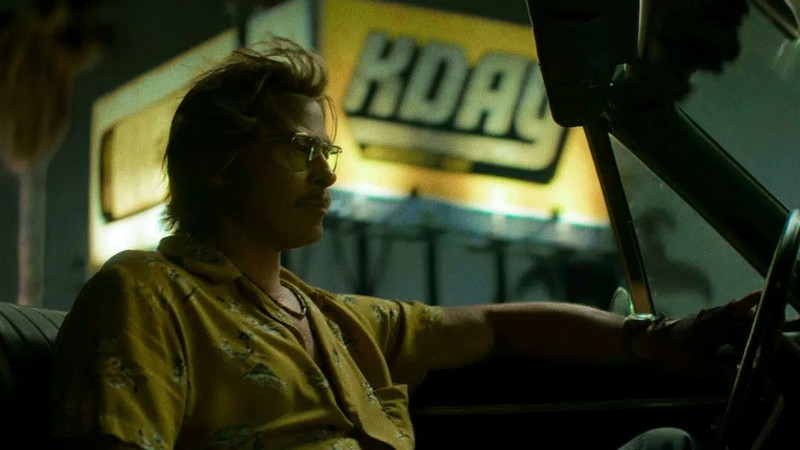
That lived-in 1977 Los Angeles comes alive through astonishing artistry behind the camera. Production designer Donald Graham Burt recreates late-seventies L.A. with the same loving, immersive fidelity that defined Once Upon a Time in Hollywood, from vintage storefronts and faded theaters to smoggy boulevard corners. Costume designer Trish Summerville nails the wardrobe down to the finest stitch, dressing Cliff in effortless lived-in denim and Hawaiian shirts while outfitting Karen Crosby in sleek, bias-cut seventies silhouettes that make every room feel authentic. Anchoring it all is Erik Messerschmidt’s stupendous cinematography (alongside Kirk Baxter’s crisp editing), which pairs adventurous staging and fluid, choreographed camera movement with unerring pacing. Every tracking shot, barroom standoff, and sunlit drive pulses with visual confidence.
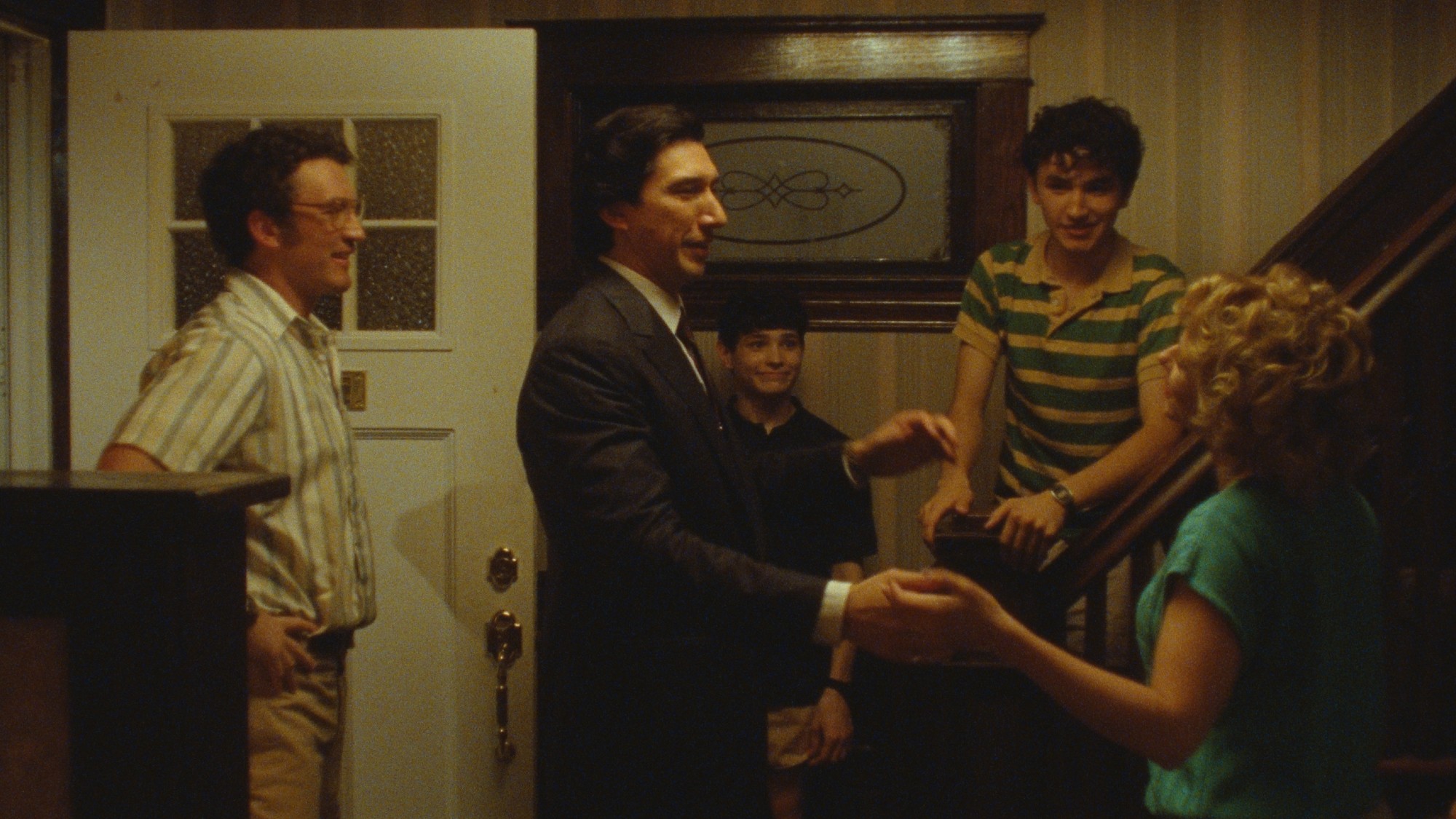
Set in 1977 Los Angeles, the film finds Cliff Booth (Brad Pitt) still unable to land steady work in the movies. Although his old pal Rick Dalton isn’t onscreen, his absence looms over the story: Rick has packed up for Australia to star in a popular TV series called Dingo Dan, and because Rick has put on noticeable weight, Cliff can no longer stunt-double for him. Meanwhile, people constantly tell Cliff he looks familiar without quite placing his face, though his Hollywood reputation lingers. Some remember him as the guy who fought Bruce Lee, with Cliff joking that it was a pretty even scrap even if he claims he won, alongside nods to another dust-up with an actor at the Playboy Mansion. Scraping by on odd jobs like bartending, driving in a demolition derby, and working nights as a projectionist at the classic New Beverly Cinema, Cliff now operates as a Hollywood studio fixer. The opening scene inside the theater hooks you immediately. Right after a near-empty screening of the fictional blaxploitation flick Soul Brothers Die Hard! wraps up, starring retired football star turned actor Roder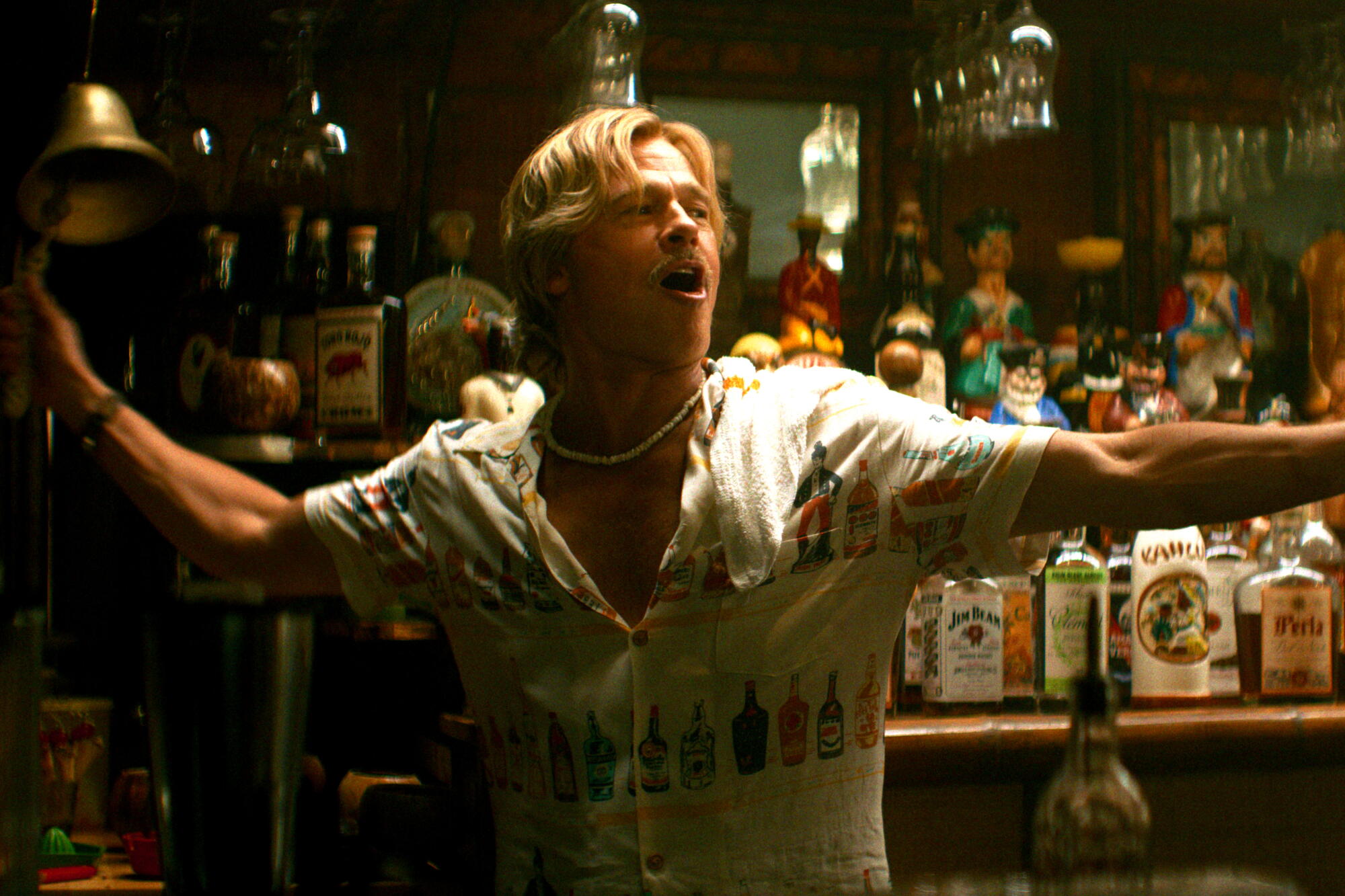 ick “Hot Rod” Harrison (Yahya Abdul-Mateen II), Anora standout Chicken Hawk (Karren Karagulian) brings along his young gay hustler associate Joey (Corey Fogelmanis) to meet Cliff. Joey has slept with a famous married director and robbed his house of an Academy Award, a gold watch, and a wedding ring. When they try to swindle $50,000 to sell the loot back, Cliff coolly confronts them and negotiates them down to $20,000, setting the tone with crackling banter.
 Courtesy Netflix
From there, the film shares the same sprawling structure as Once Upon a Time in Hollywood, unfolding into a world overflowing with movie love. We get classic Tarantino-verse nods like Cliff grabbing burgers at the Big Kahuna Burger and catching a Red Apple Cigarettes commercial starring Sharon Tate (Margot Robbie), alive and thriving in this timeline. Just as Once Upon a Time in Hollywood delighted in period TV and film reenactments, this sequel serves up hilarious showbiz flashbacks, including Inglourious Basterds-style Nazi movie sequences featuring hot-tempered TV star Charlie Peters (Scott Caan) alongside a menacing heavy (Holt McCallany), while also weaving in returning Hollywood fixture James Stacy (Timothy Olyphant), director Sam Wanamaker (Nicholas Hammond), and Disco Kingpin (Barry Livingston).
More importantly, Brad Pitt brings even richer nuance and depth to Cliff Booth. Unlike Once Upon a Time in Hollywood, where Rick Dalton carried the vulnerability while Cliff was the kickass sidekick, here Cliff lives with and cares for his movie-loving, pawnshop-owning father, Gus Booth (Peter Weller), in a cozy coastal apartment near a pier. Their warm, inviting scenes watching television together playfully echo George Spahn and Squeaky at Spahn Ranch, only infused with genuine filial affection, complete with funny little jabs about Rick Dalton acting like a chump after Cliff went out of his way to protect him and paid the price. Hope arrives too when high-profile talent agent Karen Crosby (Elizabeth Debicki) calls Cliff in for a job. Karen is a former film critic who got her start thanks to Pauline Kael, a clear and cheeky echo of Tarantino’s unmade The Movie Critic, and she steals the room with an erudite lunch monologue arguing that movies are entertainment rather than high art, comparing even Francis Ford Coppola’s The Godfather to a juicy cheeseburger spun from a pulp novel. Her sharp banter with Cliff sparks into a terrific romance that plays into Cliff’s masochistic stuntman streak when he confesses his fantasy of her slapping him, and she obliges.
 Courtesy Netflix
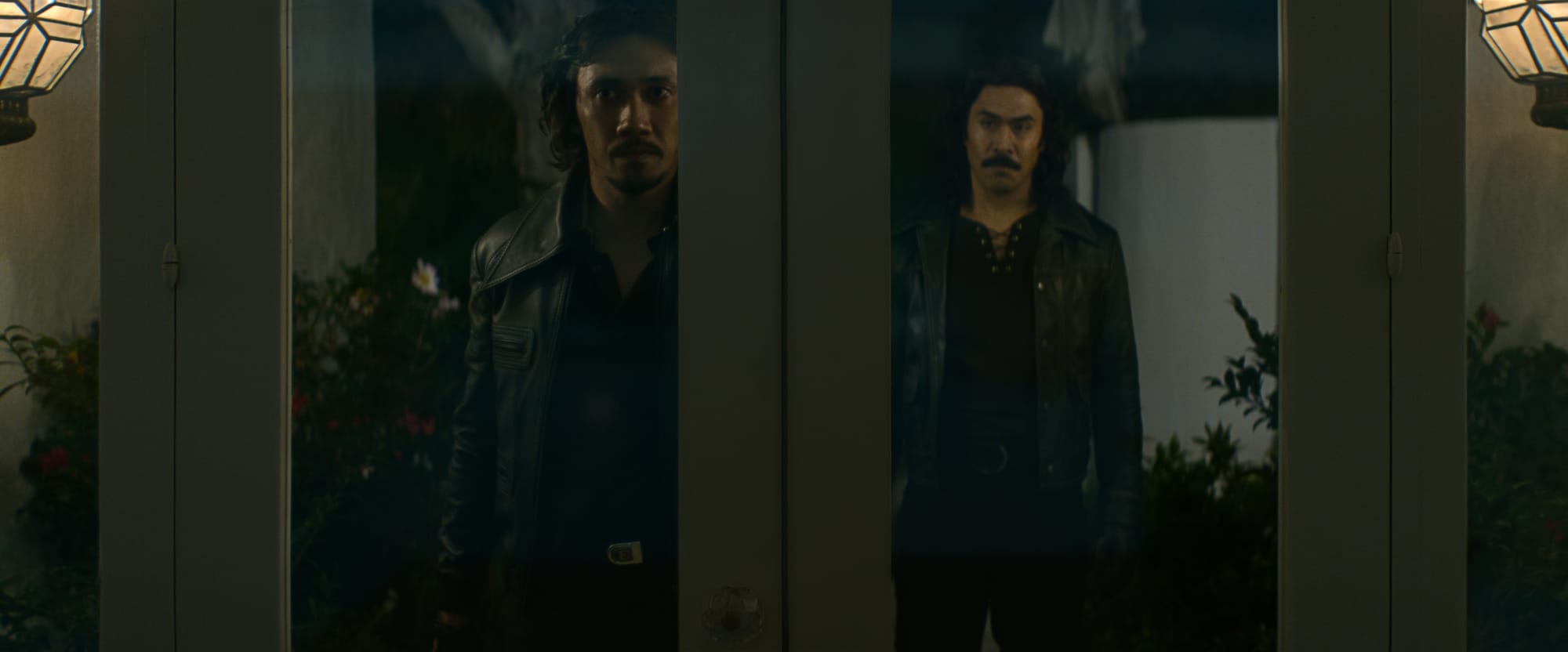
Yet the danger escalates fast once Charlie (Scott Caan), who genuinely looks up to Cliff, invites him into his orbit, including a kinetic tennis sequence that Fincher shoots with the same slick, rhythmic flash he brought to the iconic rowing sequence in The Social Network. Through Charlie, Cliff reconnects with Charlie’s wife, Toni Peters (Carla Gugino), an old flame from their days on the cheesy kiddie-movie flop Salty the Seal (which Rick Dalton also appeared in) who still holds a real fondness for Cliff. It turns out Charlie hired two terrifyingly menacing Filipino gangsters, brothers Eddie Verdusco (Matt Groove) and Fernando Verdusco (JB Tadena), one of whom carries the raw, intimidating aura of a young Danny Trejo, to kill Toni, only for Charlie to develop a soft spot and fall back in love with her, leaving him desperate to call off a murder scheme gone awry. When the Verdusco brothers invade a home, Fincher stages the most cold-blooded, unsettling sequence he has directed since Zodiac, building relentlessly toward an anxiety-inducing finale. Without spoiling a single beat, the climax delivers that classic Tarantino slow-burn dialogue buildup that explodes into pure, edge-of-your-seat adrenaline, leaving you rooting wholeheartedly for Cliff until the very last frame.
The Further Mis-Adventures of Cliff Booth is now playing in IMAX

This, honestly, shocks me. Maybe I’ll see it afterall.
This looks really interesting!