


The year 2026 is shaping up to be a phenomenal breakthrough period for representation in LGBTQ+ cinema, fueled by standout titles like La Bola Negra, Mouse, Girls Like Girls, Leviticus, Mother Mary, Gregg Araki’s I Want Your Sex, and the upcoming Coward, to name just a few. Adding its own distinct, vibrant voice to this vital wave is Club Kid, one of the strongest and most amusingly charismatic films of the year. Marking the feature directorial debut of Jordan Firstman, the movie showcases a major new talent behind the camera, carrying over the anarchic, razor-sharp comedic sensibilities that made Firstman so brilliantly hilarious in Sebastián Silva’s Rotting in the Sun. Much like his previous breakout work, Firstman walks a thrilling tightrope, capturing a persona that can occasionally border on exhausting or annoying while grounding it with an undeniable current of charm, humanism, and infectious wit.
From a stylistic standpoint, Club Kid heavily channels a Sean Baker-esque energy, seamlessly merging raw naturalism with the gritty authenticity of real underground communities. The end result feels remarkably vivid, alive, and lived-in. Centered around Peter (Jordan Firstman), a gay party promoter navigating the hedonistic highs and drug-fueled haze of early-2010s New York nightlife, the narrative kicks off when Peter encounters a beautiful British tourist named Sophie (Cara Delevingne). Amidst the chaos of ecstasy, alcohol, and pounding bass in a crowded club bathroom, the two unexpectedly share a wild, spontaneous one-night stand.
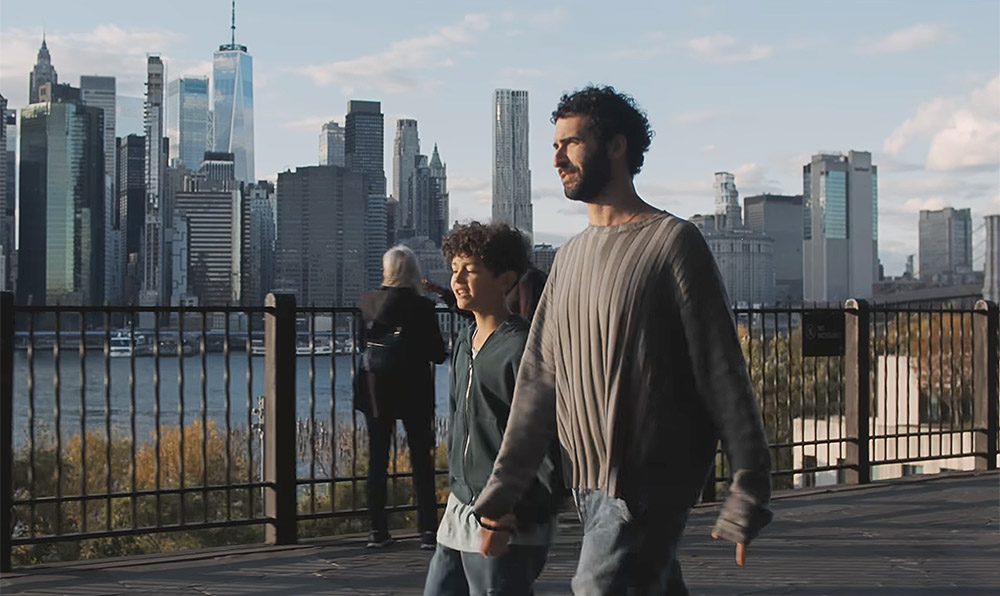 Courtesy A24
The film then fast-forwards roughly a decade later, finding Peter living an uneventful, airless, and stagnant routine alongside his roommate Oscar (Diego Calva), a hilarious, man-child party promoter and small-time drug dealer who lounges around as a chaotic homebody. That fragile routine is suddenly upended when Sophie’s close friend Edison (Kirby Howell-Baptiste) steps in, bringing along a young boy named Arlo (Reggie Absolom) from London. As it turns out, Arlo is Peter’s biological son from that long-forgotten bathroom encounter.
Narratively speaking, the film occasionally treads familiar territory where you can sense where the arc is heading, borrowing playful structural pages from Big Daddy, Three Men and a Baby, and Sean Baker’s Prince of Broadway. Yet, it still feels like a breath of fresh air thanks to how Firstman brings groundbreaking representation to the screen. We have rarely seen cinematic depictions of gay parents navigating the messy aftermath of an unexpected one-night stand under these circumstances. It grounds the audience deeply in its reality, pulling you right back in by finding a stellar emotional balance amidst the chaotic antics of the supporting characters.
 Courtesy A24
Firstman’s unapologetically anarchic comedic sensibilities give the movie an electric, unpredictable pulse, leaning into messy physical gags, unfiltered club-kid banter, and unapologetic debauchery without ever losing sight of the characters’ humanity. Watching Peter grapple with his own depressive spirals while stepping up to become a surprisingly dedicated, if deeply flawed, father gives the film its beating heart. Reggie Absolom is nothing short of wonderful as Arlo, and his extraordinary on-screen chemistry with Firstman elevates every scene they share. The two build a radiant, deeply believable bond through their quick-witted exchanges, bringing effortless warmth, sharp humor, and genuine emotional complexity to their dynamic. Early comedic mishaps, such as Peter taking Arlo out for pizza only for the dairy-allergic boy to dramatically vomit, anchor the relationship in endearing humor. Even when Peter’s lingering irresponsibility leads him to drag Arlo into late-night underground circles, the kid unexpectedly discovers his own fierce passion behind the turntables, underscored by a standout performance from Saturn Risin9 as Saffron. As a talented transgender artist, Saturn Risin9 brings an incredible depth of charm, compassion, and authenticity to the screen, anchoring one of the most vividly realized and emotionally resonant characters in the entire film.
Visually, the movie is an undeniably artful thanks to Adam Newport-Berra’s extraordinary cinematography. Shot on tactile 16mm film stock, Newport-Berra’s lens captures a gorgeous, grainy grit that delivers the aesthetics with an unmistakable, a rich texture and pulse. The richly textured visuals transform the film into a modern love letter to New York City, evoking the nocturnal affection and fondness of Woody Allen’s Manhattan mixed with the raw kineticism of modern indie cinema. The supporting cast shines just as brightly, including a hilarious downstairs neighbor played by Colleen Camp and wonderful romantic beats shared with Diego Calva’s Oscar that add the emotional layers. While Firstman’s signature comedic style occasionally threatens to overindulge, the narrative payoffs are profoundly affecting, tackling the red tape of single parenthood and the redemptive power of love with unbridled charm. Club Kid is a genuine crowd-pleaser and an undeniable highlight of the cinematic year.


Leave A Comment