


Following up with critically acclaimed hits like Dazed and Confused, Boyhood, and Everybody Wants Some, Richard Linklater demonstrated how fondly he remembers his youth and how much he draws from his past experiences. He’s always been a filmmaker that’s been drawn into certain eras as his characters drift through life and live in the moment as uncertainties loom ahead.
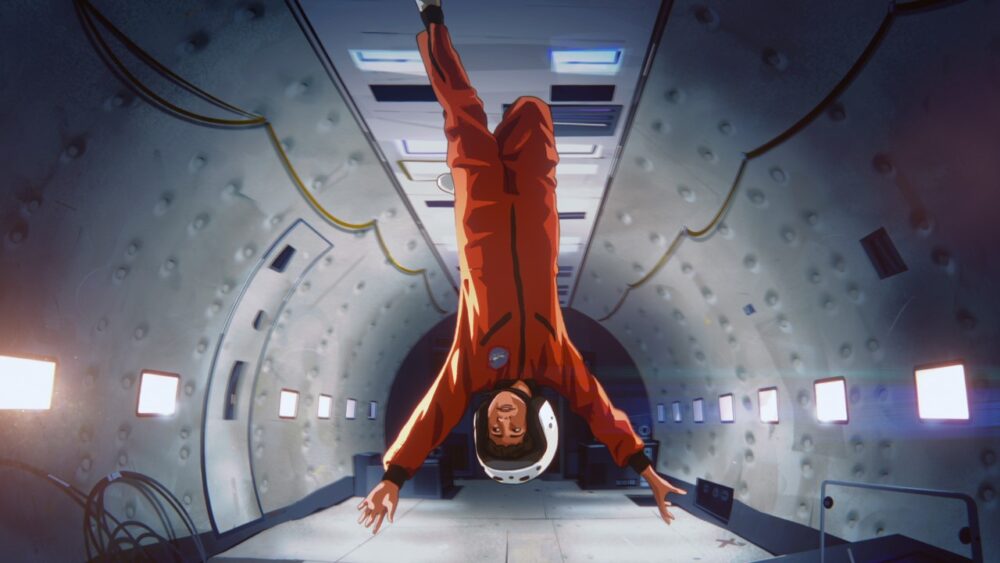
His most recent film, Apollo 10 1/2: A Space Age Childhood, is a unique animated coming-of-age saga that captures these same sensibilities with a joyous spirit and undeniable charm. It’s a film that uses the same rotoscoping animated film technique found in Linklater’s masterpiece Waking Life (2001) and his Phillip K. Dick adaptation of A Scanner Darkly (2006). The technique is also used effectively here, as it appears to be a hazy kaleidoscope of someone’s memory residing in a specific time and space. Also, his most recent framework is his most autobiographical yet about his upbringing: about a family of seven growing up in the Houston suburbs in the late 1960s, when canned ham was the dinner of choice, Jell-O was the desert of choice, Jiffy popcorn was popped on the stove, touch-tone phones were groundbreaking, the local cinema and drive-in movies were a place of retreat, and NASA was the local infrastructure that put the food on the plate.
:no_upscale()/cdn.vox-cdn.com/uploads/chorus_asset/file/23358468/Apollo_10_1_2__A_Space_Age_Childhood_00_15_16_09.jpg)
The film follows 10-year-old Stanley (Milo Coy), whose father (Bill Wise), works for NASA, and Stanley often has fantasies that become the narrative of the film in which Stanley is recruited by top government agencies that decide to do a trial test journey of a smaller lunar module that takes Stanley to a test moon landing just days before the famous Apollo 11 moon landing. Even though it’s animated, where the narrative surrounds Linklater’s own younger fantasies and daydreams, there is something quite charming and vivid about its nostalgic remembrances. While nostalgic, Linklater subverts expectations as he examines human remembrance, how the human mind preserves memories as well as distorts them by animating our past experiences
The narration and style certainly echo the Wonder Years, in which we get historical viewpoints as well as personal memories that include Stanley’s cheap father, sneaking the family into drive-through movies by hiding the oldest under sheets and proclaiming the youngest is under the age of 12 in order to receive free admission. Stanleys (and Linklater’s) memories often include around the TV, playing baseball the street, and looking out at the sky in awe. One of the film’s most memorable moments comes from Stanley remembering the programs he used to watch TV with his siblings, and cleverly Linklater shows rotoscoped versions of old TV shows and movie scenes, including The Wizard of Oz, and The Twilight Zone in rotoscope makes it even more eerie. Linklater also celebrates nostalgic memories of many beloved television shows and board games, and we see Stanley’s early cinematic experiences in the theater with Stanley Kubrick’s 2001: A Space Odyssey and Robert Altman’s Countdown.
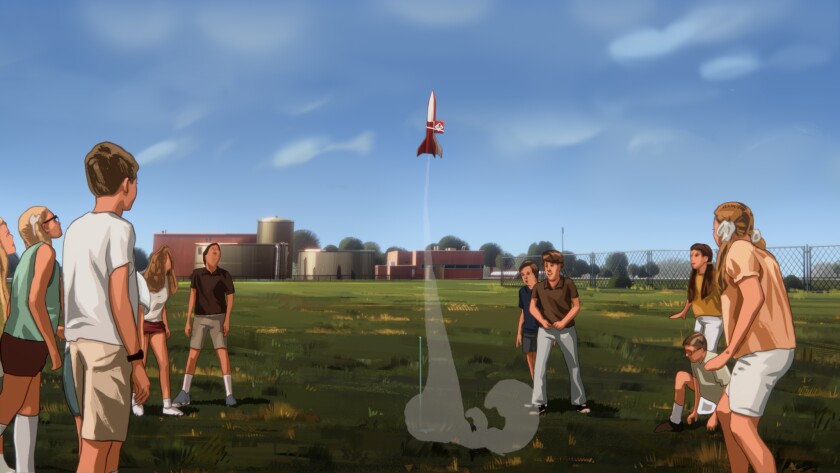
Both insightful and reflective, Linklater deserves praise for his approach here. While the film does have a sense of innocence and celebrates nostalgia, Linklater doesn’t allow the material to be all exuberant in his chronicle of the space age. While the white kids in the suburbs were lighting off bottle rockets with grasshoppers or trading in personal litter for snow cones at their local ballpark, the Vietnam War was at its peak in daily casualties. While Stanley’s father contributed to the Apollo 11 moon landing, many black citizens in Harlem were questioning why the US government poured so much money and resources into the program while people in their own neighborhood were enduring harsh poverty and starvation. As Linklater explores, such agony is often whitewashed in history as we glorify space adventure with nostalgia and romance, and he does this without ever sermonizing. Linklater also highlights how such social movements as feminism and Black Power movements, along with the anti-war movement, were at their peak during NASA’s moon race with the Soviets, which ended up becoming a very symbolic gesture and an easy distraction from the perils of the world.
The narrative, which starts in 1968 and continues into 1969, could have just been another coming-of-age saga, but Linklater elevates the material into a sophisticated and thoughtful form of ideas and philosophy. Far from dull, Linklater delivers the material with a fast-paced and highly charming narrative that zips along with wise nostalgia and bright humor, interspersed with thoughtful historical perspective. It would be quite beneficial if teachers in history classes would show it to their students.
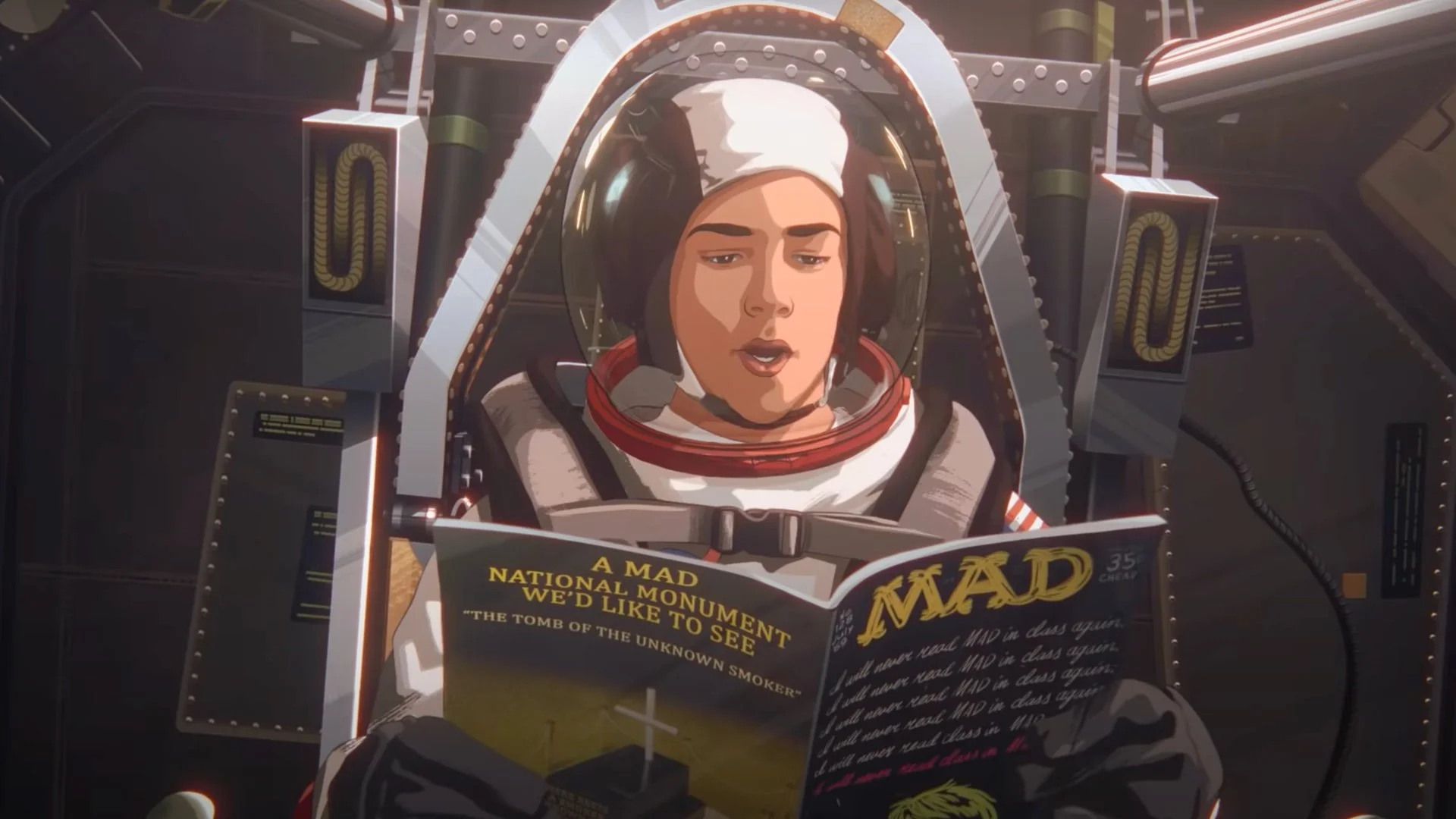
The animation once again astonishes, Linklater, along with Tommy Pallotta, utilizes the rotoscoping technique with breathtaking animation. Much like Waking Life and A Scanner Darkly, Linklater’s film continues the expressive, fragmented style that lends itself to the haziness of memory as Stanley recollects his memories as all of his memories feel foggy. The animation mostly has stark blues and yellows. Shades of brown and colorful backgrounds are added to the screen, along with other decor and fashion that capture the time setting quite vividly.
In the end, Linklater doesn’t succumb to Stan or any other tensions or routine formulas. He’s really just a kid living in a bygone time capsule, as there is no scapegoat antagonist, or unnecessary love interest. The film continues on, and you almost don’t want it to end as the film’s insights and details feel so alive and refreshing. With a breezy 95 minutes, the film ends at just the right time limit, and it comes off every bit as personal as other recent nostalgic pieces of late, like P.T. Anderson’s Licorice Pizza and Kenneth Branagh’s Belfast. The film also recalls Fellini’s Amarcord, Alfonso Cuaron’s Roma, and Woody Allen’s Radio Days with its semi-autobiographical plotless storytelling that are also retellings of the artists’ childhood.
The older Stan, voiced by Jack Black, is quite a compelling narrator, and Linklater’s storytelling once again excels. It’s refreshing to see a film feel so intimate and personal that takes you on a unique journey. In the end, Linklater invites the viewer inside his personal memories and perceptions of a very fascinating period in human history, and how mundane moments in our lives end up becoming more amplified as we live on. In this innovative film, Linklater once again triumphs, as he delivers a curiosity and care in just about every scene. It is an absolute delight.


Read the review, can’t wait to see it!
Yes, I did indeed think of WAKING LIFE as well. Linklater is multi-talented, and brings so much to different forms. Your astute review shines with a bevy of spot-on observations. I smiled when I saw the comparisons to both LICORICE PIZZA and BELFAST, two recent well-made nostalgic works.
Thanks for another informative review!
Can you be more specific about the content of your article? After reading it, I still have some doubts. Hope you can help me.