



For decades now, it has been an ongoing joke that the Fantastic Four property is cursed when it comes to making successful film adaptations. Roger Corman famously attempted to bring the Marvel heroes to life in the, still, unreleased 1994 movie. The first proper big-screen treatment came in 2005, with the amusing, yet flimsy Fantastic Four, directed by Tim Story, starring Jessica Alba, Chris Evans, Michael Chiklis and the late, Julian McMahon. While an equally disposable sequel was made, the characters were rebooted in the doomed 2015 film, Fant4stic, which was disowned by director Josh Trank before it even opened. As the Fantastic Four curse rages on, Kevin Feige and Marvel Studios have since retained the rights to the property, hitting a complete reset on the beloved character. Now incorporated into the MCU, Feige and co. are coming off a string of flops including the surprisingly great Thunderbolts and overall genre fatigue. As the last Marvel movie until 2026’s Avengers: Doomsday, the long-awaited reboot of the Fantastic Four has arrived at the helm of Wandavision director Matt Shakman. With rich aesthetics and a compelling period setting, the newest iteration of the classic characters is a thoroughly okay Marvel movie, which is still better than most Marvel these days.

Courtesy Marvel Studios
Four years ago in the alternate world of Earth 828, scientist and inventor Reed Richards (Pedro Pascal), his wife, Sue Storm (Vanessa Kirby), Sue’s brother, Johnny (Joseph Quinn), and Reed’s best friend Ben Grimm (Ebon Moss-Bachrach) were given superpowers after a mission into space goes awry. After coming into contact with cosmic rays, they become the Fantastic Four, known to the world as Mr. Fantastic, Invisible Woman, Human Torch and The Thing. With the assistance of their trusted robot, H.E.R.B.I.E., the FF become Earth 828’s leading protectors, giving the world a much-needed sense of heroism. Sue and Reed are expecting their first child together and while Reed is thrilled to finally become a father after years of trying, he fears for the potential implications of two superhumans having a baby. Shortly thereafter, the world is shaken by the arrival of the Silver Surfer (Julia Garner) who comes with an ominous message; sacrifice Sue and Reed’s unborn child for the fate of the world. If they don’t, their world will be annihilated at the hands of the god-like being, Galactus the Devourer (an imposing Ralph Ineson). Unwilling to put their child in harm’s way, the heroes plot to defeat Galactus without turning over the baby. After a crisis ensues once word of the Surfer’s message is shared, the team pleads with the world as a family to work together to help stop Galactus.
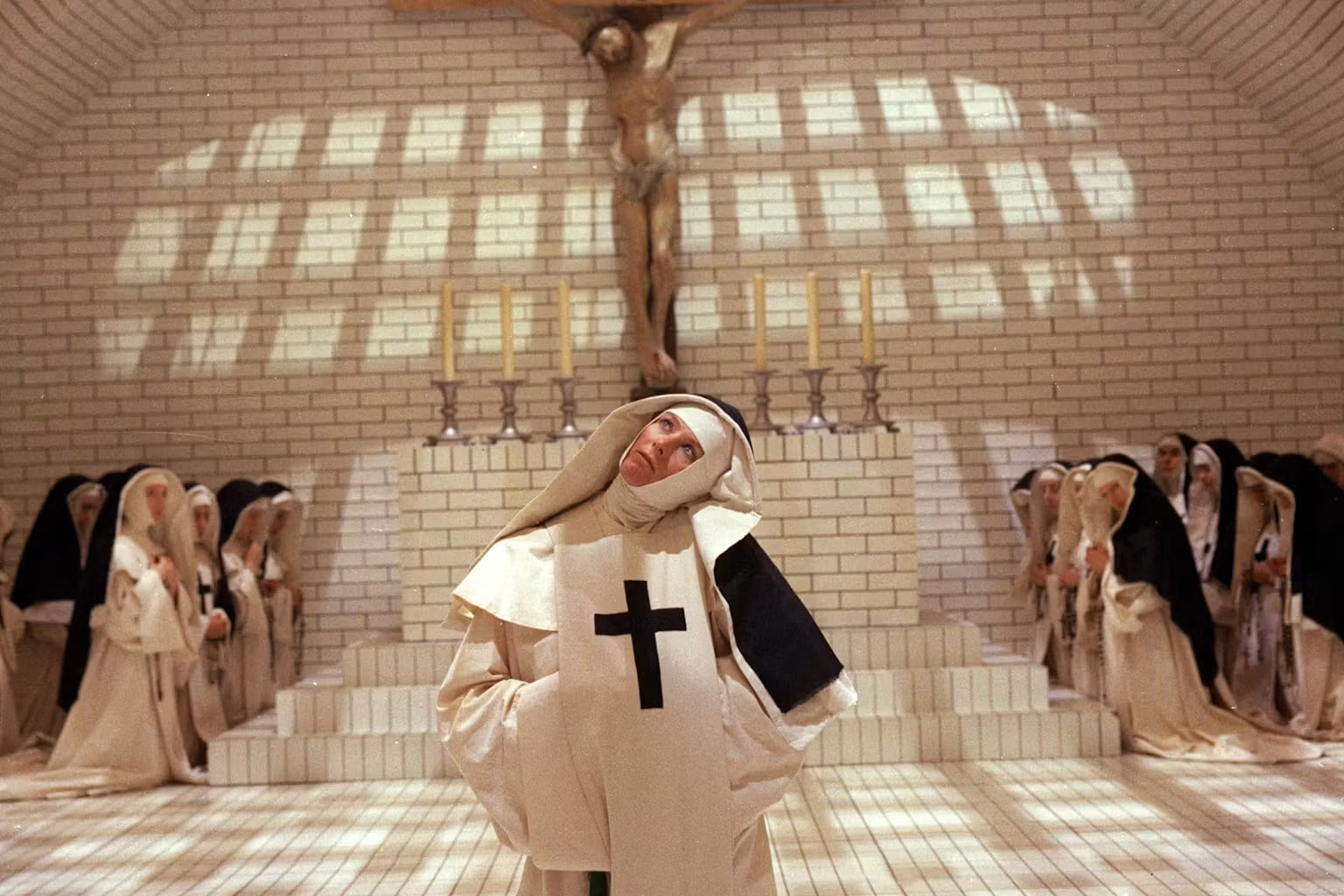
Director Matt Shakman does an exceptional job of recreating the kitschy sense of tone and spirit of the classic comics created by Stan Lee and Jack Kirby. The Fantastic Four: First Steps immediately dazzles with its retro-futuristic setting and impeccable set design. Shakman showed his impressive skill of blending modern visual effects with a period setting in the Disney+ miniseries Wandavision, but the scope of his latest endeavor is an even greater step up. Credited to production designer Kasra Farahani, this is the first Marvel film in ages that can actually be considered textured and tactile in its environments. The streets of 60’s-era NYC are encased with expansive period detail, from the classic cars and storefronts, to the costuming and flourishes of futuristic technology. We’re treated to brief glimpses of the positive impact the FF have had on their planet, offering a wholesome and even substantive look into the world around them. Reed Richards hosts a syndicated educational program titled “Fantastic Science with Mr. Fantastic”, a chintzy Bill Nye-esque television show and an animated Saturday morning cartoon based on the group has even been made. Cinematographer Jess Hall’s (Hot Fuzz) colorful and warm photography complements the tone of the film. Despite a few moments of samey-looking brown and grey backgrounds in critical set pieces, this is easily the best-looking Marvel film since Black Panther. Unlike many recent Marvel films that have been caked in excessive green screens and over usage of CGI, First Steps, and this year’s Thunderbolts, prove that utilizing effective, practical filmmaking can make the difference between immersing the audience in your world, versus alienating them. The filmmakers have made a vivid and sumptuous world to bask in. Unfortunately, the film is in such a rush to get through its story, you don’t get to fully invest in it. Running at just under two hours, First Steps is never given the chance to slow down for a beat and breathe; to take in the world we’re inhabiting, or the characters that exist within it. With numerous subplots and side characters introduced and subsequently tossed aside, you get the sense that Shakman’s film has been trimmed within an inch of itself. This rushed pacing robs so much of the potential exhilaration or wonder that is only fleetingly touched upon. Even the previously-advertised John Malkovich character has been entirely scrubbed from the film. What results is a film that tends to skirt past its most compelling ideas.

Courtesy Marvel Studios
Sue and Reed are shown to be distressed over the possibilities of having a child with two superheroes as parents. Fearing not just for the child’s safety, but whether or not their baby will have powers. A potentially unique and layered idea is quickly resolved once the baby is born and is used as a third act macguffin. This idea is used much more effectively in The Incredibles, for which this film borrows heavily from. Natasha Lyonne is introduced as Rachel, Ben’s potential love interest, who has a few nice moments opposite Ebon Moss-Bachrach. Yet, Lyonne is also tossed to the side once the plot kicks in. Paul Walter Hauser steals every frame he is in — which, admittedly, is not much — as Mole Man, leader of the underground society of Subterranea. Yet another intriguing glance at a side of this world that the film couldn’t be bothered to explore.
The new group dynamic works well enough. Ebon Moss-Bachrach is a very strong Ben Grimm/The Thing. The kind-hearted pilot-turned-clobbering giant with skin made of rocks is the film’s strongest character, with a softer, more gentle take on the iconic superhero. This film’s comics-accurate design of The Thing is a robust display of modern CG, even if one yearns for the days of the practical-suited look of the 2005 movie. Like many of the film’s best assets, he isn’t used nearly as much as you would hope, but the time spent with the character is a consistent highlight. Pascal, in his third big-screen starring role within seven weeks, is a fine Reed Richards, but his performance is unable to overcome a flatly written character. Pascal plays Richards as a Clark Gable-style leading man with oozing charisma, a brilliant mind and a conflicted heart regarding the birth of his baby boy. There simply isn’t much to this Mr. Fantastic, making him a milquetoast hero at the center of the film.
Vanessa Kirby’s Sue Storm is the clear heart of this iteration of the FF, providing the most emotional depth. An otherwise rote sequence of a hero pleading with the world is rendered quite tenderly in the hands of the Oscar-nominated actress. As Sue makes a live, televised plea with the world to band together in the face of a looming assault by Galactus, Kirby portrays the bravery and care of Sue Storm unlike any previous adaptation. Her speech is genuinely heartfelt and is the moment where the film nearly clicks together, emphasizing the power of family and unity in the face of impending doom. Joseph Quinn’s uneven Johnny Storm is stuck between playing the schticky comic relief and a character that is expected to suddenly exhibit pathos at a moment’s notice. Johnny is a complete goofball in one scene, then heroic and composed the next. Quinn has delivered solid work in the past, but isn’t able to find a firm middle ground with the character. His Human Torch fails to resonate on a consistent, human level. Ralph Ineson’s menacing presence is expertly utilized as the gargantuan space god, Galactus. The iconic Marvel villain is brought to life with a stellar mix of practical make-up, miniatures and just the right amount of digital effects. Ineson does not have sizable screen-time, but his sinister presence lingers throughout the film. Galactus is such an imposing figure, you’d wish he had a better, more satisfying conclusion.

Courtesy Marvel Studios
The Fantastic Four: First Steps is the best Fantastic Four movie to date, almost by default. Director Matt Shakman sets up a compelling and rather dazzling introduction that is ultimately hampered by rushed pacing and lack of meaningful character depth. While still an entertaining and occasionally witty film, this is one of the rare superhero movies that would have benefited from a longer runtime. For what should have been a slam-dunk is, instead, rendered a mixed bag through a lack of thematic focus and numerous missed opportunities.
The Fantastic Four: First Steps is now playing in theaters.

Fantastic 4.
Loved the first ten minutes, that retro 50’s look was fresh and appealing . The next hour tonally and story structure was a mess. Definitely need another script tweek, but the last act it came together and was quite satisfying.
This is the first Marvel movie in a long while I’ve had any interest in seeing.
Oh this I loved – that was my favorite comic as a kid.
Beirut, Lebanon
CNN
—
A deadly Israeli airstrike on Hezbollah’s stronghold in southern Beirut on Friday has left over a dozen people dead, including a high-ranking Hezbollah commander, sharply escalating the conflict between the two sides and raising fears of all-out war.
[url=][/url]
Senior Hezbollah commander Ibrahim Aqil, part of Hezbollah’s elite Radwan Force, was assassinated along with “about 10” other commanders, Israel Defense Forces (IDF) spokesperson Daniel Hagari said, accusing them of planning to raid and occupy communities in Galilee in northern Israel.
Hezbollah confirmed Aqil’s death on Friday, saying he was killed “following a treacherous Israeli assassination operation on 09/20/2024 in the southern suburbs of Beirut.”
According to Hagari, the targeted commanders were “underground underneath a residential building in the heart of the Dahiyeh neighborhood, using civilians as a human shield” at the time of the attack.
Lebanon’s health ministry said at least 14 people were killed and 66 others injured in the airstrike, which leveled a multistory building in a densely populated neighborhood.
Aqil had a $7 million bounty on his head from the United States for his suspected involvement in the 1983 strike on the US Embassy in Beirut, which killed 63 people, as well as the bombing of the Beirut Marine barracks, which killed 241 US personnel later that year.
A CNN team on the ground in Beirut saw a frantic effort to rescue people from underneath the rubble and rush the wounded to hospital. Witnesses said nearby buildings shook for nearly half an hour after the strike, which the IDF said it had carried out at around 4 p.m. local time.
A week of surprise attacks
Friday’s strike marked the fourth consecutive day of surprise attacks on Beirut and other sites across the country, even as Israeli forces continued deadly strikes and operations in Gaza and the occupied West Bank.
The first major attack against Hezbollah this week came Tuesday afternoon when pagers belonging to the militant groups’ members exploded near-simultaneously. The pagers had been used by Hezbollah to communicate after the group’s leader, Hassan Nasrallah, encouraged members to switch to low-tech devices to prevent more of them from being assassinated.
Almost exactly 24 hours later, Lebanon was rocked by a second wave of explosions, after Hezbollah walkie-talkies detonated in Beirut and the south of the country on Wednesday.
At least 37 people were killed, including some children, and more than 3,000 were injured in the twin attacks.
In a United Nations Security Council meeting on Friday, UN human rights chief Volker Turk on Friday warned that the detonation of communication devices could violate international human rights law.
Lebanese Foreign Minister Abdallah Bou Habib and Israeli Ambassador to the UN Danny Danon clashed at the heated meeting, with Bou Habib calling on the council to condemn Israel’s actions and Danon slamming the Lebanese envoy for not mentioning Hezbollah.
Предлагаем вам высококачественный тротуарный бордюр – идеальное решение для обрамления дорожек, газонов, цветников и других элементов ландшафтного дизайна.
Наш тротуарный бордюр отличается прочностью, долговечностью и устойчивостью к воздействию внешних факторов, что делает его идеальным выбором для любых условий эксплуатации – [url=https://telegra.ph/Kak-trotuarnaya-plitka-izmenila-moj-uchastok-lichnyj-opyt-vybora-i-ukladki-06-26]Желтая тротуарная плитка[/url]
Perfect piece of work you have done, this web site is really cool with good info .