


An engrossing, whodunit murder mystery about desire, murder, and forbidden love, Decision to Leave is a complicated and intricate mind-game of a movie. The film directed with such vigorous craftsmanship by Park Chanwook in his first film since The Handmaiden, which was released six years ago in 2016, holds an unusual blend of romantic drama and suspense thriller about a detective attempting to solve a mystery case that holds many chilling and equally vulnerable moments. The film was also awarded the Best Director Prize at the 2022 Cannes Film Festival. This film has been officially submitted as South Korea’s entry to represent the nation’s Best International Feature Film category at next year’s Oscars.
Inevitably, comparisons will be made to Alfred Hitchcock in its craftsmanship that holds layers of drama with suspense; Chanwook’s narrative is an enigma that certainly overly complicates itself but is anchored by its technical mastery, skillful performances, and well-earned character depth. With many twists and turns that can make your head spin just as much as his 2003 masterpiece Oldboy (released in the US in 2005), Chanwook’s latest may not be as ruthless as his cult masterpiece, but it is every bit as dizzying with its dense and intricate plotting. Repeat viewings will probably make Decision to Leave feel more like a grounded work, and this is Chanwook’s best film since Oldboy.
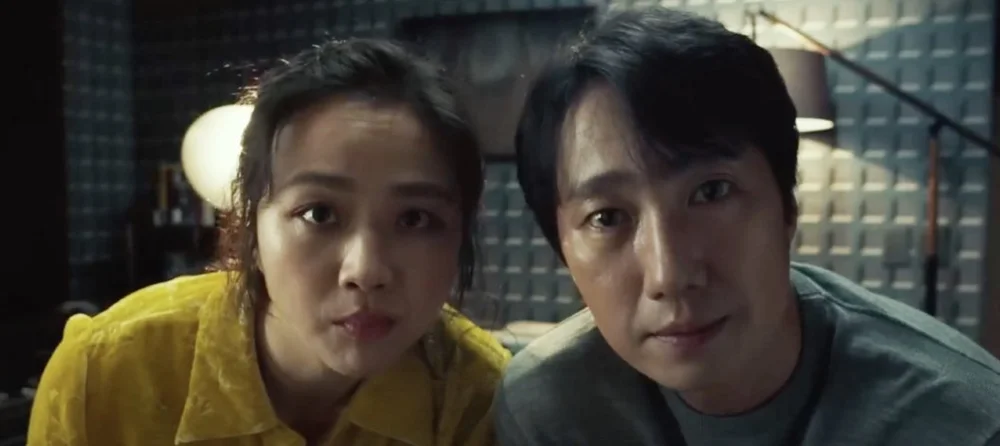
Just as Oldboy was Chanwook’s salute to the revenge genre, Decision to Leave could be viewed as a modern-day rework of Hitchcock’s Vertigo and film noir. The film’s protagonist is a skilled detective, Hae-Joon (Park Hae-il), who suspects a murder was committed after an ace mountain climber, Ki Do-Soo (Yoo Seung-mok), died after collapsing after rock climbing on a steep mountain. Hae-Joon leads the investigation, which allows him to press questions on Ki-Do’s wife, Sea-rae (Tang Wei), a Chinese immigrant who works as a caregiver for elderly people, who draws suspicions after she appears apathetic to her husband’s death. Hae-Joon brings her in for questioning and ends up becoming very obsessed with the case and of Ki So-Soo. Hae-Joon even ends up staking out her apartment during the late hours. Eventually, he ends up becoming very drawn into her, He’s an insomniac who also happens to be disconnected from his droll wife (Lee Jung-hyun). They don’t live together, she works and resides in a rural area of South Korea off the sea, and, of course, Ki Do-Soo’s homicide work demands to be attended to in the city.
After an endless number of restless nights, Seo-rae’s innocence ends up persuading Hae-Joon that she is incapable of pulling off such a murder. She even practices a soft-spoken form of meditation that puts him to sleep. Eventually, Hae-Joon becomes obsessed with Seo-rae, which echoes the archetypes that we’ve become accustomed to from the noir genre. Chanwook also avoids having both his main characters have any intimate sex scenes together. Their relationship feels platonic, but their interactions certainly yearn for an unspoken desire. Their bond is something of a soulmate–both characters hold a vivid chemistry that echoes such pairings we have seen before in such masterpieces as In the Mood for Love and Lost in Translation. You can sense their human connection through expressions, body language, and demeanor each time they are on screen together.
This allows Chanwook to explore the mechanics of many other familiar noir films, like Roman Polanski’s Chinatown, Bong Joon-ho’s Mystery of Murder, and Hitchcock’s Vertigo. While Chanwook’s Decision to Leave becomes every bit as prickly in narrative plotting as those masterpieces, Chanwook’s approach still feels fresh considering he allows character depth and vulnerability to flourish out of the primordial. Chanwook is able to transcend the noir genre into a story about human longing.
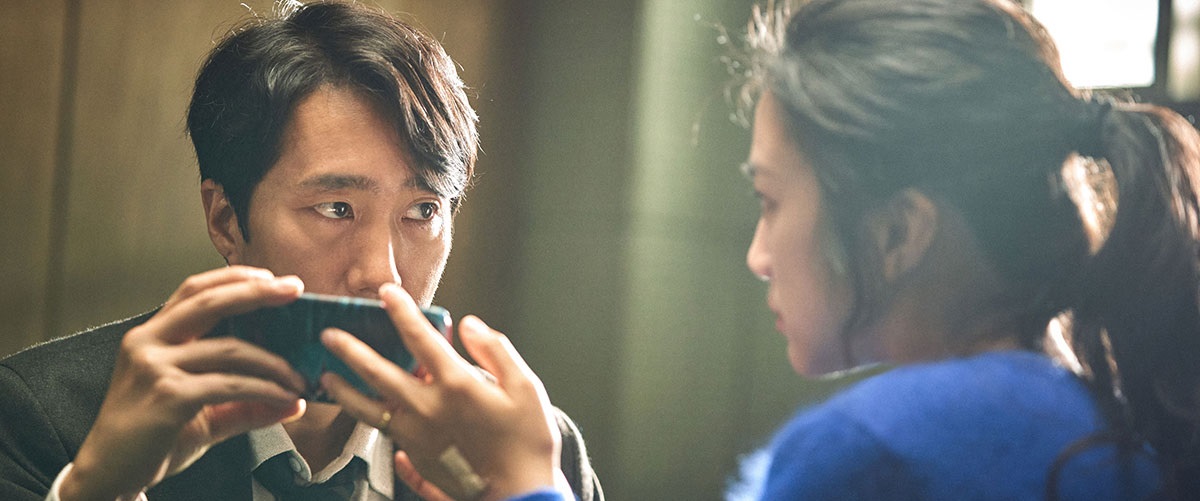
We have memorable interactions between Hae-Joon and Sea-Rae. From their conversations in the interrogation room, where they end up sharing sushi together, you can sense that these people belong together despite the outside circumstances that surround them. Even in the scene where she calmly puts him to sleep, you feel the fondness between the leads. Just when the human interaction takes off, the romantic obsession and murder-mystery go full circle once again after a second murder is committed that points back to Sea-rae. The evidence becomes more damning than the circumstantial before, which leads Jae-joon back to questioning the investigation of Sae-rae’s husband’s death. This involves a visually alluring montage going back to the murder to show how she could have pulled off the murder.
Decision to Leave ends up also becoming a portrait of perception intertwined with love. In the end, Chanwook eventually raises a slew of ambiguous questions: does she truly love him, or is he merely a pawn in her game of self-interest? Love can make us blind after all. The film ends up shifting gears once Chanwook allows the film to become a murder suspense drawer. In typical Chanwook fashion, he builds up an excessive amount of plotting that consists of flashbacks, supporting characters, and a plot device where technology ends up being the centerstage to the story as cell phones end up revealing whereabouts, locations, recordings, and undoing contradictory alibies. Both a technical exercise and dense in its storytelling, there is the overriding notion of how perception can heighten one’s denial.
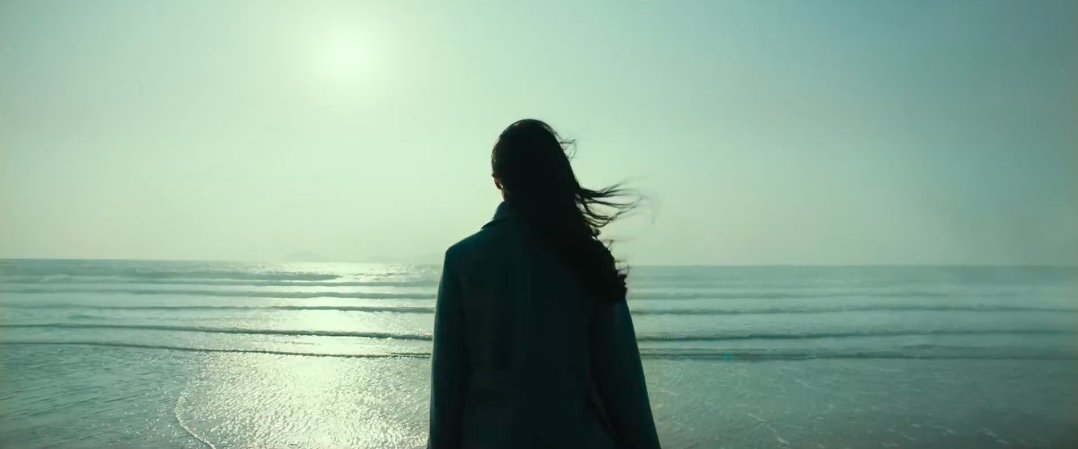
Regardless of how one responds to Decision to Leave and the ambiguous, unforgettable finale that holds some striking imagery on a wavy beach, the images are utilized with various wide-lens and long-lens shots by cinematographer Ji-yong Kim. There is a strong sense of attention played by Chanwook that is commanding. There is no doubt he proves he has a love of cinema and a sense of precision. Every plot thread, character arc, characterization, and genre-bending element he aims for feels secure in his unyielding vision. What could have just been a routine noir riff ends up holding many increments that transcend all of the familiar archetypes and noir tropes. It’s a film that allows a lot to reflect on upon viewing and that carries through all the way through its finale, in which Chanwook’s “Decision to Leave” reassures itself as an intricate thriller that eventually builds up more questions than it answers.
Decision to Leave opens in limited theaters Friday, October 14th and will be released at Cinema Detroit Friday, October 28th.
https://www.cinemadetroit.org/ for tickets and showtimes


This one has been high on my list since it was announced. Can’t wait until it’s released
I’m hoping this gets a wider release soon. I love his previous work!
can’t wait to see it…
Nice for a non English speaking movie to get recognition
Love the story. Definitely going to watch this film. There are a tremendous amount of talent in the South Korean cinema. Great story telling with amazing directing styles.
Park Chan-wook is the reason I and a lot of people got into Korean cinema in the first place. So I will always make time for him whenever he has a new movie out.
This looks very good and I will be for sure to check it out!
Yes looks like a really good film. Great review, Robert.
Sounds like an intriguing movie that I hope to watch in the near future.
Very good blog article.Really thank you!
Thanks so much for the article post.Really thank you! Much obliged.
Your article helped me a lot, is there any more related content? Thanks!