

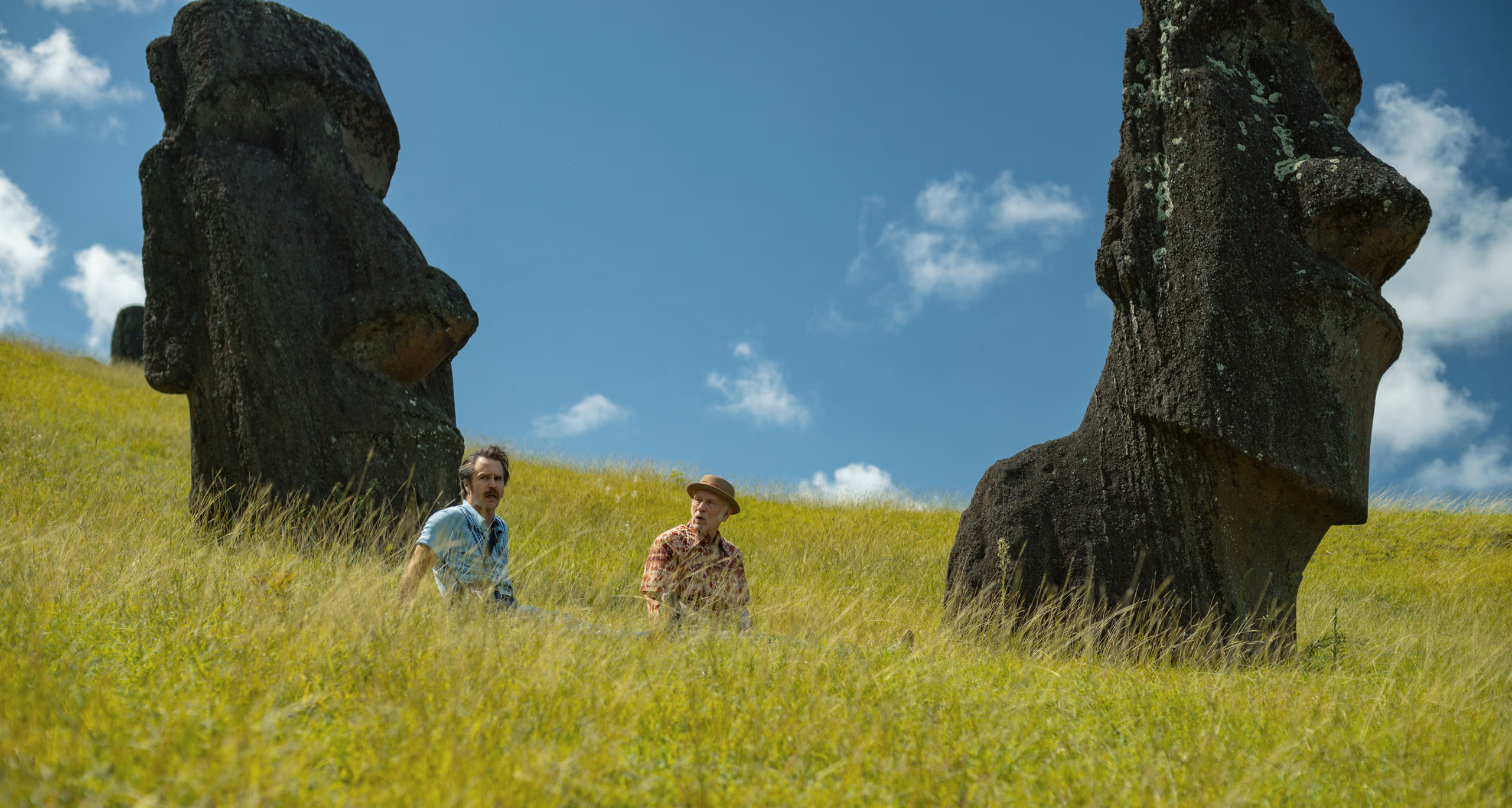

Martin McDonagh’s fifth film Wild Horse Nine proves once again how he balances dark, biting comedy quite like no one else can. Returning to the poignant themes of male camaraderie and the lingering specter of suicide that anchored In Bruges, the film explores the fragile bonds of friendship under extreme emotional strain with incredible humanity and great emotional arcs.
Courtesy Searchlight Pictures
Set against the looming shadow of General Pinochet’s 1973 coup in Chile, the narrative immerses itself in the murky world of CIA active measures, anti-Marxist covert operations, and US geopolitical intervention across South America. Shortly before the political upheaval strikes, CIA agents Chris (John Malkovich) and Lee (Sam Rockwell) find themselves dispatched from Santiago to Easter Island by their sinister bureau chief, MJ (Steve Buscemi). Amongst the island’s iconic moai statues, a routine operation quickly devolves into an existential crisis. The central conflict thickens when Chris forms a profound, unexpected connection with two local Chilean women and rebellious activist students (Mariana di Girolamo and Ailín Salas), whose anti-imperialist fervor directly collides with the agents’ mission.
This unexpected bond between Chris and the two Chilean women, played by Mariana di Girolamo and Ailín Salas, acts as the emotional lightning rod of the picture. Their presence disrupts the weary cynicism of the covert operations, forcing Chris to reckon with his own complicity in foreign subversion while Lee grows increasingly uneasy about their unraveling assignment. Mariana di Girolamo and Ailín Salas bring an unyielding, fierce authenticity to their roles, challenging the agents’ worldviews not through dramatic grandstanding, but through quiet conviction and sharp banter. Their interactions with Chris inject a grounded human cost into the political backdrop, turning what could have been a cold espionage tale into a haunting study of conscience.
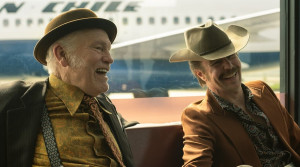
What truly elevates the material is the ferocity and density of the writing. The script is remarkably dense and textured, filled with intricate thematic layers, sharp rhythmic cadences, and long stretches of dialogue so mesmerizing and meticulously constructed that it evokes the classic, captivating conversational flow of Quentin Tarantino’s Pulp Fiction. There are conversations in this film between Chris (John Malkovich) and Lee (Sam Rockwell) that are comparable to the Royale with Cheese conversation in Pulp Fiction.
Courtesy Searchlight Pictures
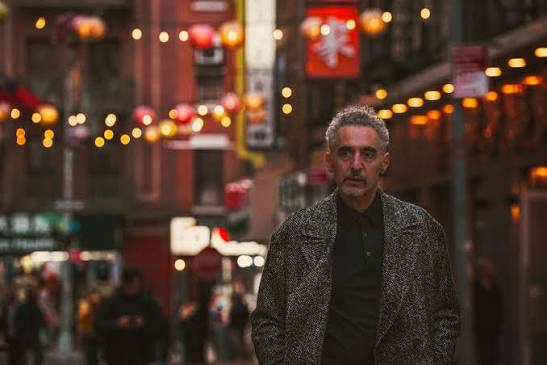
At the center of it all is a towering performance by John Malkovich as Chris, delivering what is indisputably one of the single greatest screen turns of his storied career. Malkovich completely transforms into Chris by shedding his usual theatrical theatricality for a weary, heavy-bodied demeanor that feels steeped in decades of morally compromising statecraft. His body language carries the weight of a man whose physical and mental faculties are quietly crumbling from within. Chris suffers from a slipping, forgetful memory alongside a creeping physical illness, and Malkovich grounds these ailments with heartbreaking realism rather than theatrical melodrama. The memory lapses inject a fascinating, unpredictable dynamic into his relationship with Lee (Sam Rockwell), shifting their banter from sharp comedic friction to something deeply tender and vulnerable. As Chris struggles to retain key facts or lapses into fog, Lee is forced to alternate between a frustrated junior partner, an enforcer, and an unwilling caretaker, creating an extraordinary push-and-pull between the two men.
What makes Malkovich’s work so thrilling is the delicate wire walk between dark comedic absurdity and a cold, lurking menace. He delivers McDonagh’s biting dialogue with a hushed, razor-sharp cadence, where a sudden glint in his eye reminds you of the lethal operative Chris once was, even as he forgets where he left his watch moments later. Yet beneath the menace and the sharp dark humor lies an immense, surprising layer of empathy and vulnerability. Malkovich infuses Chris with a profound sense of late-life remorse, allowing the character’s internal awakening to feel wholly earned as he confronts the reality of his past missions. By the time the film reaches its climax, Chris’s emotional arc hits with staggering force, transforming a tired covert agent into a deeply human, tragic figure grasping for redemption before his own mind and body give out entirely.
Courtesy Searchlight Pictures
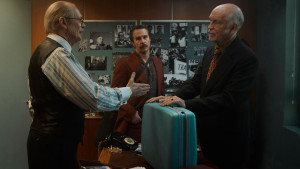
Equally vital to this central alchemy is the extraordinary dynamic between Chris and Lee who is collaborating with McDonagh for a third time. The duo captures an electric screen synergy that rivals the iconic partnership of Colin Farrell and Brendan Gleeson in both In Bruges and The Banshees of Inisherin, bringing a combustible rhythm to every shared exchange. The supporting cast is equally stellar, featuring an exceptionally effective Steve Buscemi as MJ, who delivers a wonderfully deadpan yet subtle sinister edge, alongside Parker Posey, who provides a hilarious performance as Lee’s wife. Beyond its dialogue and performances, the picture shines through its rich texture, striking landscape photography, and a quiet narrative discipline that lets every emotional beat land with unfiltered power. McDonagh’s latest film is so wonderfully written and fiercely acted, leaving an urgent desire to experience it all over again in more viewings.
Wild Horse Nine is now playing in theaters.

Leave A Comment