


In her remarkable feature directorial debut, A.V. Rockwell’s poignantly rendered A Thousand and One goes head-on with some very potent issues such as race in America, our flawed institutions, the duplicity of gentrification, and just how cruel and oppressive these institutional forces can be when, on the surface, they are supposed to level the playing field. The film brilliantly explores race in New York City and America, and it does so without feeling didactic. But at its core, it’s a very compassionate portrait of motherhood, and Rockwell pulls off the film with great empathy. It’s a film where Rockwell gives assured treatment to her characters and themes. Set in Harlem in the mid-1990s up until the mid-2000s, this emotionally charged American drama benefits from a vivid authenticity that views the story from the perspectives of both a struggling single mother and her orphaned son.
An original screenplay by writer-director Rockwell gives fresh insights into the plight of what it means to be a black woman in Harlem and during the Rudy Guliani and Michael Bloomberg eras. With an artfully vibrant directing style, Rockwell should be praised for her engaging storytelling and directing skills. Her visual style flourishes with impressive camerawork, the narrative unfolds with a ferocious vibrancy, and her greatly scripted exchanges are sustained with raw emotion. This is all thanks to the film’s superb performances, especially the lead performance by Teyana Taylor, who turns in a very memorable performance that is destined for Oscar buzz. In fact, the film deserves consideration for many categories including Best Picture, Best Director, Best Original Screenplay, and cinematography as well.
 Courtesy Focus Features
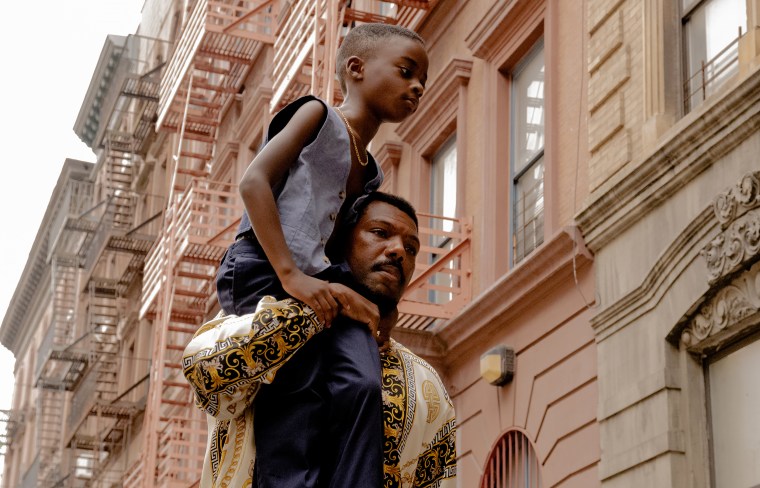
The sprawling saga that channels the structure of Barry Jenkin’s Moonlight begins with a 23-year-old woman named Inez (Taylor), who is released from jail after serving nearly two years on Riker’s Island. Inez ends up reconnecting with her six-year-old son, Terry (Aaron Kingsley Adetola), after seeing him on the street. She claims she is going to improve her life, and Terry feels like he has heard this before as he now lives in a foster home. Once Inez discovers the news that Terry is in a children’s hospital after hurting himself trying to escape his foster home, she ends up visiting him in the hospital. While holding a lot of regret and knowing just how relentless the outside world can be, Inez’s motherly instincts kick in, and she kidnaps her son out of the hospital and ends up raising him. Is one of the many rash decisions Inez makes during the course of the story, but her foolhardy choices come from a place of solicitude, including reconnecting with one of her ex-boyfriends, Lucky (Will Catlett), who was just released from prison.
Inez makes a living by doing hairwork on the side, and she also gets a job in cleaning, where she must commute nearly an hour to Queens. She ends up renting out an apartment in Harlem and ends up getting a fake ID and new alias for Terry, who goes by Darrell—a decision that ends up having consequences later on in Terry’s life when it comes to his self-confidence and educational advancement. Inez ends up building a makeshift family with Lucky, who isn’t too keen on being with a woman who has a young child. Tension arises between Terry and Lucky, which carries on as Terry grows older.
 Courtesy Focus Features
While Rocke”s characterization of Lucky is certainly flawed, he is short-tempered (though never psychically abusive) and conflicted. Sometimes he does come home for long stretches of time, and other women in the area flirt with him. With all these flaws, Rockwell shows a lot of empathy for his character and doesn’t vilify him. In a lesser filmmaker’s hands, Lucky would probably be that one-dimensional and abusive boyfriend character that resorts to drugs and alcohol. The characterization here of Lucky is more equitable, and every character is presented with dignity and grace. Eventually, the bond between Terry and Lucky grows stronger as Lucky has a very rewarding character arc that feels earned, intricate, and unhurried.
Further elevating the film’s narrative and intricateness, which includes familial dynamics and struggles, is the social commentary on systematic inequality in Harlem. Rockwell brilliantly intermixes audio of speeches by Rudy Giuliani and Michael Bloomberg, in which they embrace the NYPD Blue stop-and-frisk policy that targeted black and Hispanic men. The way Rockwell presents this has a galvanizing effect on the narrative, and it effectively works on the narrative flow of the film. For instance, as Terry gets into his teenage years—played by Aven Courtney at age 12 and Josiah Cross at 17—we see Harlem change as well. We see signs of gentrification occur as landlords begin remodeling buildings, which coerces the current tenants out of their apartments and brings in wealthier residents (mostly white) and businesses. While remodeling is always important and sanitary, Rockwell accurately shows how it is more often acquisitive than helpful. A great moment involves a white landlord, Jerry (Mark Gessner), who visits Inez’s apartment and gives a helping hand in repairs, only to get wishy-washy about the repairs once his maintenance team abandons the repair and he instructs her to vacate the apartment for a few months until it’s repaired. We also see the presence of police stepping up as Terry grows older and stop-and-frisk is in full swing.
 Courtesy of Focus Features
A Thousand and One accesses a long array of issues and builds up substantial critiques of the flaws of race within this country. Throughout the film, Inez gets more protective and encouraging toward Terry. Her end goal is to provide him with a better life than what she and Lucky endured. With that, Terry ends up getting accepted and enrolling in a technical high school. Even there, Terry succumbs to microaggressions and betrayal once the truth of his upbringing is revealed. This reaffirms that Rockwell is a gifted filmmaker and engaging storyteller who also holds a prowess spirit and rich ideas. Despite some melodramatic trappings in the third act that channel some of Lee Daniels worst impulses, but Rockwell rises above the melodrama that wisely intensifies thanks to Taylor’s towering performance and involving writing. A Thousand and One is an exceptional piece of cinema, one that leaves you feeling the vitality of being a single mother trying to take small steps in attempting to find prosperity for her child in a vicious system that is stacked against her. A huge winner of the Grand Jury Prize at this year’s Sundance Film Festival, this is as electrifying as a debut feature film can get. Certainly, prioritize this film and seek it out.
A Thousand and One is now playing in theaters.



Good review
great review and rating I’d like to see this.
This sounds really good. Very interested to see it.
I think I’ll have to check this out!
Great review .sounds like a heartfelt film with great actors dealing with difficult issues
I will defiantly watch this. Since I lived in New York during the 90’s.
Saw this at virtual Sundance and it is, IMHO, the best film of the year so far. Lead by a brilliant performance by Toyama Taylor, as well as the 3 actors playing her son Terry at various ages. This is a devastating drama. Without saying too much, the scene near the end , in the apartment, yields a gut punch that had me reaching for the Kleenex. 4 stars of 4
I can’t wait to watch this. It sounds like one of those rare gems that truly is a slice of life story that feels so real ypu would think ita documentary. I hope this plays somewhere near me so I don’t have to wait for streaming
Excellent review. This is a very powerful and beautifully done drama that doesn’t overdo anything but it also doesn’t pull any punches. The film is a raw depiction of lives trapped within an economic and social system that both demeans people and forces them into the very behaviours and lifestyles that it then condemns and punishes them for. The central performance is stunning, but everyone in the film is great, including the three actors who portray Terry, evoking, as you note, the tripartite structure of Moonlight. A feature-;ength debut that shows the same promise as Ryan Coogler’s Fruitvale Station.
“An original screenplay by writer-director Rockwell gives fresh insights into the plight of what it means to be a black woman in Harlem and during the Rudy Guliani and Michael Bloomberg eras.”
Yes, indeed Robert! And that’s a major point to broach with this film, which is fabulously attuned to time and place! Teyana Taylor delivers a powerful, electrifying performance, and the film is surely one of the very best released this year so far. Young Cross is also extraordinary and the film is simultaneously disturbing, wrenching and poignant. The film is an unabashed condemnation of society and the social blight that afflicts so many in this urban jungle. Your acting and narrative comparisons to MOONLIGHT are spot-on!!
Hey, Robert. I did not mind the trappings you mention, but we agree about the film being excellent. : )