


Highly sensory filmmaking and a heartfelt performance by Paul Mescal pull off an unusual balance of wooziness and sincerity in Aftersun, a hypnotic and elliptical mood piece centered on a summer vacation trip in Turkey between a father and his young daughter. Though very much in the vein of Sofia Coppola’s 2010 masterpiece Somewhere, which is also about a daughter-father relationship and hits a lot of familiar Sofia Coppola notes, the feature debut by Scottish filmmaker Charlotte Wells eventually finesses its own sensibilities and demonstrates a filmmaker of immense skill. Aftersun is a film of reminiscences and rather a film of landscapes and mindscapes, with a deeply personal vision that is accessible in storytelling and an undeniably payoff in the finale. The artful film should position itself well for awards season at the Independent Spirit Awards for awards consideration for Best First Feature, Best Director, Best Lead Actor (Paul Mescal), and Best Cinematography by Gregory Oke. It’s also worth mentioning that renowned filmmaker Barry Jenkins (Moonlight, If Beale Street Could Talk) also serves as a producer of this indie gem.
Wells certainly has a visual eye and a deep understanding of humanism as well. Again, there are several similarities to Sofia Coppola in this film that range from karaoke singing, the father and daughter swimming together, sunbathing, and inevitably bonding together as the father character even has an arm cast just like Stephen Dorf’s father character in Somewhere did. But where Somewhere was more of a bourgeoise deconstructionist exploration of the male gaze that was more about the character growth of Dorff’s Johnny Marco transforming out of his womanizing habits, Webb’s film becomes a father-daughter portrait that eventually becomes more of a meditation on faded memories.
 Courtesy of A24 Films
Though an expansion of her 2015 debut short film, Tuesday, and very similar in plot, Aftersun plays like a feature-length short, it alternates between visual poetry and accessible plotting; maintaining the emotional pull of its characters and becoming a very observational mood piece that could have easily been pedestrian in a more traditional director’s hand.
Like her short, the entire film unfolds from the perspective of adult Sophie (Celia Rowlson-Hall), who watches the digital footage of her trip with her father, Calum (Mescal), of when she was a young adolescent (Frankie Corio), who wakes up on her birthday and has the urge to watch and reminisce the fond memories she shared with him. Slowly shimmering itself into memories, the film strays away from Terrence Malick-like montages, though it is every bit as much a tone poem. The film occasionally alternates between the past and present, with sudden jump cuts to the digital footage in which the fuzzy imagery serves as a metaphor for the haziness of human memory.

Outside of the films measured and controlled artistry, the highlight of the film really is Mescal and 12-year-old breakthrough actress Corio. Calum is a single father who takes his young daughter on a package vacation in the late 90s to a resort that that shortchanges his hotel room with just one bed, but there are enough daily activities at the hotel that keep them afloat as they bond. Calum comes across more as the older brother that is certainly attempting to reconnect with his daughter Sophie. They both bond, and Calum is pretty loose and isn’t overly strict with Sophie. He’s certainly a loving father, but he resists the patriarchal controls that we often see with father-daughter relationships.
They both hold the same humor, they both like to let loose, dance together, and Calum even gives Sophie the freedom to hang out with kids her age without being an overly worrying parent. They live far from each other, in which Calum’s visitation is mostly on summer seasons. Sophie lives with her mother in Glasgow, Scotland and Calum resides in London, England. We are given no exposition or insights on the divorce or much information on the mother. The film is more of an observational tone poem about the father-daughter bond over the course of a few weeks during their summer vacation.

The film’s Mediterranean setting is exquisite, where many British and Americans go to resort. The film’s strength is its artful insights into just how Calum and Sophie bond together. There are many luminous shots of them spending time together as they sing karaoke together, share dinners together, and play around with Calum’s camcorder. The film is really about capturing the moment rather than just dwindling down subplots or digging up past tensions between them. Deep down inside, you can sense Calum is very lonely and he holds an unhappiness that he keeps far away from Sophie when he’s alone in the hotel room. Calum’s psychology and distress are certainly understated, but perhaps he holds a lot of regrets because he realizes his time with his young daughter is limited. There is a motif of a Persian rug at a local market that serves as a metaphor, almost like a portal on the passage of time that also reveals the hidden emotions of Calum’s wounded psyche.
Sophie is attuned to her father’s mood changes, but the film takes a turn and jumps into some coming-of-age territory as well. At the resort, boys around her age are taking an interest in her, and we see her gradually develop into a young woman. Like Somewhere, there is a sense of childhood innocence fading away and where she begins blossoming into the early stages of womanhood. In a remarkable scene, she performs a karaoke rendition of R.E.M’s Losing My Religion, which is on par with Lost in Translation, Never Rarely Sometimes Always, and A Bigger Splash as being one of the most impressively staged and emotionally resonant scenes that involve characters singing karaoke. It’s a very intricate and delicate moment in the film that holds many layers–on one level, there is a soul-crushing aura about that scene that this time together will soon come to an end–on another level, this is perhaps the last moment of childhood innocence that Sophie will have as she enters into her adolescence. We also get an impressive soundtrack that suits the ’90s period of the film and consists of Los Del Rio Macarena and a beautifully staged scene of Calum dancing alone on a crowded dance floor to David Bowie and Queen’s Under Pressure.
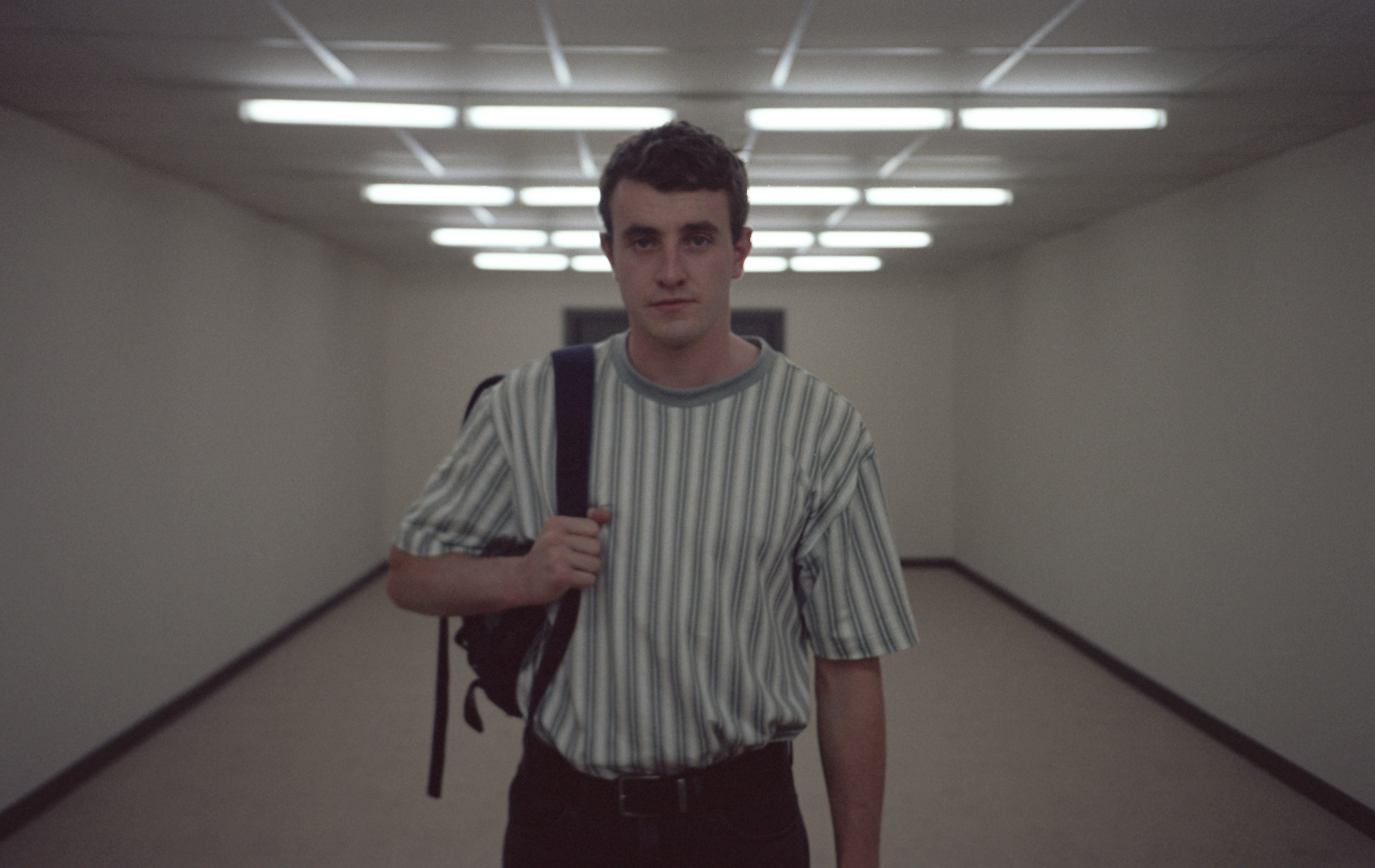
Aesthetically, the film impresses on a visual level with its ravishing, sun-bathed cinematography that is interwoven with a vivid color pallet of mostly bright and shiny colors that echo the work of Luco Guadagnino. These images are interwoven with breathtaking inserts of nature, wide shots of oceans, and fixed compositions of ravishing landscapes, and both Wells and cinematographer Oke know how to stage their characters. There is a brief section of a silhouetted back shot of Calum in deep thought and crying alone in the hotel room as he’s imbued with blue moonlight. Slightly fragmented by design, the film has an elegiac, perpetual motion and emotional subjectivity about it. The film’s final shot is also rewarding and equally shattering. It’s one of the most moving final scenes and artfully staged shots I have observed this year. Finally, Wells manages to deliver an abundance of nuance in its portrait of internal struggles interlaced with familial bonds, and it exquisitely reveals a fragile vulnerability that interweaves distorted and faded memories when confronted with the ever-occurring passage of time.
Aftersun opens Friday, October 21st in limited release and will expand to more cities in the coming weeks.



Just the previews had me teared up
A24 has been has been knocking it out of the park with their releases. Definitely plan on seeing this one.
It’s nice to watch a film that lingers in storytelling and beautiful cinematics in the midst of so many films that prefer to thrill or scare or shock. Thanks for the recommend!
A24 films are always the best
Another well-written review, Robert.
Rich, thoughtful review… again. I was not aware of this gem and hope I can get to see it. Yeah, it seems like A24 is leading the pack in original, creatively good films. I’ll keep looking for them.
Most likely won’t play where I live. However if looks like one I’ll catch streaming. Sounds beautiful though
That’s a nice film to watch. I noticed numerous times, that whenever there is a feature film debut for someone who’s climbing up the steps of the ladder, they usually do a phenomenal work telling the story. There’s ambitious, focusing and love to the filmmaking process.
Adding this to my list, based on your great review, thank you, Robert.
A beautiful and thoughtful write up my friend! An extremely moving film and I felt that in your writing for it too.
This movie, along with E.O. hit my directly in my emotional core more than any other films this year — even films I would say I even liked more. In terms of an emotional reaction, Aftersun was just devastating. An absolute gem of a film,
Great blog.Really looking forward to read more. Want more.
Thanks for sharing. I read many of your blog posts, cool, your blog is very good.