

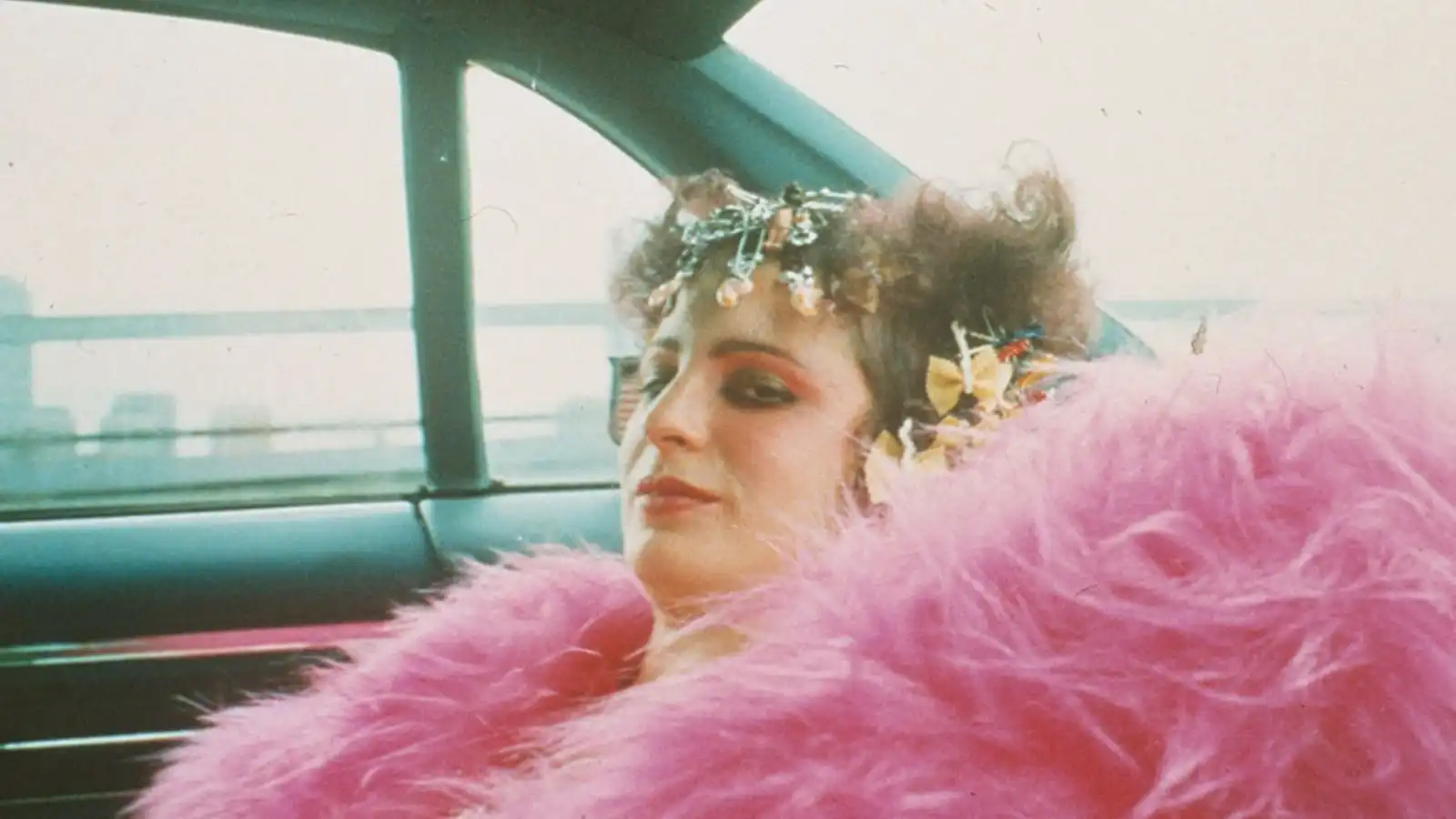

In All the Beauty and the Bloodshed, seasoned documentary filmmaker and Academy Award winner Laura Poitras (Citizenfour) delivers her most wrenching film yet, a galvanizing, deeply powerful documentary about photographer Nan Goldin, who shares her lifetime experiences in the East Village New York City art community and her past traumas, which are intertwined with her modern-day activism against big pharma and the billionaire family The Sackler’s, who have profited billions off the opioid trade. Poitras allows her subject, Goldin, to target and reflect on her past pains while showcasing her own photography, which has helped to distinguish her work. Nan Goldin makes a compelling subject who holds many past traumas and is searching for catharsis and reasoning for the personal demons that have haunted her since her teenage years. Poitras’ documentary manifests Goldin’s memories with her photography, her own narration, archival footage, and interviews. Its mission is to inform, empower, and inspire with its revealing insights. It’s the year’s most riveting documentary that lives up to the Golden Lion Prize it won at the 2022 Venice Film Festival.
Throughout the journey, we get to know Goldin, whose photography was in garish colors at a time when all pictures were in black and white. Her subjects were just ordinary people in confined apartments and bars, but there was something very authentic and vivid about them. She attempted to get them exhibited at local galleries and museums, which were often rejected and found her work too unconventional. The art industry at the time was also mainly male, which didn’t leave much room for women photographers other than exhibiting the work of Diane Arbus. The film chronicles 40 years of Nan’s life, and Poitras pays astounding tribute to her artwork, passions, and activism. Her photography work is undeniably impressive, with striking compositions, and the way she captured the essence of the moment with her projects was quite revelatory. Throughout the film, Poitras plays out her photography like slideshows in the same way she used to present them at galleries and museums. Looking at her artistry, you can certainly understand just how her work was marginalized.

Poitras also uses a lot of older archival footage and photos that Goldin retrieved dating back from her suburban upbringing, from which we learn a lot about her past traumas that led to her older sister being institutionalized by her deeply conservative parents for having “impulses” in which her sister had to repress her sexuality. Sadly, the repression led to depression, and tragically, Nan’s sister died by suicide at the young age of 18. Poitras structures the film expertly as well. While it’s a skillfully layered portrait of her artistry, it’s far from being a conventional documentary.
The film is structured into two halves, where the first half is a journey through Nan’s youth and her creativity all the way up to a very deeply abusive relationship with her finance, who battered her so badly that he attempted to blind her with his punches. The second half is her journey as an activist, in which she formed a non-profit organization called P.A.I.N. (Prescription Addiction Intervention Now) that raised awareness against the Sackler family and exposed the billions they made under their company, Purdue Pharma. They also have a past history of donating their bloody money to art museums, philanthropic causes, universities, and other non-profit organizations, profiting off the suffering and deaths of the opioid crisis that they largely contributed to.

It’s a dark tragedy, and almost anyone you talk to has had a close one either die or get addicted to opioids. Goldin is also a recovering addict on OxyContin. What’s revealing and essential about the documentary is how Goldin empathizes with how addiction is an endless battle. Nobody is fully recovered; one has to take something else to relieve the addiction to the more aggressive pain killers. We often don’t address or discuss that in society due to the stigma involved with addiction. Goldin passionately explains this to lawmakers in New York, saying that more regulations need to be done for accountability and prevention instead of the regulatory capture that occurs now. To Goldin’s credit, her non-profit uses all the money raised and any money she gets from the lawsuit to help anyone embarking on reorganization. Goldin’s traumas have led to her addiction, she knows people in her community who suffered and died, and she is determined to protest, combat, and expose the Sackler’s for who they are, and to purge them out of the communities, like the art world, that are like a second home to them.
The structure, which is divided into seven chapters, delves into her past life as well as her current activism in the film industry and never feels out of place. We get the joys and hardships of Goldin’s life. We learn about the trauma that led to her addiction, which paved the way for her vital activism against the Sackler’s’ ruthless business practices. For far too long, Goldin has witnessed those who prey on the vulnerable, and for far too long, many have profited and gained power from injustices and misery. She is a survivor of abusive relationships and family repression, as well as a key witness to the AIDS crisis in the 1980s, when the government’s incompetence and lack of action resulted in the deaths of many of her own close friends in Provincetown’s gay community. Even the art world shunned her at first. The film’s execution and structure superbly tie in how all her experiences laid the groundwork for the woman she is today. In one of the film’s most memorable scenes, Goldin leads the protest at the Metropolitan Museum of Art, where members of PAIN are followed and spied on.

For the first time, Poitras feels more emotionally attached to the material than before. That’s not to say her Oscar-winning film Citizenfour, about NSA whistleblower and American exile Edward Snowden, wasn’t engaging. However, that film, along with the others she has helmed, have always felt carefully detached and deliberately so. With All the Beauty and the Bloodshed, she allows enough space and affection to allow the viewer to reflect on and process the documentary’s emotions—including the film’s most powerful moment, when Goldin recounts the abuse she received from an ex-boyfriend that almost led to her losing her eyesight. She ended up taking self-portraits of her bruised eyes and creating her monumental exhibition and artbook titled The Ballad of Sexual Dependency, which led to her ex and father attempting to legally stop the show. It was a terrifying experience for Goldin, and she describes in vivid detail and with courage how she survived the abuse and carried on, even though the trauma always catches up with her.
It’s difficult to imagine anyone not walking away from All the Beauty in the Bloodshed and not being emotionally impacted by it. There is a kinship in the documentary between Poitras and Goldin that holds candor and insight about artistry, life experiences, trauma, and eventually contrition. It also nobly captures the misgivings about how we treat addiction and how society allows the stigma and conformity to suffocate individuals who suffer from substance use disorder. It’s a documentary of strong morals, artistry, and affliction. It’s also the best documentary of the year.
All the Beauty and the Bloodshed is now playing in limited theaters.




Nice review! Hopefully I can see it soon.
Not usually too interested in documentaries and don’t know who Nan Goldin is, but this sounds good. I may check it out sometime!
Can’t wait!! Poitras is incredible and only does and supports valuable work.
A must see given your review, Robert. Thank you.
I’ll try and see it
I’ll give it a look.
This sounds fascinating. Hopefully I can catch it streaming. It sounds right up my ally
Classical and simple. I wish them nothing but the best luck.
Hi defactofilmreviews.com admin, Your posts are always a great source of knowledge.
To the defactofilmreviews.com webmaster, Keep sharing your knowledge!
Thank you for your blog article.Really thank you! Keep writing.
To the defactofilmreviews.com owner, Your posts are always informative and up-to-date.