


In an era where a majority of films attempt to play it safe in order to turn a profit, two-time Oscar-winning filmmaker Alejandro G. Iñárritu’s Bardo, False Chronicle of a Handful of Truths holds all the elements for delivering a bold and formally daring masterwork due to its grandiose ambition and dazzling visual style. Iñárritu blends his self-reflexive Felliniesque narrative with surrealist imagery, stellar craftsmanship, and social commentary on heritage and personal identity into one deeply personal framework, but the end result is a fascinating and equally uneven one. The film is highly stylized work with many memorable set-pieces and visually arresting sequences that aim very high, though some don’t fully work because they are too precious in how they draw attention to themselves. The film grows exhausting in some areas, and the rhythm becomes tiresome in some sections, even after Iñárritu cuts it down by 20 minutes from the Venice Cut. Another 10 to 15 minutes could probably be cut, and the film would have felt more seamless. Nevertheless, Bardo is an artful and elegant work of art of a filmmaker attempting to expiscate some existential questions.
The film benefits from stunning camera work; with striking visuals led by cinematographer Darius Khondji, Iñárritu’s vision and visual grandeur is on par with the arresting visuals that were on display with Birdman and The Revenant, which are arguably his most artistically and commercially successful films thus far. Khondji’s cinematography is revelatory, and his artistry certainly deserves some Oscar attention as it’s one of the most beautifully shot films of the year. Innartu’s directing also flourishes, and even though there are some things that don’t quite work about the film, there is no denying just how monumental his directing style goes in this film. The film is also bolstered by a stellar lead performance, led by Daniel Giménez Cacho as Silverio Gama, a renowned journalist and documentary filmmaker, who struggles with his own personal identity as being Mexican and holds a lot of guilt about his roots while holding celebrity status in both Mexico and the United States. The term “bardo” is a Tibetan term for having a state of existence between two lives on earth. In even deeper terms, it’s a transitional phase where a soul is traveling between death and rebirth.

Just observing Cacho walk around in stunning tracking shots and interact with the characters throughout the film makes the film a pleasure on its own. To be fair, Iñárritu’s film is so ambitious that you can tell there had to be a lot of difficulties in translation his ideas and themes together into a cohesive vision. The film is certainly in the vein of Federico Fellini, with shades of the beloved art-house masterpiece 8 1/2. Iñárritu’s conceptual vision is his strongest suit; the ideas are undoubtedly personal, and the majority of the emotional tone surprisingly ignites within its abstractions. For audiences familiar with Fellini, you can sense Iñárritu is certainly channeling Fellini, with shades of Terrence Malick in his stylization and visual rhythm. Even though his 2014 masterpiece Birdman had a similar style, it’s not quite as smooth or consistent.
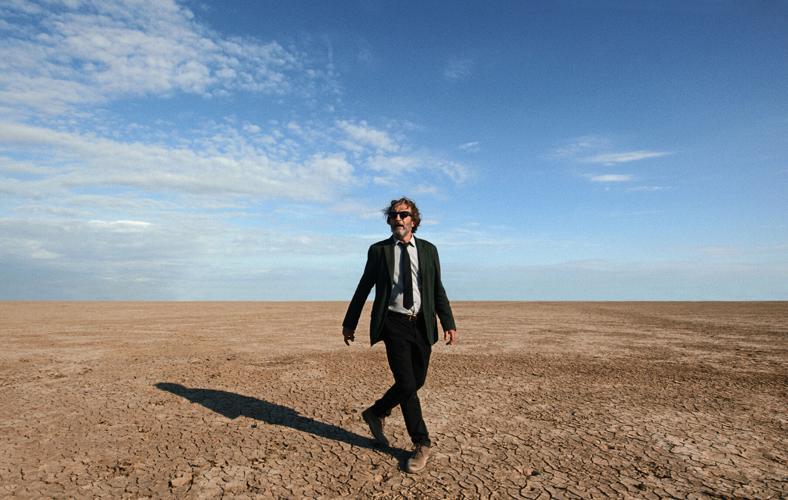
Iñárritu, without a doubt, has a bold style and many rich ideas on his mind. The story is existential in that it explores life and death, history and revisionism, and it delves deeply into his own anxieties and psyche. The film opens with a very extravagant image of the shadow of Iñárritu’s alter-ego walking the desert, and then he leaps and floats within the POV of the camera in a steadi-cam shot. We are willing to travel to Los Angeles for our protagonist, Silvero Gama (Cacho), a well-known journalist and documentarian. He’s about 50 years old and resides with his family in L.A. After being informed that he is to receive a highly regarded journalism award, he decides to take his family back to Mexico before the ceremony to get in touch with his mind and spirit in his native land. This is also Iñárritu’s first film set in Mexico since his debut feature, Amores Perros, which was released 22 years ago.

Silvero Gama is a one-of-a-kind celebrity in the film. He’s a muckraker who has exposed the truth about Mexico’s brutal corruption, which involves drug cartels working with draconian governments. Silverio also digs deep into Mexico’s history, including the conquest of the Aztecs by Hernán Cortés and the Mexican War of Independence, in which Mexico won independence from Spain. Yes, Iñárritu covers a lot of history in this film, but it’s really not about Silvero’s career as a filmmaker. It becomes more about his crusade for his purpose and truth, or half-truths that he discovers about his own reality.
The film also functions as a self-portrait, with Iñárritu exploring his guilt over leaving Mexico for Los Angeles. In one particularly impressively dramatic scene in the film where Silverio is back at their Mexican home in preparation for the speech, his son, Lorenzo (Iker Sanchez Solano), gets lectured by his father on how he needs to appreciate Mexico more. This leads Lorenzo to call out his father’s own hypocrisy in leaving Mexico himself and in exploiting his subjects in his documentary. It’s a nuanced scene in the film that elevates it away from being a piece of narcissistic filmmaking because Iñárritu ponders his own personal guilt and takes criticism for it.
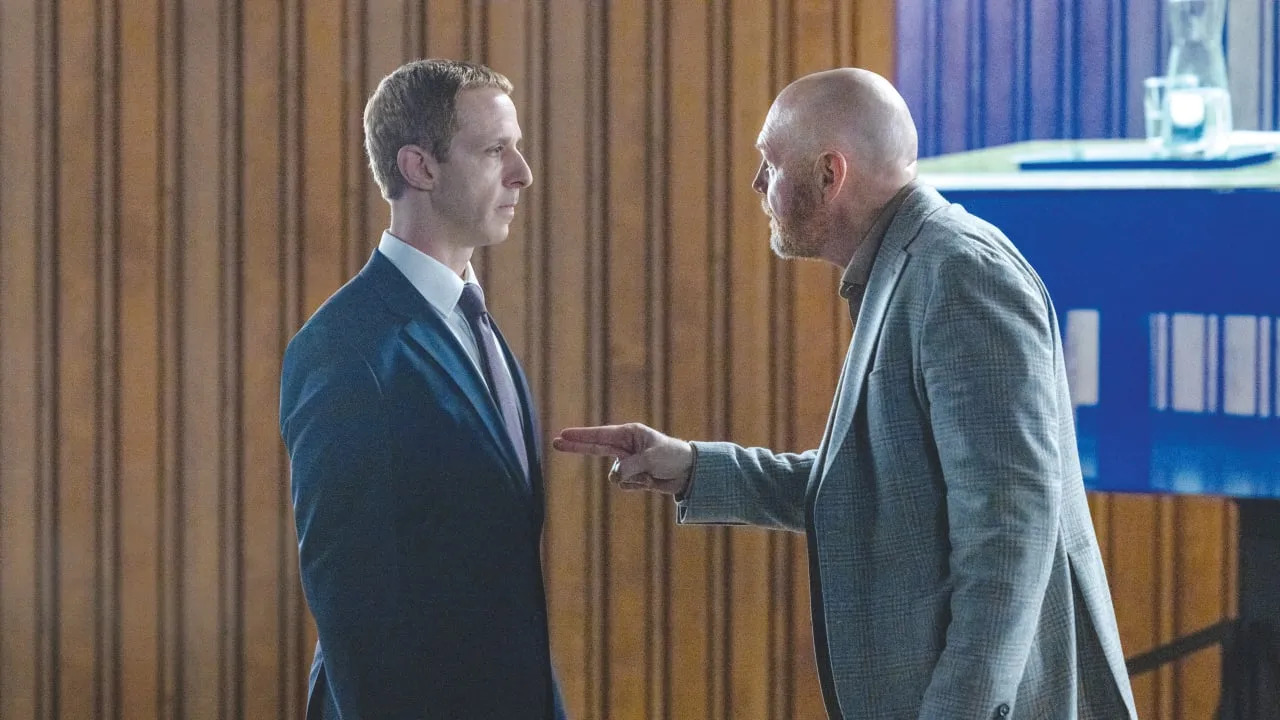
Other forms of humanism in the film are mostly kept at a distance and unravel through its structure, which shifts between dreams, fantasies, memories, and reality. Iñárritu has done this before with The Revenant and Birdman, but in Bardo, the style is even more amplified, though not as cohesive. We see fantasies about Silvero’s loss of his third child, including a scene in which his wife Lucia (Griselda Siciliani) requests that the baby be returned to her womb. It’s a very surreal scene, but it ends up being oddly sincere. There are several other standout sequences in the film that start off amazing but end up being very didactic or precious and don’t leave as much of a payoff as you might expect. One scene in particular is a club sequence staged to look like it’s straight out of P.T. Anderson’s Boogie Nights, though it becomes obtrusive midway through the sequence after Silverio gets into a heated debate with a critic, Carlos (Hugo Albores), who dismisses his work of all the self-referential criticisms that Iárritu inevitably knew his film would face and only ends up boosting his ego and Another precious scene in the film is a moment when Silverio’s dead father visits him in the club’s public restroom. It doesn’t carry much emotional depth other than to serve as a CGI visual effect of Silverio appearing on a child’s body that feels like it belongs in a Michel Gondry film.
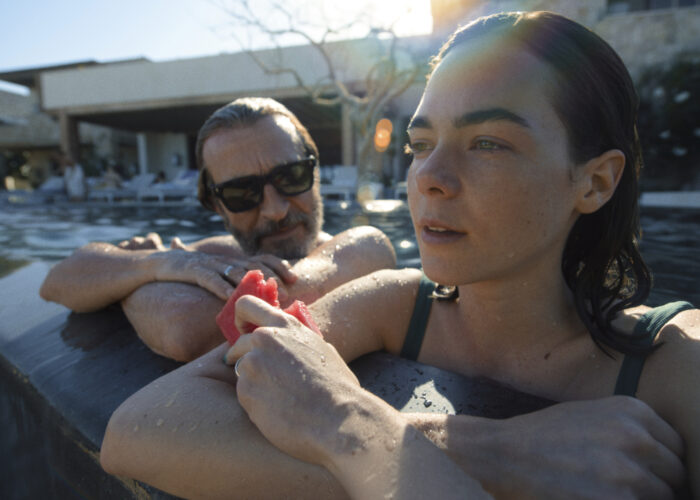
Aside from some of these scenes having some shortcomings, there are many sequences that do standout throughout the course of the film, including the impressive third act that involves pedestrians suddenly fainting on a city street, which serves as a metaphor for some citizens who disappeared or died from cartel violence in Mexico. There is a heartwarming moment in the film of Silvero having a deep exchange with Camila Gama (Ximena Lamadrid) as they discuss her future in a resort pool, looking out into the ocean as she ponders, living in Mexico again. Other stunning sequences involve a scene of Silverio confronting a TSA agent over his VISA status, and once again the dance club sequence is perhaps the most astounding set-piece Iñárritu has ever staged which includes a mesmerizing moment of the melodies of David Bowie’s Let’s Dance fading out where we only hear the lyrics. There are other exquisite images that involve Silvero riding on public rail with a bag of fish he bought at an aquarium, and other some dreamy hallucinations in the desert that is comparable with the third act in Malick’s The Tree of Life.
Bardo is certainly one of Iñárritu’s most overreaching works, but it’s mostly his unbridled vision that makes it such a fascinating watch. Bardo is a very alluring film, one that certainly holds the spirit of Fellini as it travels through the psyche of Iñárritu’s alter-ego. Iñárritu’s vision, while flawed, is undeniably artistic, and it eventually finds its dramatic core with the film’s superlative visuals and contemplative questions about heritage, identity, and purpose. While the film could easily be accused of being ego-driven and overly self-referential, there are plenty of awe-inspiring moments and breathtaking craftsmanship that outweigh its flaws. Bardo is one of the most uniquely cinematic experiences you will find this year.
Bardo is now playing in limited theaters, including Detroit, before streaming on Netflix December 16th.



Great review. Looking forward to seeing it
Great score! I’ll be checking it out sometime.
Love inarritu’s work and excited to see his latest. Great review, Robert.
Can’t wait to see this. Thanks for the review!
Looking forward to this. I’m hoping it hits uk cinemas when I’m in Manchester so I can see it theatrically.
He’s one of my favorite filmmakers and was worried when I heard the negative reviews from TIFF. It seems like the most recent 30 minute edits have helped the film immensely. After reading your review I will most certainly be checking this one out. Thanks.
Beautiful film. Such a surreal experience and so happy I saw it in theaters.
Great review .sounds like an interesting movie .I hope to see it in the future
The Michel Gondry comparison of that one certain scene is so on point! Only comparison I’d add in for homage is possibly Roy Anderson but never goes too deep into that area but is there I feel in some places in the beginning a bit.
I do appreciate Iñárritu’s work, so I’m definitely adding this to my watch list. Thanks for this great review, Rob!
Just watched Bardo last night. In some respects an amazing film- some memorable set pieces- the club sequence and dance floor scenes- and great lead acting. In another respects a bloated, self indulgent vanity project. Overall, I enjoyed it. But would not watch it again
I really liked your blog. Keep writing.
I really enjoy the blog.Really thank you! Great.
A round of applause for your blog post.Thanks Again. Cool.
mahperi çakar instagram bize olan yardımlarından dolayı teşekkürler Tate Hahn mahperi durmuş Joni Rivera mahperi dans Maddison Benson diriliş mahperi hatun ölümü
Awesome blog. Really Cool.
I appreciate you sharing this article.Much thanks again. Will read on…