



The Black Phone, based off a short story by author Joe Hill, was a surprise hit in its summer 2022 release. Directed by Scott Derrickson and co-written alongside C. Robert Cargill — a former film critic-turned-screenwriter and novelist, the duo behind the terrifying 2012 hit Sinister, the horror thriller successfully weaved in supernatural elements with a mix of gritty childhood drama and a coming-of-age story about perseverance. It was a film that felt like it could’ve been told over a campfire on a cool fall evening. While that film’s ending didn’t exactly scream for a sequel, the duo are back with an original concept for this follow-up. Despite some narrative contrivances that feel “sequel-y”, this is a unique and rather inspired horror sequel.

Courtesy Universal
Set in 1982, four years after killing and escaping the clutches of The Grabber (Ethan Hawke), Finney (Mason Thames) is now struggling to cope with the traumatic events that happened to him in the first film. Turning to shitty skunk weed to self-medicate and failing to keep his anger in check, Finney leans on his younger sister, Gwen (Madeleine McGraw) to keep him from succumbing to his worst impulses. While Finney still hears an occasional phone ring from random pay phones around town, he flatly rejects these advances. Gwen, however, begins having more of her psychic dreams, specifically that of three deceased boys, also killed by The Grabber, calling to her from the bottom of a frozen lake at a nearby campsite. After some research, the siblings find that their mother (Anna Lore), who died when they were younger, attended the same summer camp Gwen sees in her dreams. Finney and Gwen take it upon themselves to travel to the campsite, now used for camp counselor training, in order to solve the mystery as to what happened at the camp when their mother attended. However, like his victims in the first film, The Grabber exists in a strange, supernatural dream world, making calls to Finney. When Finney finally answers, The Grabber insists his work is not done and that he’s coming for both him and his sister. The siblings, alongside Gwen’s romantic suitor, Ernesto (Miguel Mora), the camp owner, Mando (Demian Bichir) and employee, Mustang (Arianna Rivas), are snowed in by a blizzard and must figure out how to kill The Grabber once and for all.
Directed by Scott Derrickson, this latest horror sequel has great confidence in taking the film in many interesting new directions. Something of a Nightmare of Elm Street riff, Black Phone 2 uses clever inspirations to carve out a new path, avoiding recycling old beats and themes from the previous film. One of the film’s greatest strengths is how different it feels from the first. Encased in a solid wintry atmosphere and a further emphasis on dream logic, Derrickson’s film is both cozy and chilling. Shot by cinematographer Par M. Ekberg (Polar), the snowy aesthetic creates an ominous sense of claustrophobia where ten feet outside of a window feels as far away as the opposite side of the woods.
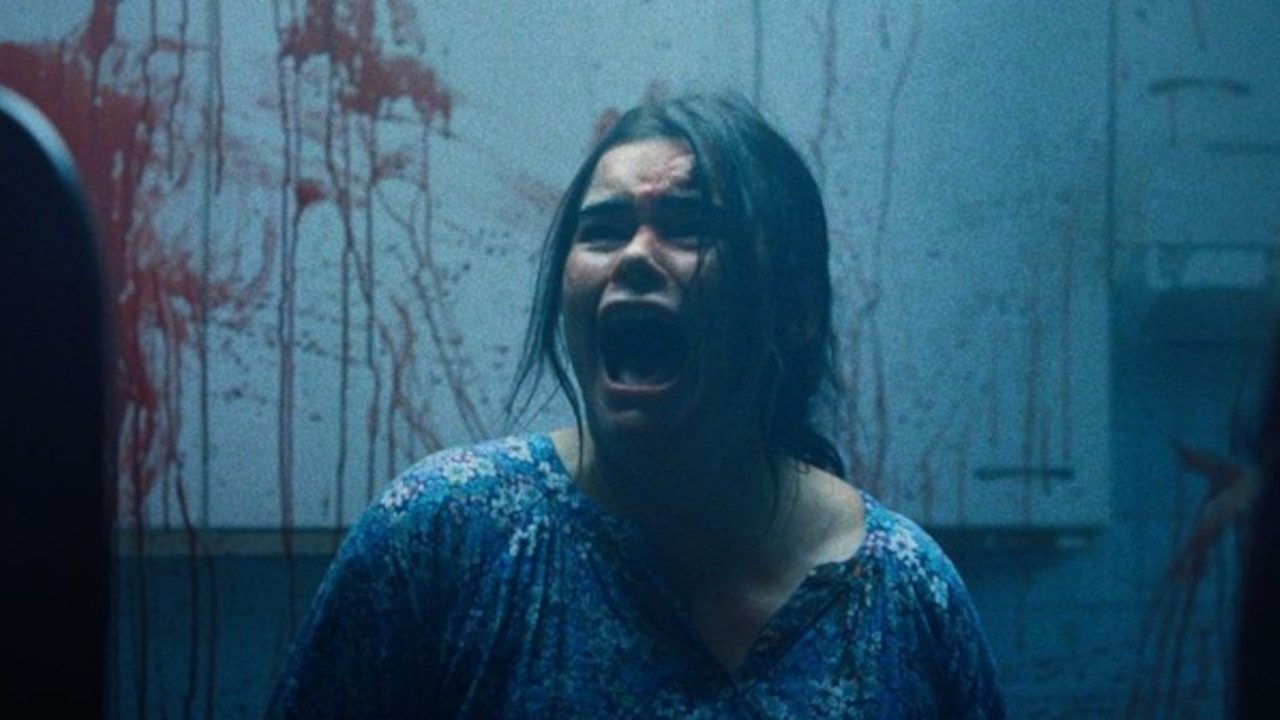
Derrickson and Cargill’s work always instills a sense of heart, which shows itself in the relationship between Finney and Gwen. Both siblings equally lean on each other as both have suffered their own sense of PTSD since the first film. Finney fears that he’ll never truly escape The Grabber’s basement whereas Gwen is unable to stop seeing horrific visions in her dreams. The siblings share each other’s abilities, inherited by their mother, but Gwen is far more open to her gifts, thus allowing her to enter her dream world. If the first film’s protagonist was Finney, this film’s protagonist is clearly Gwen, giving actor Madeleine McGraw a terrific showcase for her on-screen talents. One emotional moment at the end of the film shows McGraw having a conversation in a long, unbroken take, where the young actress gives a range of emotions before bursting into a ball of tears. It’s a genuine, heartfelt moment that rings — no pun intended — true.

Courtesy Universal
Once again, Ethan Hawke is acting entirely behind a mask — or least through parts of one — throughout the film, making his sinister presence that much more effective and impressive. Hawke’s Grabber character has become a literal Boogeyman that will haunt and kill you in your dreams. Despite having less screen-time than in the first film, his character lingers in nearly every corner of the screen, despite only appearing in dreams, flashbacks or in visions. It’s a masterclass of acting through physical presence and careful inflections in his delivery. Regardless of any potential sequel down the line, Hawke has turned this character into a truly frightening and lasting Boogeyman for this decade.
Derrickson’s distinctive visual language continues to evolve here with Gwen’s hypnotic dreams captured using super 8mm. Like his work in Sinister, Derrickson utilizes super 8mm photography to deeply unsettle the viewer, adding a layer of authenticity to even the most abstract and grisly of imagery. This creates a seamless distinction for whenever the film switches between reality and Gwen’s dream world. Even the more overtly silly moments land with a relative chill. It’s simply rare to see a studio film that features this much super 8mm photography, yet the results are technically splendid.

Courtesy Universal
Black Phone 2 is an inspired and eerie sequel. While there is an undercurrent of silliness, particularly in the final act, director Scott Derrickson is such a strong filmmaker and composer of genuinely chilling imagery, this sequel rarely falters. Fronted by a terrific central performance from Madeleine McGraw and another frightening turn from Ethan Hawke, Black Phone 2 is one of the better, more distinct horror sequels in recent years.
Black Phone 2 is now playing in theaters.





You are pretty much spot on, Noah. Saw it last night. Not remotely a great film, but a solid thriller. Superb review!
Still need to see the first one, but looking forward to both!