



Director Jia Zhang-Ke once again explores the passage of time and its changes in how humans interact due to cultural and technological changes with Caught by the Tide. Like Richard Linklater’s Boyhood, Zhang-Ke uses footage he shot in previous years dating back to his treasured international art-house classics from his 2001 film Unknown Pleasures and his 2006 celebrated masterwork Still Life. Of course, Zhang-Ke’s muse and regular Zhao Tao (Ash is Purest White) appear throughout the 20-year span of the film, using deleted scenes and unused footage from Unknown Pleasures and Still Life. Zhang-Ke is able to build these unused scenes that would be illogical in lesser hands into something logical as he organically pushes disconnected scenes into something cohesive. The result is another existential work of art from Zhang-Ke, one that isn’t driven too much by plot but by cohesive themes and an observation on the passage of time.
Qiaoqiao (Thao) experiences three decades of bittersweet longing as the film depicts her search for her lover Bin (Li Zhubin), who has disappeared. The plotting is similar to Miguel Gomes’s recently released Grand Tour. Throughout the years and Bin’s journey, we eagerly await the encounter, but the narrative resonates into something more empirical about culture, science, and technology. We see the change of the massive Three Gorges project that, during planning, over 90 million people were left displaced from the flooding.

Courtesy Slideshow/Janus
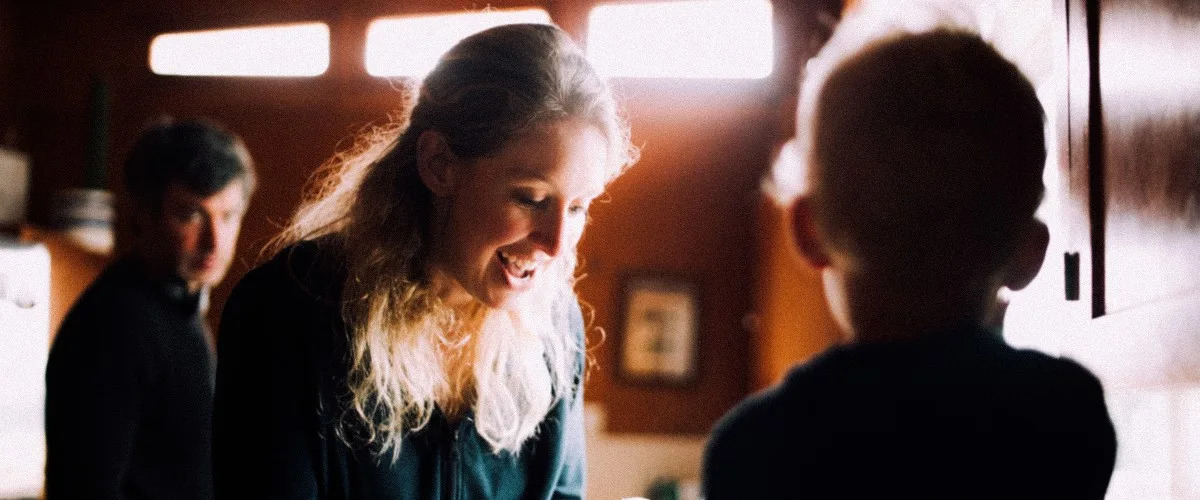
The film really is one sprawling and spontaneous journey that provides a profound portrait of China. It’s a joy having the camera observe Qiaquioa living out her life through all these changes. Along her journey, we see friendships and romances ignite and deteriorate. Along her journeys, we see all these changes all the way up to the COVID-19 pandemic. It’s fascinating seeing the changes throughout the film. Seeing the narrative unfold during the early 2000s to the mid-2000s all the way up to 2022 is like watching a dystopian sci-fi film unfold as we see people wearing face masks and hospital visits are equated to FaceTime.
Zhang-Ke isn’t so much making a cautionary film about the threats of technology and where we are or where we can be headed. It’s more of a portrait of the changes of time and seeing this unwind on film is staggering. What also benefits the film is Zhang-Ke’s visual style that is excelled by the cinematography from both Yu Lik-wai and Éric Gautier. These talents expertly utilize the breathtaking backdrops of China’s landscapes that are both natural and industrial that perfectly examine this story into a sublime work of art that is more than a film but rather an extraordinary time vessel.

Courtesy Slideshow/Janus
Zhang-Ke’s thoughtful themes abound throughout the course of the film, and he’s always examining time moving forward and the changes that endure. Seeing the dichotomy of time is fascinating. While people learn from mistakes and pain, sometimes society doesn’t fully learn on a collective level. The film has many dazzling moments throughout, some with ecstatic energy and others that are both witty and melancholic. It might seem like familiar ground with Zhang-ke, but he manages a way to make it feel remarkable, which it is.
CAUGHT BY THE TIDES is now showing in limited theaters


This sounds excellent. Looking forward to it.
I will definitely check this out!
Great film. Using footage from films made over two decades ago, the director puts together a journey of love and longing. Great performance by the lead actress, who I believe has no dialogue. 3.5 of 4 stars
банкротство физлиц [url=http://www.bankrotstvo-fiz-lic-moscow.ru]http://www.bankrotstvo-fiz-lic-moscow.ru[/url] .