


Two isolated soul’s cross paths and form an undeniable bond in Causeway, a superbly acted and exquisitely crafted character study that has a story that is all too familiar in the indie film realm. The film has enough emotional pull and is engaging enough to ensure a deeply moving experience for its audience. Apple TV and A24’s campaign skills will be tested once again as they attempt to put Academy Award winning actress Jennifer Lawrence into a highly competitive Best Actress crowd that is already loaded with fierce competition from many high-profile films and great performances like Tar, Till, and Everything Everywhere All at Once, to name just a few. With so many films streaming on so many platforms, hopefully Causeway finds the core audience that it deserves.
The central figure of Broadway director Lila Neugebauer’s first feature is Jennifer Lawrence as Lynsey (Jennifer Lawrence), a U.S. Army soldier who just endured a severe brain injury in Afghanistan and is forced to return home to New Orleans to recover before getting deployed. Lawrence’s performance here is quite raw and equally understated, perhaps her most impressive performance since Winter’s Bone, which garnered her first Best Actress nomination in 2010. Her character, Lynsey, is very vulnerable and certainly traumatized by the accident. She has a passion for her duties in the Army Corps of Engineers, and she struggles with daily life as she tries to heal from her accident and reconnect with her estranged mother, Gloria (Linda Emond).
 Courtesy of Apple TV+ Films
Lynsey is certainly a lonely woman. She returns home out of necessity and does everything she can to avoid her mom. Even if that means working a job as a swimming pool maintenance technician, which is a perfectly suited job for Lynsey because she had experience maintaining water pipes in the Army Corps of Engineers, On the plus side, she doesn’t have to interact with many people considering she ends up working alone after her boss is impressed with her pool work and most of her clients are out of town.
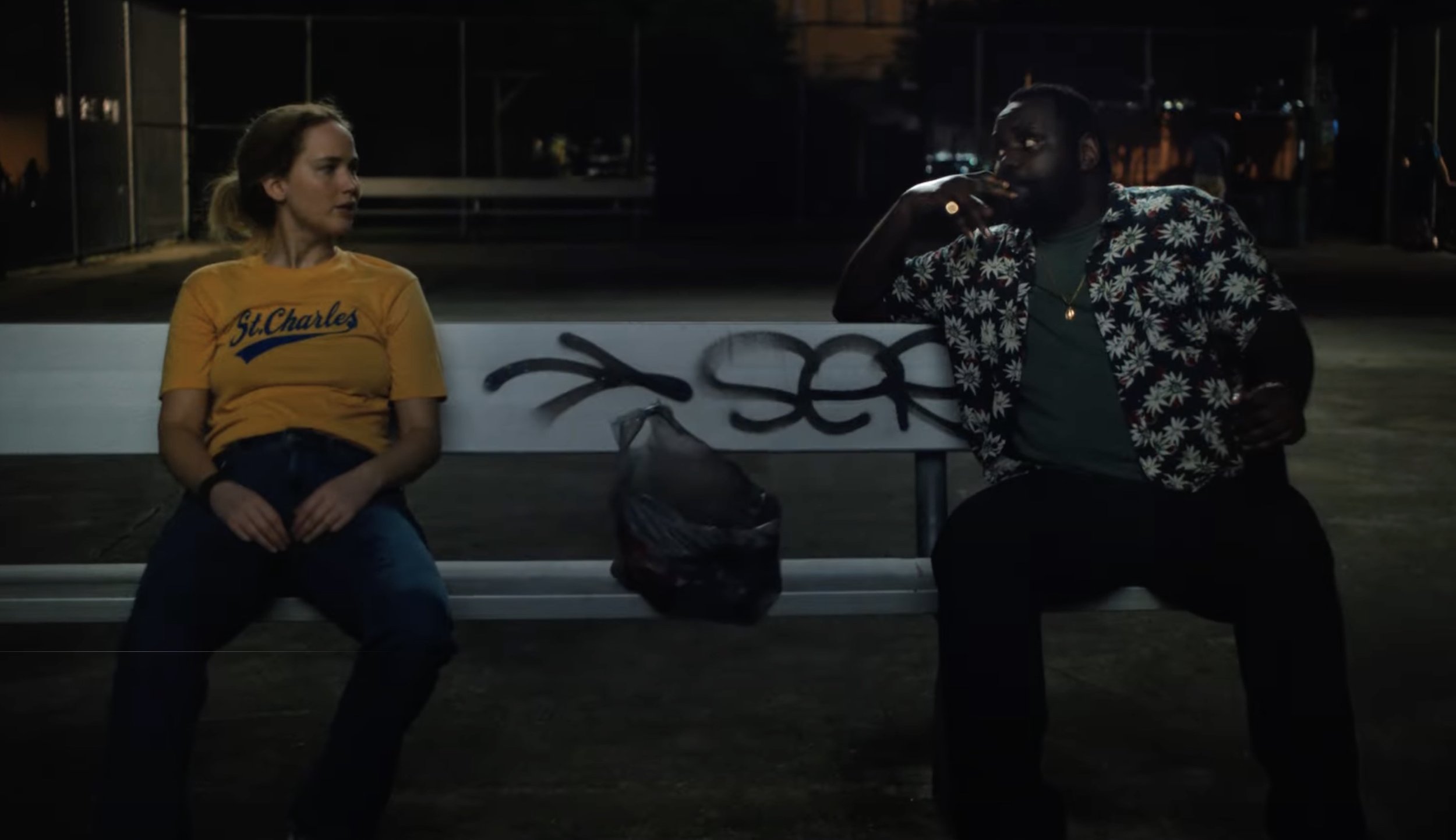
The only type of attention Lynsey seems to want is to persuade her neurologist, Dr. Lucas (Stephen McKinley Henderson), who becomes the gatekeeper in moderating her healing. In between work and healing, Lynsey’s truck goes down, and she ends up needing auto repairs. She encounters the shop owner, James (Brian Tyree Henry), who is very helpful, and you can sense the two have some sort of instant chemistry and bond towards each other that feels more humane and spiritual than romantic in their very first scene together.

Of course, both Lynsey and James gradually begin to share some of their inner pain together. James is still haunted by the accidental death of his family in an automobile accident that left his fiancé and nephew dead, and James has a prosthetic leg from the door crushing in on his leg from the accident. James now lives alone in a nicely sized house in a New Orleans neighborhood. There is a beautiful exchange between James and Lynsey after they go out drinking. She asks him if he would like to move in as a roommate because his loneliness in the house has become unbearable. Lynsey, for her part, is a lost soul who pushes everyone aside and appears to have only found real fulfillment in the Army. Her accident has coerced her into a state of resultant solitude from her illness, and she deeply yearns to be redeployed.
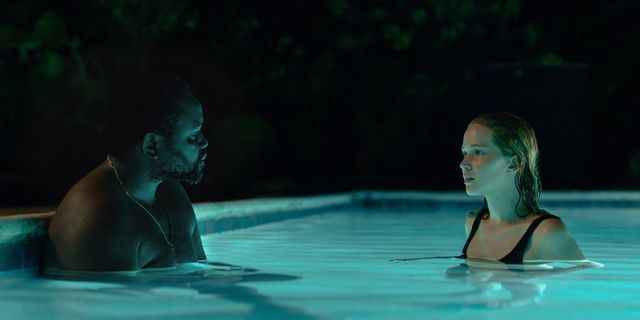
Fortunately, the script makes the viewer feel a lot of compassion and empathy for both characters. The script doesn’t have the characters explicitly emphasize how they both need each other. The script is much wiser. The original screenplay by Ottessa Moshfegh, Luke Goebel, and Elizabeth Sanders draws you in with its emotional sincerity, and you can sense a group of mature writers at work here. Lynsey is guarded and distant, she keeps the relationship with James very platonic, and James is really looking for the human need of companionship. Lynsey eventually emerges from her thick shell, and you can sense she begins to grow into a more compassionate person after encountering James. There are many delicately muted exchanges throughout the film, including a beautifully written scene of James and Lynsey swimming in the pool during the afterhours.
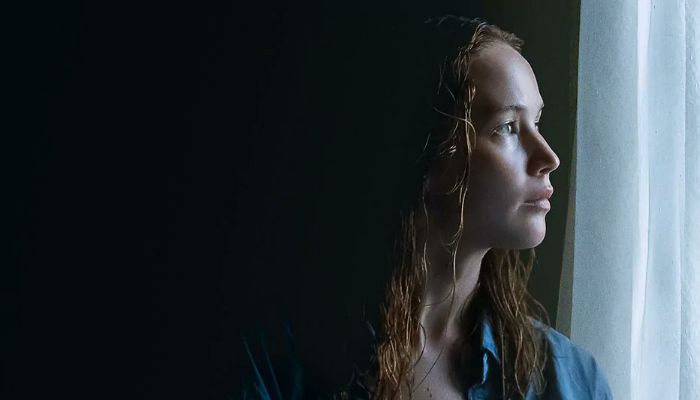
The film never feels cloying or manipulative, either. All the emotions feel genuine and raw. This dramatization is helped thanks to many great collaborators, including veteran production designer Jack Fisk (The Tree of Life, Mulholland Drive, There Will Be Blood), who drapes the background and foregrounds with radiant blues that serve well as a tapestry of visual techniques that is certainly inspired by Krzysztof Kielowski’s Three Colors–Blue. First time cinematographer Diego Garca delivers a lot of exquisite artistry in the film, with many meticulous shots of Lynsey looking out at windows or observing pools to capture her tormented psyche. Aesthetically and visually, the film is about the past, how it always hovers around us, and how both Lynsey and James want to liberate themselves from their past anxieties. The tight editing also helps with the pacing of the film, and Lila Neugebauer positions herself as a skilled director.
The performances in Causeway are exceptional, led by Lawrence, whose character growth as Lynsey generates constant involvement with the viewer. Brian Tyree Henry is once again first-rate, as he delivers a very layered performance of vulnerability and sensitivity, where he hides his emotions so well, but you can sense a deep level of despair within. That is why the emotional realities are so effective, because Causeway becomes a somber meditation on the healing power of human bonding. It really is a quiet film filled with deep humanism and a personal understanding of human loneliness.
Causeway is now streaming on Apple TV+


Jennifer Lawrence is great. Can’t wait to watch this
I was less than interested but Paperboi always gets a watch from me
This sounds like it’s going to be a really great film. I will have to give this one a watch.
I think Jennifer Lawrence is one of the best actors working.
Both Lawrence and Henry’s performances were incredible. I could feel the pain of the characters. Thank you for yet another review and recommendation!
Definitely will watch this film. Great review, Robert.
I hate how the war with russia and ukraine is stil lgoing on. lets reveal some secrets
You do make some spot-on comparisons here Robert! And your 3/4 grade is precisely what I would give the film, fueled by the strong performances by the Oscar-nominated Henry and Jennifer Lawrence.
To the defactofilmreviews.com owner, Thanks for the well-organized post!
Hi defactofilmreviews.com owner, Your posts are always well researched.
Hi defactofilmreviews.com administrator, Keep up the good work, admin!
Hello defactofilmreviews.com owner, Keep up the great work!
Hello defactofilmreviews.com webmaster, Thanks for the detailed post!
Hi defactofilmreviews.com webmaster, You always provide in-depth analysis and understanding.
To the defactofilmreviews.com owner, Keep sharing your knowledge!
Dear defactofilmreviews.com owner, Thanks for the well-researched and well-written post!
Hello defactofilmreviews.com admin, Good to see your posts!
Hi defactofilmreviews.com webmaster, You always provide clear explanations and step-by-step instructions.
To the defactofilmreviews.com owner, You always provide great examples and case studies.
Hi defactofilmreviews.com admin, Your posts are always informative.
Hello defactofilmreviews.com administrator, Your posts are always well-delivered and engaging.
Hello defactofilmreviews.com webmaster, Thanks for sharing your thoughts!
Dear defactofilmreviews.com administrator, Your posts are always on point.
Hi defactofilmreviews.com owner, Your posts are always a great source of knowledge.
Hi defactofilmreviews.com owner, Thanks for the in-depth post!
Excellent blog you have here.. Itís difficult to find quality writing like yours these days. I really appreciate people like you! Take care!!
Wow, great article.Really thank you! Want more.
Major thanks for the blog.Much thanks again. Really Great.
Hello defactofilmreviews.com administrator, Your posts are always insightful and valuable.
Enjoyed every bit of your blog article.Really thank you! Will read on…
Howdy! Do you know if they make any plugins to assist with Search EngineOptimization? I’m trying to get my blog to rank for some targeted keywords but I’m not seeing very good gains.If you know of any please share. Cheers!
Appreciate it for helping out, great information.
I want to to thank you for this wonderful read!! I certainly loved every bit of it. I’ve got you bookmarked to check out new stuff you post…
slots games free slots games free online slot games
Thank anyone so much to get permitting me know what I didn’t know. I enjoy working with you.
Really enjoyed this blog post.Really looking forward to read more. Really Great.
Very good article post.Much thanks again. Will read on…
Hey! Do you use Twitter? I’d like to follow you if that would be ok. I’m undoubtedly enjoying your blog and look forward to new posts.
แทงบอลอย่างไรให้ได้เงิน พนันบอลชนะเช่นไรผิดโกง UFABET จ่ายจริงจ่ายไม่ยั้งระบบเข้าใจง่าย แค่เพียงคลิกสมัครก็ทำเงินได้โดยง่ายกับคาสิโนออนไลน์ สบายสุดๆชีวิตชิวๆชีวิตคลูๆทำเงิน สร้างผลกำไรสบายๆจะต้องที่ UFABET
I need to to thank you for this very good read!! I absolutely loved every bit of it. I have you bookmarked to check out new stuff you post…
ブランドLouisVuittonルイヴィトンマフラーコピーN級品China Candle Gift Box
Utterly pent content, appreciate it for entropy.Here is my blog post: Semzia Brain Pills Reviews
I have read so many articles or reviews about theblogger lovers except this piece of writing is really a nice article, keep it up.
I conceive you have noted some very interesting details , thanks for the post.
An fascinating dialogue is worth comment. I think that you need to write more on this subject, it may not be a taboo topic but typically people are not sufficient to speak on such topics. To the next. Cheers
Thank you for your sharing. I am worried that I lack creative ideas. It is your article that makes me full of hope. Thank you. But, I have a question, can you help me?