



A chronicle of grief, healing, and the power of the creative process are all familiar themes we have seen numerous times before, but rarely are they executed with the delicateness, resentment, tenderness, and hope that is Drive My Car, Ryusuke Hamaguchi’s beautifully layered, richly evocative study about how the death of a spouse and loved ones forces a stage actor, director, and his chauffeur to attempt to find ways to strengthen, inspire, and comfort themselves from their loss through their art and human connection. The narrative descriptions and any reviews you read for Drive My Car will do little justice to Hamaguchi’s impeccable writing, natural dialogue, and rich characterizations whose sensibilities are comparable to those of Kenneth Lonergan (Manchester by the Sea, Margaret, You Can Count on Me) and Alexander Payne (Sideways, The Descendants, About Schmidt), who have also made outstanding films about the grieving process.
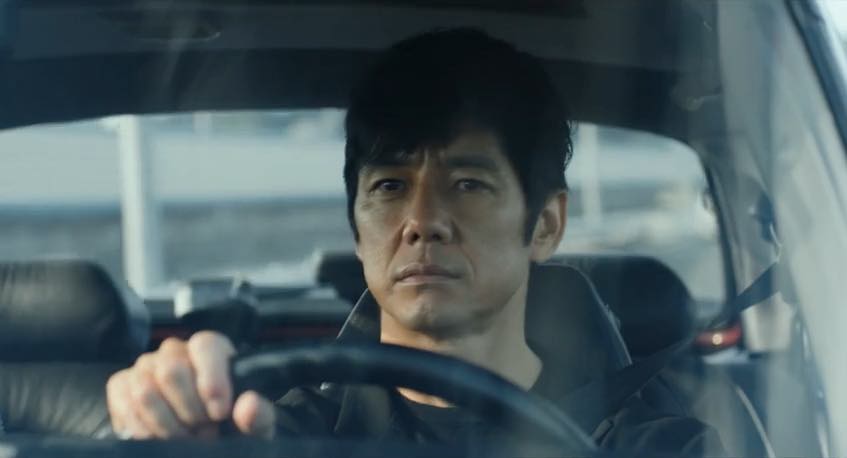
Clocking in at 3 hours, the film never feels exhausting or overlong due to its absorbing emotions and engrossing narrative as the first act builds on heartbreak and insecurity. In the film’s first act, Hagaguchi explores the marriage between Tokyo-based actor and theater director Yusuke (Hidetoshi Nishiima) and playwright Oto (Reika Kirishama), in which their marriage is very passionate but also holds some grief as their daughter died 20 years prior. Yusuke ends up discovering that Oto is being sexually unfaithful once a trip is canceled, in which he even walks in on her having sex with another man while music plays, only for Yusuke to quietly walk out, ashamed of his cuckold experience. But Yusuke shakes it off, pretends to be out of town as he even checks into a local motel as he skypes Oto, saying he arrived at Hiroshima just fine, even though he’s still in Tokyo. His secret of knowing about Oto’s infidelity only emboldens him to become more passionate, stronger, and more creative, which leads Oto to realize her husband is beginning to feel more in control of things.
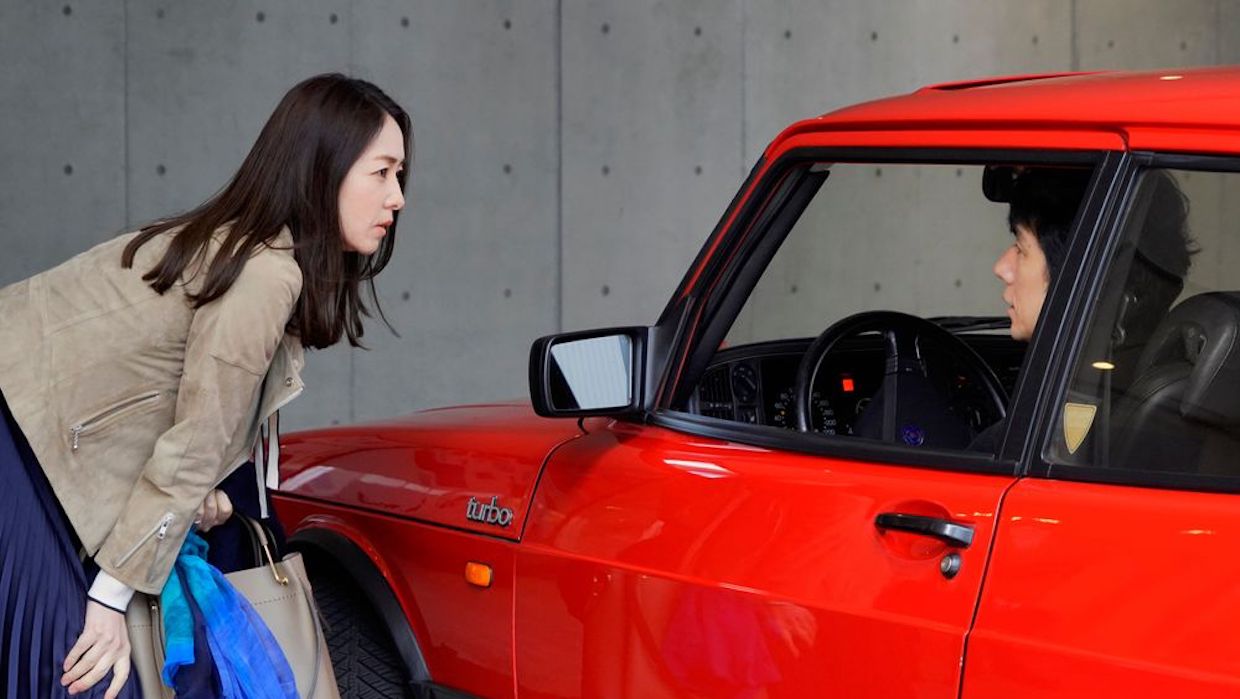
She’s even by his side once he’s been diagnosed with early stages of glaucoma, which sadly could lead to blindness if he doesn’t take action with eye drops. Sadly, everything in Yusuke’s reality takes an abrupt change once Oto dies from a sudden cerebral hemorrhage. Yusuke mourns and steps away from his creative aspirations. His only comfort left is his red Saab 900 car, which serves as a shield against the world he feels detached from. Yusuke even runs his dialogue lines from the script as he listens to the recording play with his fellow collaborators.
Tormented and grieving, Yusuke ends up getting an invitation to direct Uncle Vanya at a renowned theater festival based in Hiroshima. He also learns that when directing, for his own safety, the organizers have arranged a chauffeur for him, which feels like an invasion of the one thing he finds peace in. The hired driver is Misaki (Toko Miura), a very timid, introverted, low-keyed person who doesn’t open up too much about herself or her history, even though we begin to find out that her own dependency reflects Yusuke’s. In the beginning, their encounters are very blasé and mostly silent, as we hear botched recordings of Ote’s Uncle Vanya script reading and play in the background. There is certainly an awkward silence between the two that is just waiting to be unleashed.

In between the car rides, Hamaguchi begins to explore the theater lifestyle in very vivid ways. Yusuke begins auditioning and casting for the play, in which he ends up casting a screen actor for the production, which includes a younger screen actor named Takatsuki (Masaki Okada), whose acting is quite mediocre in the auditions. Things begin to feel more awkward once Yusuke realizes he’s the young man Oku was having an affair with. Yusuke ends up casting him as the lead of Vanya rather than casting himself. Ryusuke adds a lot of ambiguous layers if Yasuke is doing this out of revenge to torment him in the future, or if he’s doing this to find more closure on why Oto committed the adulterous act.
It’s here where the vehicle becomes a rich motif as a form of protection from the outside world, and Yusuke begins to bond more once he compliments her driving skills during a beautifully written dinner scene. The two are no longer shy around each, they begin to open up about the afflictions they both carry during their drives back home. She also opens up about her life and tormented past that also involves adversity, hardship, and living an impoverished lifestyle. The exchanges between the two actors are very engrossing and riveting in the way they are scripted and directed. It’s some of the sincerest interactions between any two characters I saw in a film this year. There is an unspoken compassion and empathy that both characters have for each other that resonates, all the way up until the film’s powerful third act and final scene, which holds such essence and dramatic impact.
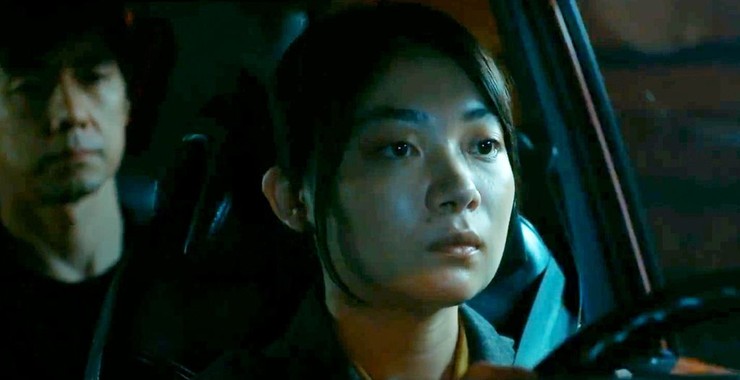
Drive My Car is a poignant and humanistic film that holds many rich themes and brilliant motifs, it actually ends up becoming a road movie as the film progresses. Cinematographer Hidetoshi Shinomiya builds up many striking compositions in a wide variety of wide shots, all the way to inserting shots of the rearview mirror to examine how the past is an evaporation of time and space, and how the road connects us to our uncertain future and destinations. So much delicateness and grace are to be found in Hamaguchi’s vision. He is a very subtle storyteller, and his grace shines through, as does his touch on the human experience. Drive My Car is one of those rare films that’s long, epic, and sorrowful that pulls off everything it sets out to do. It manages to celebrate and reexamine its characters’ conflicts, how their experiences reshape who they are, what they stand for, and who they have now become.

Great review! Agreed that this is a great piece of cinema.
Just saw this tonight, this film is nothing short of poetic and deeply riveting. Easily one of the treasures of this year.
Based on the short story from haruki murakami Ryusuke didn’t miss this one
Very good review. I hope you check this out when I can.
Just saw this film because of your review. Poetic master peace. Great review Robert
I wanted to send you a very small note in order to say thanks a lot yet again over the amazing information you’ve featured in this article. It was seriously open-handed of you to deliver openly all many of us could possibly have sold for an e-book to make some profit on their own, principally seeing that you could possibly have done it if you ever decided. Those tricks as well worked to be the great way to realize that the rest have the identical dream the same as my very own to find out way more with reference to this issue. I am certain there are many more pleasurable occasions up front for people who go through your website.