


Writer/director Ari Aster’s debut feature Hereditary was an immediate success upon its summer 2018 release. The sinister horror film took audiences to the bleakest depths of grief and familial trauma with no bright light or reassuring glimmers of hope. His second film, the hypnotic and horrifying sleeper hit Midsommar, explored the sorrow and heartache of a failed relationship, while his previous film Beau is Afraid, a three-hour Freudian odyssey through the mind of an anxiety-ridden loser with severe mommy issues, left audiences in utter perplexity. His latest cinematic scourge of deep trauma is a 21st Century western set during the darkest time in recent history. Using the COVID-19 Pandemic as the core backdrop, Aster’s latest is a confrontational political satire and a chilling neo-noir. As one of the first major releases post-pandemic to directly address the events of the COVID-19 shutdowns, Ari Aster’s fourth feature might be flying too close to the sun, but it’s captivating, nevertheless.

Courtesy A24
Set during the tumultuous summer of 2020 in the fictional small town of Eddington, New Mexico, Sheriff Joe Cross (Joaquin Phoenix) is fed up with the outside world and refuses to abide by the federal mask mandate. As the world is in the midst of lockdown, Joe’s home life consists of his mentally unwell wife, Louise (a strong, if underutilized Emma Stone), who is, herself, consumed by right wing propaganda on Facebook and takes interest in a charismatic, QAnon-like cult leader in Vernon (Austin Butler). Her mother, Dawn (Deirdre O’Connell), who is the most radicalized by online outrage and misinformation, lives with the couple, further peddling Joe’s right wing beliefs. The town’s liberal incumbent Mayor Ted Garcia (a commanding Pedro Pascal) fully supports the mandates and is in favor of the development of a new data center in town, cheekily named Solidgoldmagikarp. Joe has reached his breaking point and decides to run for Mayor in the upcoming election against Ted, who has a personal history with Joe and Louise. Joe enlists his two deputies, Guy (Luke Grimes) and Michael (Micheal Ward), to be his campaign aides, while Louise wants no part of his campaign. This sparks something of a culture war in town as the George Floyd murder and Black Lives Matter protests loom over the background. As further societal unrest begins to unfold, Joe stubbornly thinks he can single-handedly contain the chaos from brewing within his town and prevent it from eating itself from within. This causes Joe to become further consumed with jealousy, beginning a dark descent of power and greed.
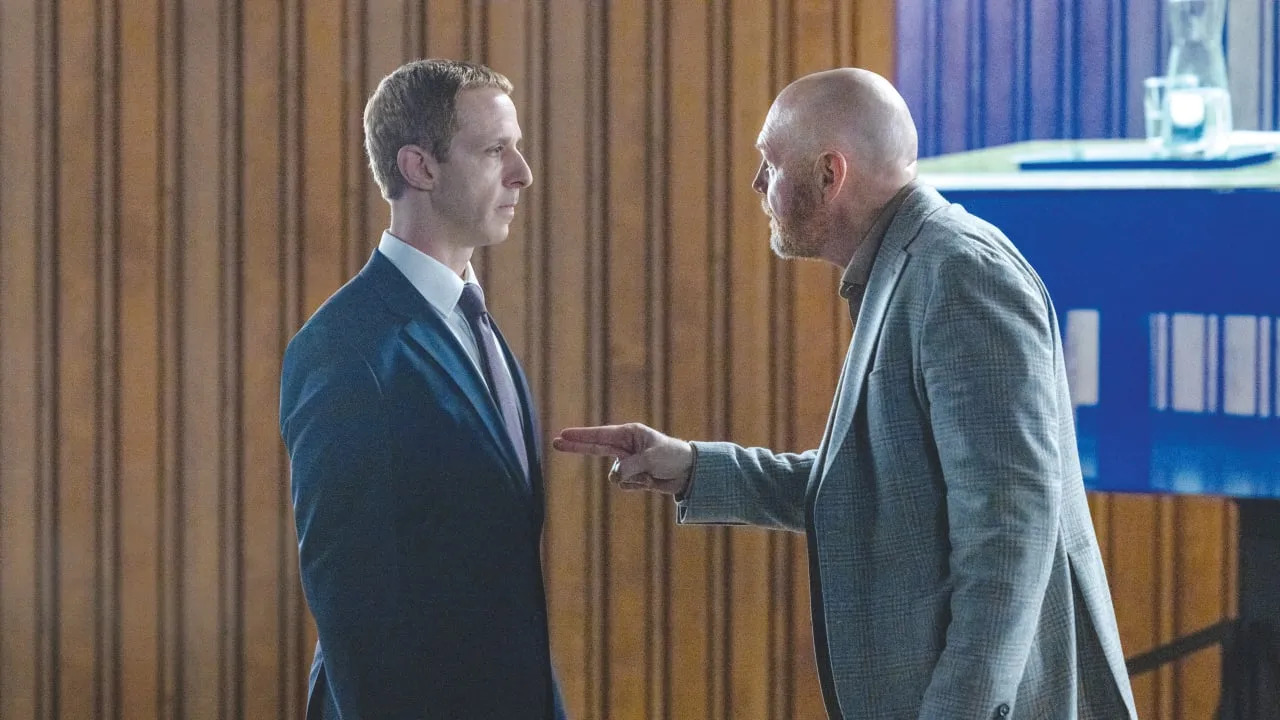
Writer/director Ari Aster’s fourth feature film is the closest thing to a modern-day western in recent memory. Skillfully infusing western tropes and iconography into a satirical take on American division akin to Kubrick’s Dr. Strangelove, Eddington paints an absurdly vivid portrait of early Pandemic-era hysteria. The film’s weary travelers include a rugged sheriff overcome with ego and conspiracy-brain, molding himself into something of a bum outlaw. gung-ho and Bitcoin-obsessed deputies, a virtue-signaling liberal Mayor and a mysterious gunman who arrives on a private jet. Aster stages maskless one-on-one conversations like quickdraws, with ideologies as weapons and sequences the film through the unstable eyes of Joe. Darius Khondji’s sun-baked cinematography is equally vibrant and quietly unnerving, shot like a proper neo-noir. Eddington‘s grandiose score by Daniel Pemberton and Bobby Krlic, fit with orchestral overtures, Leone-style musical stings, moody string sections and ominous percussion, is mesmerizing, in and of itself. The auteur filmmaker’s unflinching ability to revel in provocative subject matter is brought to the forefront as the film unfolds through the heightened anxiety of its protagonist. With his latest film, Aster is operating closer to Oliver Stone’s signature sense of political paranoia than nearly any American filmmaker in recent years not named Craig Zahler.
Eddington is arguably Aster’s broadest canvass to date, with an overwhelming amount on its mind. This is a fuming, palpably angry film whose genre-bending is not too dissimilar from the 2020 neo-Western Bacurau or even Nicolas Winding Refn’s underseen Prime miniseries Too Old To Die Young. As the first substantial piece of original cinema to tackle the pandemic with such scope and narrative focus, Aster’s moody and satirical film reintroduces old fears of early pandemic life and skillfully incorporates them into the script. The all-consuming existential dread of the state of the world bubbles up around the characters who then use this to further their own personal gain. Eddington is Aster’s most cynical film to date, evidenced in his ensemble of characters. In his quest to satirize the hypocrisies of the American political system and highlight human contradictions, every one of the characters in this film all have their own specific set of flaws. Not many directors opening films in over 2,000 screens tend to force their audience to confront their own biases and engage with characters so firmly aligned in their views on recent hot-button issues. Yet, despite how despicable and wrong the audience may feel about them, these characters do feel resoundingly human.

Courtesy A24
Aster’s control of tone is still one of his many strengths, with Eddington finding an uncannily specific tone through black comedy, chilling existentialism and earnest genre homages. The writer/director implements many humorous touches in the mise en scène such as Joe’s campaign signs, reading “your being manipulated” and Ted’s overly corny TV ads. With four films under his belt, certain sequences in Eddington stand as some of Aster’s most ambitious and gripping filmmaking to date. An impeccable oner follows Phoenix and his deputies responding to a local protest that quickly gets out of hand. An extended tracking shot captures the catastrophic humiliation of Joe responding to a noise complaint at Ted’s outdoor fundraiser. Startling shootouts are equally frightening as they are thrilling to watch and Austin Butler’s introduction as a smooth-talking cult leader is an all-too-brief glimpse inside an unsettling, yet magnetic screen character. At a full 148 minutes, Aster’s film finds a tangibly hazy sense of pacing despite occasionally long-winded stretches of meandering. That said, Eddington crescendos with an explosive final act that ratchets up tension to stomach-churning degrees. The Hereditary and Midsommar auteur builds to some truly white-knuckle suspense even if he struggles to maintain consistency. Aster brings the film to a confronting final note, one that finds a warped sense of closure amidst total chaos.
Joaquin Phoenix’s work is some of the finest of his career. His confused and pathetic sheriff is initially depicted as sincere and genuinely focused on his community, before succumbing to ego and greed. He is both caring for his townsfolk and utterly willing to turn to evil corners to achieve his goals. Phoenix subtly allows the audience to feel his awkward sense of isolation and confusion at the world before twisting the knife as he descends into complete obsession. Empire of Light and The Old Guard breakout Micheal Ward plays the film’s most intriguing character, a local deputy who is secretly dating an 18-year-old high schooler and is experiencing something of a crossroads between his life as a police officer and as a black man amidst the George Floyd murder.

Courtesy A24
Eddington is conflicted, morally complex and utterly transfixing. Writer/director Ari Aster’s latest film is a pitch-black saga of small-town America during the modern-day height of division and hysteria. Joaquin Phoenix powerfully leads an eclectic ensemble cast in this uneasy and prickly neo-western. Its satirical mean streak is likely to throw off many viewers, but fans of Aster’s will recognize his signature sense of despair. This is a confronting and stirring reflection of 2020’s America that is squirm-inducing in all the right ways.
Eddington is now playing in theaters.



This is one that is so divisive that I can’t wait to see it for myself
Looks like a winner!
I saw this last night and absolutely loved it. Aster is quickly becoming one of my favorite directors around right now. Like Beau is Afraid, I’ll need to watch this a few more times to fully understand it.
Really liked this film. Shining a light on the craziness of 5 years ago, from both sides of the political spectrum. Film takes a dramatic turn halfway through, which is unexpected , but works out well under Aster’s direction. Both leads are good. 3.5;of 4 stars