

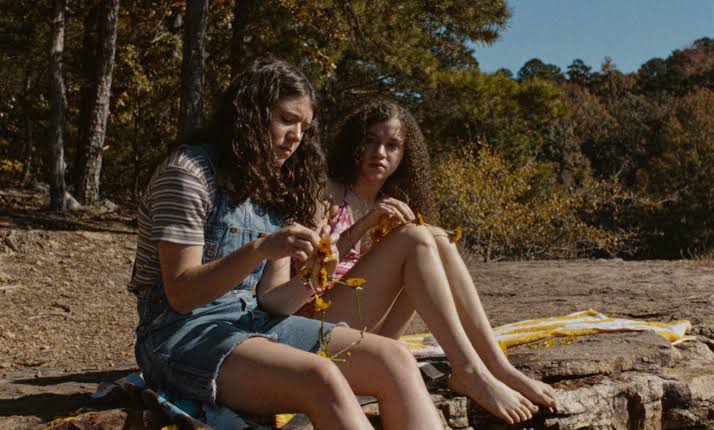

Coming-of-age stories are so often sanded down into predictable, nostalgic archetypes that when one comes along driven by unvarnished truth, the impact hits like a physical shock. Directed by Kelly O’Sullivan and Alex Thompson who are the creative duo behind Ghostlight, a film I initially dismissed as a bit too schmaltzy but now feels compelled to re-examine. With that, Mouse is an exceptionally personal work of cinema. Every exchange feels earned, every silence carries weight, and every thematic payoff lands with a devastating naturalism.
Courtesy IFC Films
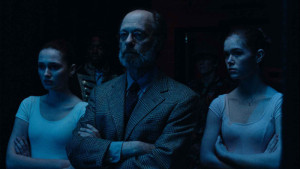
At the heart of the narrative is Minnie Dunn (Katherine Mallen Kupferer), a quiet high school junior whose world is tethered to her vibrant childhood best friend, Callie Bell (Chloe Coleman). The opening scenes capture their effortless alignment, portraying a long-standing bond that feels wholly authentic. Then, barely twenty minutes into the runtime, a sudden car accident claims Callie’s life. The tragedy is sudden, shattering, and deliberately uncinematic. The emotional complexity deepens during the aftermath; at the funeral, Minnie finds herself sidelined, painfully aware of how few physical photographs exist to prove her place in Callie’s life while more performative classmates capture the collective mourning. Their shared world once extended into their high school theater department, overseen with understated gravitas by a drama teacher, Mr. Murdaugh (David Hyde Pierce).
As Minnie stumbles through the fog of loss, the story shifts from a conventional youth narrative into a raw portrait of shared grief. Minnie begins spending time with Callie’s mother, Helen (Sophie Okonedo), who is navigating her own unbearable quiet, compounded by an impending divorce triggered by the tragedy. Minnie gravitates toward Helen’s warm, spacious home, a stark contrast to her own living situation. At home, Minnie lives with her single mother, Barbara (Tara Mallen), a hard-working, exhausted veterinarian. Barbara loves her daughter fiercely, but their crammed house and constant dinners of microwaved chicken nuggets reflect a life defined by survival rather than comfort. Tara Mallen turns in a deeply human, complex performance, illustrating how economic strain can look like emotional distance. Meanwhile, Minnie’s bond with Helen grows richer as they prepare for a school tribute cabaret, where Minnie hopes to honor Callie by learning to sing the song her friend used to perform.
Courtesy IFC Films
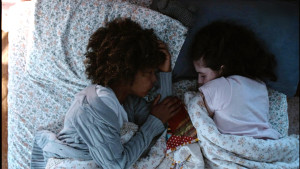
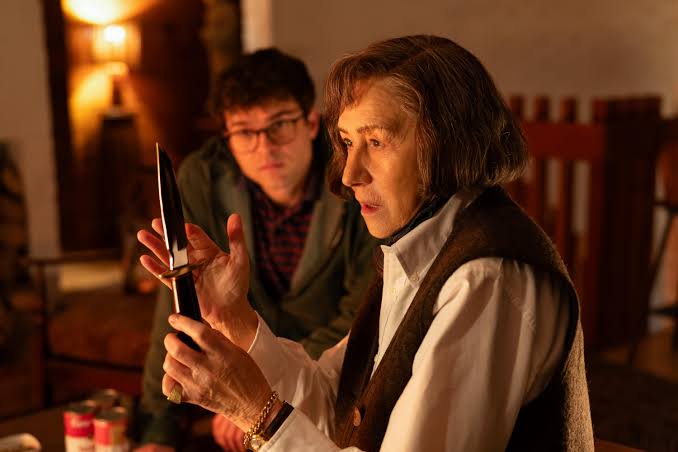
That evolving dynamic within Helen’s home is rendered with exquisite visual care by cinematographers Nate Hurtsellers and Luke Dyra. The camerawork subtly elevates the emotional landscape, particularly in the domestic spaces. Inside Helen’s house, Hurtsellers and Dyra weave a palette rich in amber yellows and warm, muted oranges. There is a palpable sense of isolation and quiet solitude lingering in these frame compositions, yet the warm golden glow cuts through the heavy air, offering an unmistakable visual beacon of hope. It signals visually what the story demonstrates emotionally: that even within the crushing quiet of shared tragedy, both Helen and Minnie are slowly finding a path forward together.
Parallel to this heavy excavation of sorrow is Minnie’s quiet awakening. Wandering into the local video store to return long-overdue VHS tapes of Good Will Hunting and Titanic, she connects with Kat (Iman Vellani), the charismatic clerk working behind the counter. Their budding romance provides a gentle, necessary counterweight to the surrounding darkness. Vellani brings a wonderful spark to the role, helping Minnie step out of her repressed desires and reclaim a sense of agency as a young lesbian woman.
Everything leads toward the high school memorial tribute performance, a culmination that could have easily succumbed to cheap sentimentality in lesser hands. Instead, the narrative builds a quiet, overwhelming momentum as both women process their grief through the preparation. But the film’s emotional high-water mark comes in a stunning, tender exchange late in the story between Barbara and Helen. Without surrendering a single plot point, the scene stands as a triumph of quiet, pitch-perfect acting that builds a moment of unexpected vulnerability between two very different mothers that leaves an indelible mark and reduces the viewer to tears through sheer honesty.
Courtesy IFC Films
Set in 2002, Mouse evokes the finest era of independent filmmaking, channeling the tactile richness of a classic early-2000s Sundance darling. Having lived through high school and college in that exact period, the production design, tone, and musical choices feel meticulously authentic rather than cheap aesthetic nostalgia. O’Sullivan’s razor-sharp script avoids melodramatic traps, opting instead for genuine pathos and character depth that linger long after the final frame. Recently nominated for a Gotham Award for Best Feature, Mouse is a remarkable, deeply moving piece of indie cinema. It is a film that deserves to find a wide audience, standing out as one of the most truthful coming-of-age portraits in recent memory.
Mouse opens in theaters on November 13th.



Leave A Comment