

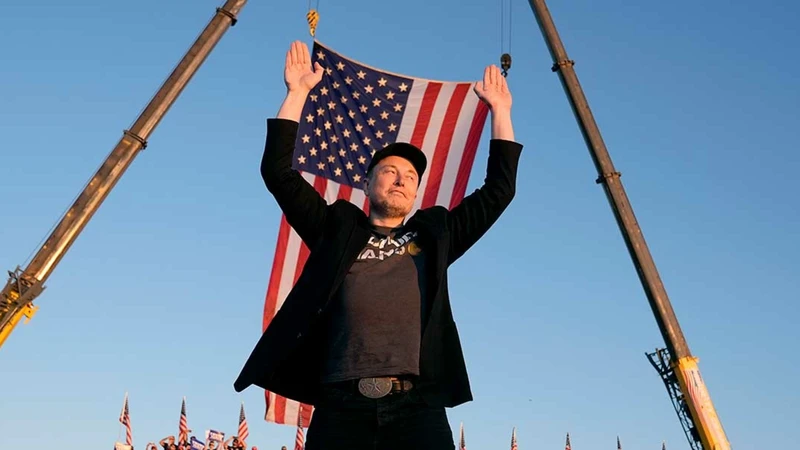

Alex Gibney’s monumental, nearly four-hour documentary Musk stands as the undisputed magnum opus of his celebrated career. Spanning almost two hundred and forty minutes with unflinching precision, the film delivers a searing, meticulously researched examination of a man whose cultural and industrial footprint shapes our modern world. Rather than offering a simple smear piece, Gibney opens the film by acknowledging the genuine spark of brilliance that defined Elon Musk’s early public persona, painting him as a visionary innovator and relentless entrepreneur who captured the world’s collective imagination. However, as the narrative unfolds, Gibney constructs a harrowing arc of self-destruction driven by an insatiable thirst for power, unbridled greed, and a profound, toxic narcissism.
The absolute rigor of the documentary’s argument makes it a masterclass in nonfiction storytelling. Gibney systematically traces the expanse of Musk’s career, exposing a persistent history of double-crossing, ruthless corporate politics, and calculated deception. When viewed through the lens of this vast chronicle, the infamous lies of Elizabeth Holmes almost seem quaint by comparison. Holmes was subjected to fierce legal accountability for deceiving investors and the public, yet Gibney compellingly highlights the stark disparity in how Musk has navigated similar or greater deceptions while continuing to evade meaningful consequences. What emerges is a masterful study of unrestrained power and greed, anchored by a deep psychological exploration of Musk’s past and upbringing. Knowing Musk’s long-standing obsession with simulation reality, Gibney executes a brilliant meta-textual stroke by incorporating AI-generated interview segments after Musk refused to participate which is a refusal marked by Musk instantly dismissing Gibney on social media as a douchebag, to which Gibney dryly posted back a sharp touché as the project was announced.
The human cost of Musk’s ego is further illuminated through candid interviews with key figures in his personal life, including his first ex-wife Justine Wilson as well as notable exes like Ashley St. Clair. Their testimonies provide an intimate, unvarnished look at his interpersonal dynamics. On the corporate front, the documentary thoroughly dismantles the mythology surrounding his achievements, revealing that Musk did not actually found Tesla, but rather maneuvered his way into taking it over from its true originators, Martin Eberhard and Marc Tarpenning. Gibney demonstrates how Musk operates far more as a master market manipulator and hyper-effective salesman than a primary technical inventor, relying on high-stakes public bluster to pump stock prices and skirt regulatory guardrails.
 Courtesy Bleaker Street/HBO Films
Gibney’s examination of Musk’s tenure over Twitter, later rebranded as X, serves as one of the film’s most striking chapters. The documentary tracks how a platform built as a global public square was transformed into a echo chamber for hateful rhetoric once basic ethical standards were discarded. Gibney exposes the toxic corporate environment that ensued, characterized by plummeting employee morale, mass layoffs, and arbitrary management by decree. This devolution aligns closely with Musk’s transition into a self-proclaimed First Amendment absolutist and his increasingly radical far-right political trajectory. The documentary illustrates how the growing entanglement of Musk’s commercial empire with federal contracts mirrors classical corporatism which is a dangerous fusion of state power and corporate influence that has historically defined fascist regimes. The film further exposes the unchecked hazards of his Grock AI initiative, detailing how a total lack of regulatory oversight that don’t have the same ethical standards as other systems built with guardrails, such as Google Gemini has ed to the rampant creation and exploitation of non-consensual AI-generated imagery involving women and children.
Equally chilling is the film’s deep dive into his personal quest to father a legion of children, depicting his practice of offering sperm to women and his bizarre fixation on repopulating the planet as a deeply ominous manifestation of hubris. The personal cruelty of his worldview is underscored by the way he downplays those he has exploited in his past, as well as his cold disowning of his transgender daughter. Gibney ties these behaviors back to an underlying paranoia rooted in his early tech days, where Musk notoriously resisted standard software code protocols because he viewed any outside interference or disruption to his business operations as a personal assault.

The physical hazards of Musk’s untethered ambition are starkly exposed in the film’s investigation into Tesla’s automated driving technologies. Gibney catalogues how aggressive marketing of self-driving capabilities lured drivers into a false sense of security, resulting in fatal crashes when system sensors failed, all while leadership brushed off safety warnings. Bringing the narrative into the broader political sphere, the film critically examines the Department of Government Efficiency (DOGE). Gibney exposes DOGE as an incompetent, deeply corrupt vehicle that gut-renovated critical public infrastructure, stripping away vital US aid programs and federal oversight under the guise of streamlining government operations. Furthermore, the film documents his massive financial contributions to the 2024 election cycle, illustrating how he leveraged his vast capital to sway democratic outcomes.
Through flawless structural pacing, exceptional interview access, and a watertight case-built brick by brick, Gibney presents an indispensable portrait of our era. Musk is ultimately a terrifying, vital revelation of the extreme danger one habitually dishonest billionaire poses to democratic institutions, free discourse, and the political process as a whole.
Musk is now playing in theaters




Leave A Comment