


Resurrection is only the third film in 10 years by Bi Gan, who is up there with Jia Zhangke and Zhang Ziyi, who are perhaps the most visually mesmerizing, poetic, and technical geniuses working today in China. His greatest accomplishment, Long Day’s Journey into Night—released in North America in 2019–made my top 10 list that year, and it offered the same amount of glorious artistry that was found in Sam Mendes’s 1917, which was praised that year. On the other hand, Bi Gan has now reached great appreciation with art-house and international film aficionados over the years, and I felt like I was seeing a rock star during the film’s North America premiere at the New York Film Festival that I attended back in the fall.
I anticipate Resurrection will live on with many art-house film buffs in the years to come after its Janus release that will give it a long window of appreciation with its Criterion Collection due to its visual grandeur, striking imagery, and genre-bending methods that are comparable to Jean-Luc Godard’s Pierrot Le Fou and Leos Carax’s Holy Motors. This is a film that will require multiple revisits, as it’s a lot to process, but the film is dazzling, and the final chapter in the film is absolutely mind-blowing with its visual and technical bravura of filmmaking.
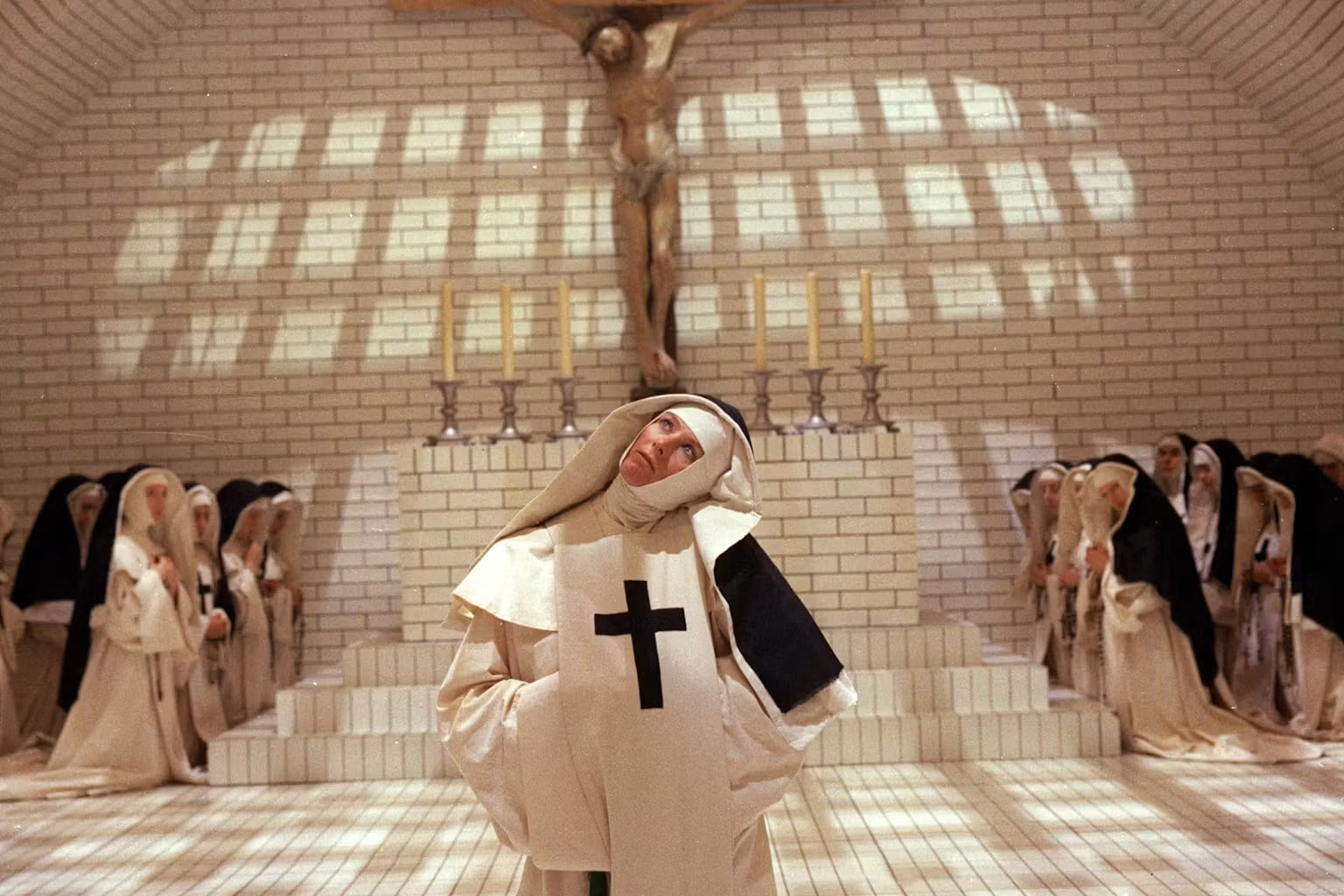
The film’s setting is a world where humanity no longer dreams after exchanging it for longevity, and once they trade in their dreams they referred to as “The Other Ones,” who in return track down the dreamers named “Deliriants”. We are introduced to an Another One named Miss Chu (Shu-Qu in multiple roles) who tracks done an unnamed deliriant (Jackson Yee) who is dedicated to dreaming. and Miss Chu grants him an eternity of dreams after installing a film projector inside him after realizing his passion for dreaming. We are transported to the early 20th century, and the film plays out the aesthetics of silent movies in similar ways to the opening chapter of Hou Hsiao-hsien’s Three Times. There are title cards and it’s one extended visual overture that adds to the film’s dreamworld. The Deliriant resurfaces as Qui, who is accused of murdering a man by stabbing him with a fountain pen. This leads to Qui being tortured into a confession by the fortress commanding officer (Mark Chao) and this leads to Qui escaping until their fates encounter each other again on a train which adds to the dreamlike atmosphere.

Courtesy Janus Films
The narrative pivots to 30 years later, and we now see the Deliriant is now Mongrel, an art thief exile hiding out in an abandoned Buddhist temple. He has a severe toothache and conducts Buddhist rituals with a Spirit of Bitterness (Chen Yongzhong) in which Mongrel confesses to the murder of his father. The confession leads to him being spared from having an agonizing death from rabies and instead being granted a second life as a dog. Each chapter represents a sense, including sight, hearing, taste, smell, and touch, with a final epilogue of consciousness that has a near-future setting and an abstract realm that recalls the “2046” section in Wong Kar Wai’s 2046. We follow the Deliriant through various chapters and various tones ranging from noir to sci-fi, caper film, and German Expressionism. The film offers a lot of technical flourishes as Gan and fellow cinematographer Dong Jingsong showcase their uncanny skills with its array of techniques and visuals, with visually stunning compositions, an astonishing use of split diopters, and breathtaking camera movements.
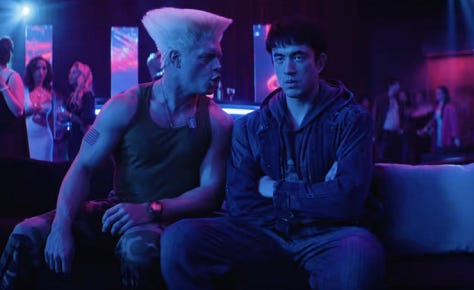
The most astonishing chapter is the final Y2K chapter, which takes place in a port city on New Year’s Eve, 1999. The Deliriant is an Apollo, a young grifter who falls for Tai Zhaomei (Li Gengxi), a vampire who claims she has never bitten a human before. Together, Apollo and Tai walk the streets through the city and hold some charming moments, and then they drift apart when Tai is dragged to a karaoke bar by her boss, Mr. Lou (Huang Jue), and Tai Apollo ends up confronting Mr. Lou and his henchmen, which leads to one bravura after a moment as it’s staged in one long take just like the finale of Long Day’s Journey into Night, and the 40-minute single, long take is the centerpiece of Kailli Blues, which is now becoming a defining commonality for Bi Gan’s style.

Courtesy Janus Films
Like many of his fellow Chinese and neighboring Asian filmmakers, Gan is fascinated with the concept of time, and his films often ponder the passage of time and how the gateway of time leads to faded memories that are no different than cinema. He pays tribute to the Lumiere Bros. and Orson Welles’s The Lady from Shanghai with a mirror labyrinth scene. This concept has been done before, as mentioned above, with Pierrot le Fou and Holy Motors. Like those films, there are many bizarre and sensational moments. Raising a lot of questions with abstractions. Bi Gan’s odyssey here shows how humanity is always evolving, much like cinema itself, leading up to the final in how our own reality and perception are much like an illusion, just like cinema itself, as Bi Gan expresses his adoration for the experience of watching movies, which is very much like dreaming itself, which is very much what life is about as well.
GRADE A –
RESERRECTION IS NOW PLAYING IN LIMITED THEATERS and will open in Detroit at the DIA on FRIDAY, JAN 23, 2026


I’ve been curious about this one since I heard about it!
Told in multiple parts as we jump through time. Film looks great and has a great lead performance. Some may find the plot convoluted, but worth sitting through. 3.5 of 4 stars