


Jane Schoenbrun’s Teenage Sex and Death at Camp Miasma is a brilliant, deeply personal, and metatextual tribute to ’80s slasher cinema. Like I Saw the TV Glow, Schoenbrun uses dark media nostalgia as a cautionary metaphor—exploring how cult art can comfort yet also confine us as a coping mechanism for repressed queer desires, sexual awakenings, and authentic identity. It tackles heavy themes of trauma, artistic integrity vs. corporate exploitation, and the complex friction between the male gaze and internal feminine agency. What makes the film so remarkable is its sheer ambition: it juggles a massive array of tone shifts, metatextual layers, and psychological weight, yet it never once feels uneven, scattered, or all-over-the-map. Everything anchors back to Schoenbrun’s deeply vulnerable, highly personal voice.
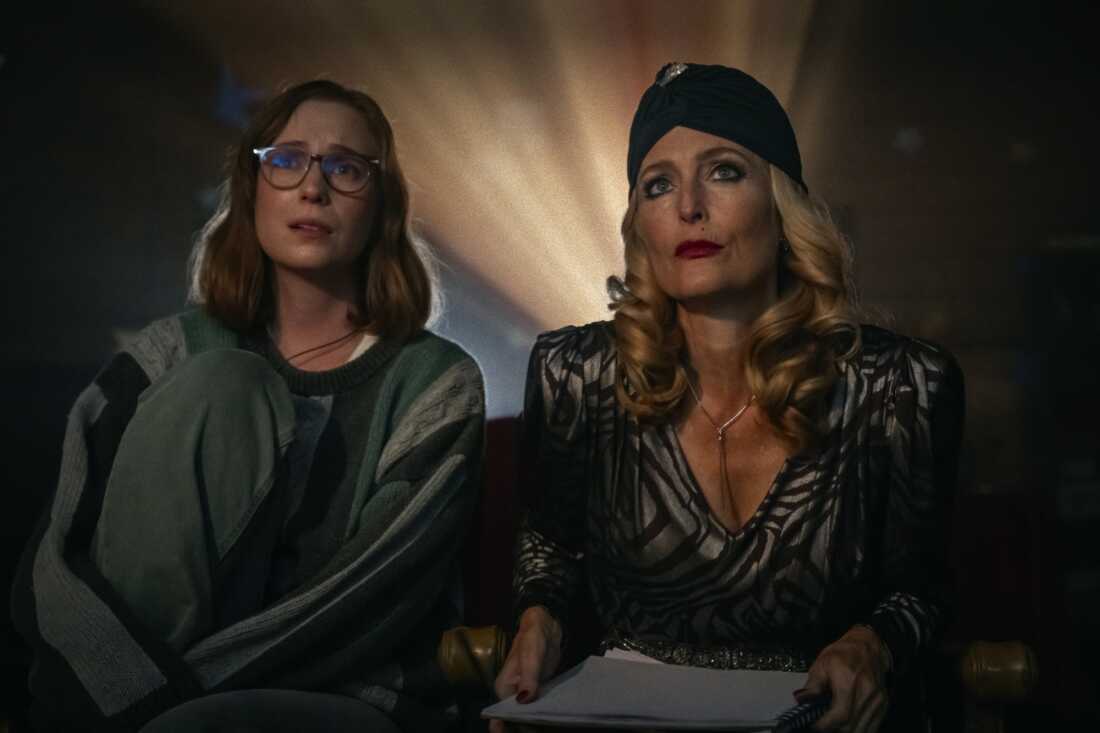
The story follows Kris (Hannah Einbinder), an indie filmmaker fresh off critical buzz at Sundance who approaches horror through a deeply academic, analytical lens—dissecting slasher tropes through her perspective as a lesbian queer director. The studio greenlights her to reboot the long-dormant Camp Miasma franchise, but Kris sees right through the corporate mechanics: executives simply want to protect their IP while performing damage control, using a queer indie darling to strip away the original’s legacy of misogyny and transphobia. It is a razor-sharp, painfully accurate portrait of how the contemporary film industry commodifies “subversive” artists to sanitize problematic studio catalog properties.
Despite her cynicism toward the studio, Kris is an unapologetic, diehard fangirl of the original 1980s Camp Miasma. She sets out to track down her ultimate childhood idol: Billy Pressley (Gillian Anderson), the original film’s final girl. Kris travels to a remote, Wi-Fi-less cabin situated directly on the old filming location, where Billy lives like a horror-world Norma Desmond from Sunset Boulevard. In a hilarious self-aware touch, the film directly jokes about this Sunset Boulevard dynamic as Billy clings to the grand shadow of her youth. Yet, despite Camp Miasma being a celebrated cult favorite, Billy herself remains largely forgotten in the broader horror community. The narrative hilariously points out this injustice through a brilliant meta-joke comparing her obscurity to how Felissa Rose’s Angela in Sleepaway Camp is often overlooked, or how people forget Bruce Springsteen’s sister Pamela played Angela in the sequels.

Courtesy Mubi
At home, Kris is in a complex polyamorous arrangement—she is in an open relationship with a woman who is dating a bisexual man named Thor. Repressed and distant, Kris admits to struggling with intimacy and finding sex difficult to enjoy, holding a deep resistance toward physical vulnerability. Yet as she spends time at the cabin, she finds herself profoundly attracted to Billy. Billy becomes the catalyst who unlocks Kris’ hidden desires and suppressed sexual fantasies, allowing her to finally loosen up and embrace her body.
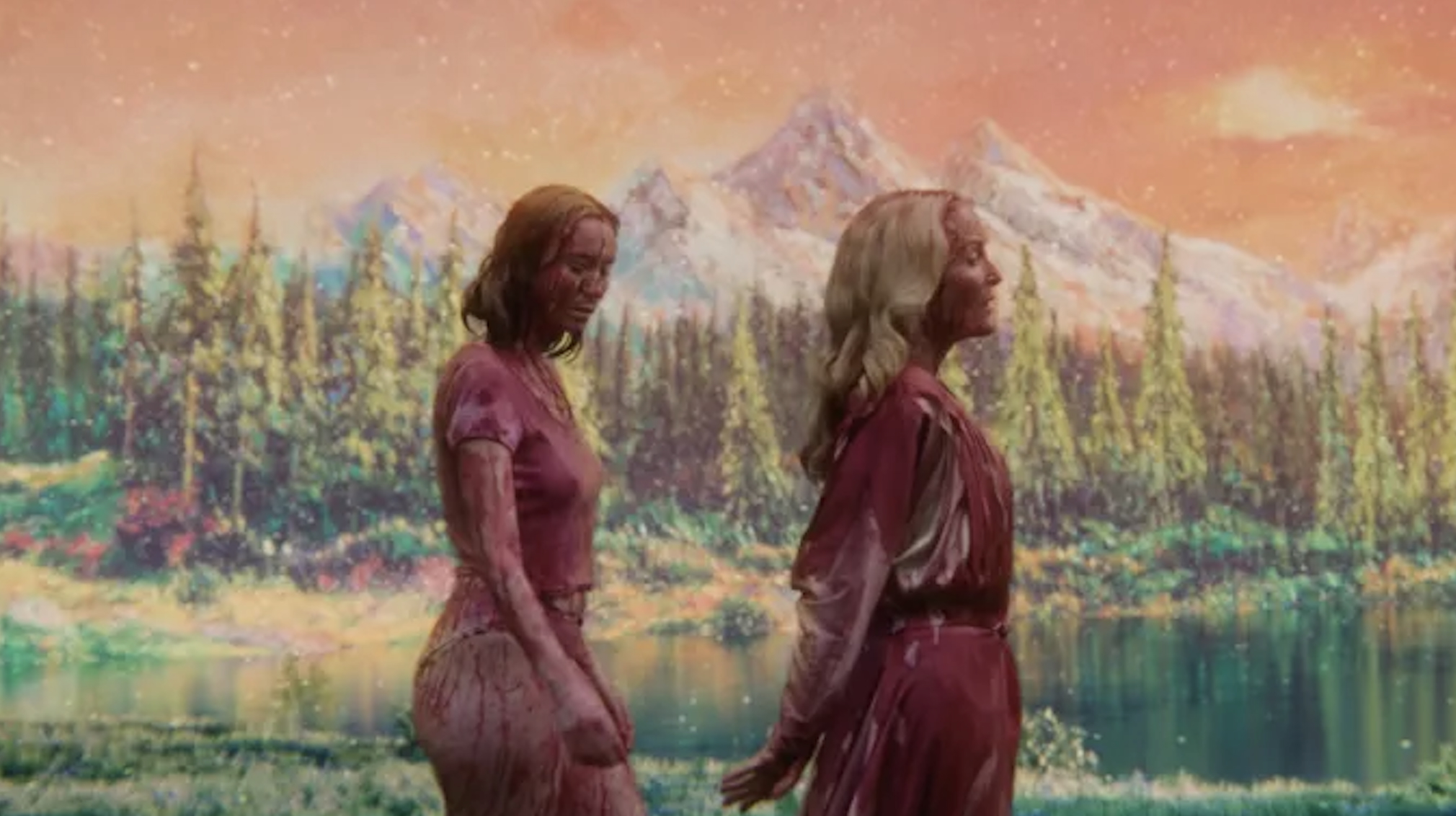
As Kris tries to convince her idol to join the reboot, the film regularly cuts to film-within-a-film sequences revisiting the 1980s original and its absurd slasher mechanics. The central killer in the original Camp Miasma wears an iconic, ridiculous camera mask, stalking the woods to record his carnage. The kills within these retro sequences are over-the-top, outrageously gory, and deliberately silly, complete with cartoonish splatters of CGI blood sprayed across the wider shots. These vintage bits feature a group of teens driving in a van like they’re in The Texas Chain Saw Massacre, confronting odd locals like Patrick Fischler (a deliberate, brilliant nod to Mulholland Drive). The meta-ensemble also features Amanda Fix as the young 1980s Billy Pressley, Eva Victor—who is completely unrecognizable until the end credits as DJ, Sarah Sherman as Kris’ frantic agent, and Dylan Baker as a baffled studio executive.
The exchanges between Einbinder and Anderson are extraordinary. Delivering her finest performance since The House of Mirth, Anderson transforms into a reclusive veteran watching 35mm prints of her past trauma. Watching her on screen inspires absolute awe, especially when Billy opens up about the trauma she endured on set with a male co-star. In true David Lynch fashion, Schoenbrun punctuates heavy moments with indulge-worthy sweets and fried chicken, culminating in a hilarious, bizarre KFC sequence. The emotional core hits just as hard when Kris opens up about her own fantasies, sheepishly admitting to desiring a hyper-feminine, misogynistic “male gaze” attire which is a contradictory, piercingly honest reflection on internalized sexuality.
Courtesy Mubi
The Hollywood satire cuts razor-sharp. A hysterical Zoom pitch featuring Kris acting out her anxiety leaves executives like Dylan Baker and her agent Sarah Sherman utterly baffled. Meanwhile, the film balances commentary on ’80s era transphobia with lush, sensual aesthetics. The visual composition stays true to vintage slasher language while infusing a rich, intimate, and atmospheric glow.
While the third act gets slightly exhausting as Schoenbrun attempts a Felliniesque 8½ meta-spin that isn’t quite as tight as the grounded chamber-piece scenes between Kris and Billy, its self-awareness ensures it settles beautifully upon reflection. Haunting, clever, and structurally daring, Teenage Sex and Death at Camp Miasma is a work of pure brilliance.
CAMP MIASMA is now playing in theaters

Love Jane Schoenbrun. I’ll be seeing this!
Great review, Robert. Have not heard of this film, but will look out for it based on your review.
You know what. lLooks interesting. I’ll give this a watch. Great Review
An original homage to Friday the 13th style films, as well as David Cronenberg. Great set design and cinematography. Winning pwrformances