


It was only a matter of time before the Broadway musical that is a dual adaptation of Alice Walker’s novel and Steven Spielberg’s 1985 American epic of the same title, The Color Purple (2023), would hit the big screen. Blitz Bazawule (aka Blitz the Ambassador) has adapted the source material with reverence and some stylization that stays true to the raw emotion. However, the tonal shifts and musical numbers are wildly all over the map and uneven. The end result is a film with an intermittent rhythm with no real memorable musical numbers. I didn’t walk out remembering any of the music, and a few days later, the film hasn’t haunted me the way Spielberg’s 1985 beloved classic has. I know there are hardcore fans of The Color Purple, and the movie is smashing Christmas box-office numbers, but The Color Purple film revival fails to resonate.
As Spielberg’s film was nominated for numerous Oscars, the musical premiered on Broadway in 2005 and ended up having a revival in 2016. The source material has always connected with audiences with its themes on the cyclical and cruel nature of racism and sexism, female relationships, and how to effectively use expression to stand up against abuse and adversity. The film also has domestic abuse, incest, and rape that have been distressing to watch. Yet the poignancy of the disturbing source material always elevated it away from feeling exploitative. This is still on display in the latest version, but some of the approach and performances here feel hammy and at odds with the rich source material. While the musical numbers are well-choreographed, they don’t connect well with the narrative, and they never feel seamless. They also trivialize the gritty moments on display, and the result feels jarring, even ill-advised.
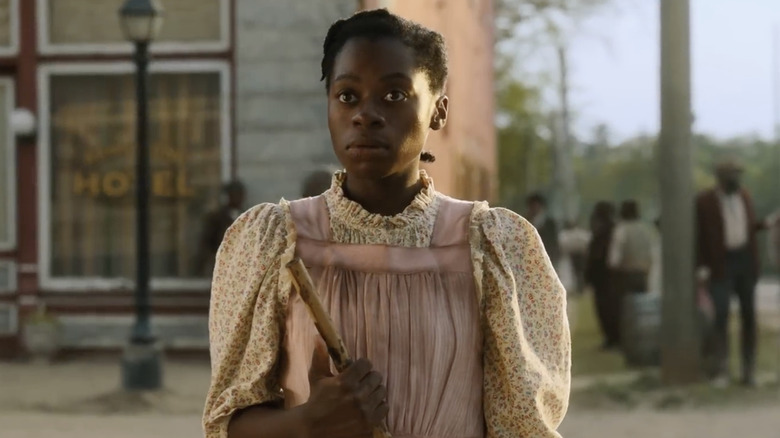 Courtesy Warner Bros.
Cinematographer Dan Laustsen exquisitely crafts and frames the Southern outdoors, but the way the narrative transitions into a musical doesn’t spark with that magical fantasy the way other musicals do. The setting is 1909, and we follow two young sisters, Celie (Phylicia Pearl Mpasi) and Nettie (Halle Bailey), who have endured abuse from their horrendous father, Alfonso (Deon Cole), who sadly has sexually abused Celie for years, which resulted in two pregnancies where the babies were sold off. Through clunky flashbacks, we are introduced to the mother (Aunjanue Ellis), who has sadly passed away.
Celie ends up experiencing even more cruelty after being married off to Mister Albert (Colman Domingo), in which she experiences degradation and verbal and physical abuse. Mister often slaps and hits Celie just if his dinner isn’t prepared to his liking. Celie ends up running off after Nettie stands up to Mister, and she disappears for a long period of time.
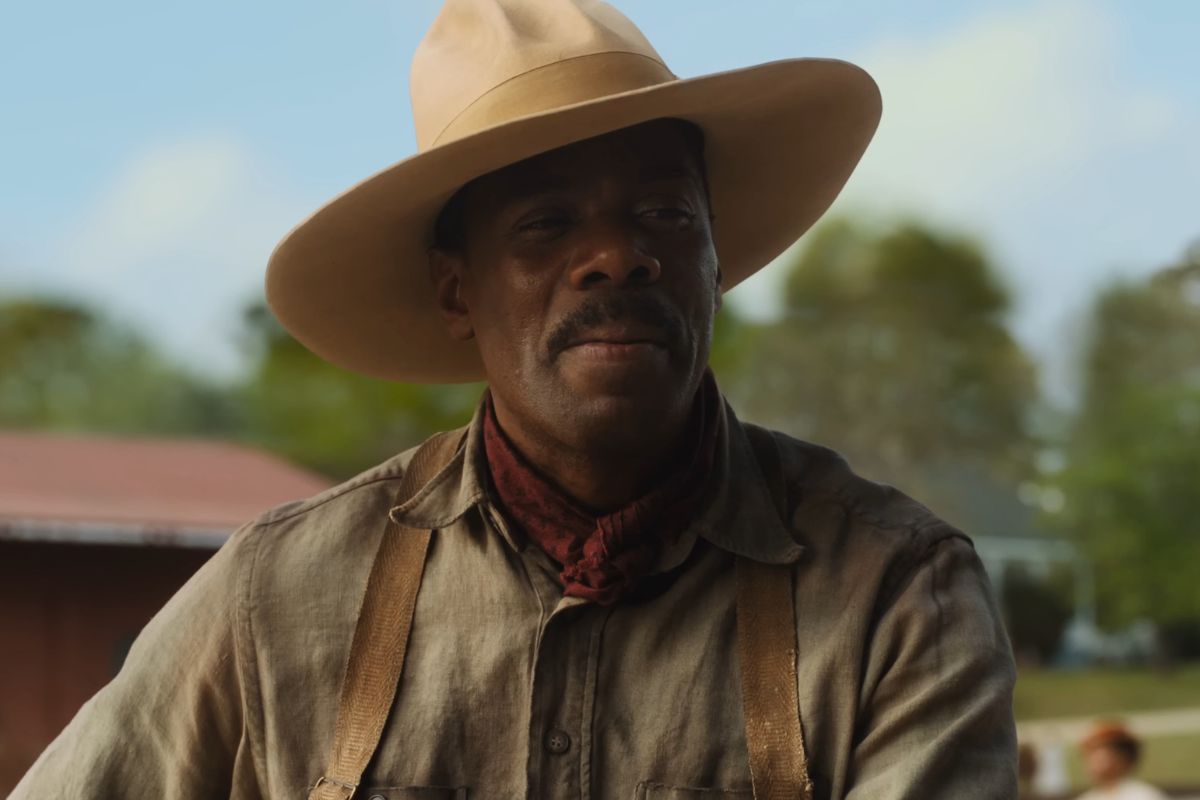 Courtesy Warner Bros.
Then we flash forward to 1917, and we see that Celie is now an adult (Fantasia Barrino—reprising role from the 2005 Broadway), and we see that she is now back under the household of Mister. She ends up befriending Shug Avery (Taraji P. Henson), a jazz singer and mistress to Mister, who ends up standing up for Celine, and, of course, we meet Sofia (Danielle Brooks), who is the wife to Mister’s son Harpo (Corey Hawkins), who is combative against domineering people. The character and performance by Brooks in the film are certainly effective and comparable to Oprah Winfrey’s memorable role, but the performance ends up being so good, upstaging Barino’s and the character of Celie, which wasn’t a flaw in Spielberg’s 1985 film that used their friendship and humor to counterbalance the bleakness of the narrative.
Throughout the film, the musical numbers are a reflection of Celie’s psyche. In Spielberg’s version, Celie’s solitude and isolation felt more internalized, and you felt her yearning for liberation. Her desires and longings were never verbalized, but they were felt. Here they are staged out, and they feel like familiar music-video idioms. The dancer numbers are forgettable, and they feel like recycled music videos. Nothing feels singular, and each number doesn’t distinguish itself from the others. Bazawule relies too heavily on speeding up the frame rate to utilize the action; the result diverts away from the emotion.
Ultimately, the way the music is incorporated as a series of short music videos feels detached from the emotional drudgery and humanism on display in the narrative. Bazawule tries too hard to make the material crowd-pleasing, even with an unearned third act that attempts to redeem Mister, but the result feels forced and disjointed. While debates can occur if musical numbers should be intertwined about the agonies of social injustices, misogyny, and slavery, it doesn’t quite cohere to the depths that were delivered so well in Spielberg’s 1985 beloved masterpiece.
THE COLOR PURPLE is now playing in theaters.


Robert, I prefer this film to Spielberg’s, and I definitely like it more than you do. Some rousy performances, and splendid singing and dancing and quite moving. But flawed, and not likely to make my alphabetical Top 20. As always you defend your position brilliantly and this is a terrific review.
Just have so little interest in this that I’m having a hard time writing this sentence.
Have absolutely no interest in this
I am glad to see you are a fan of Spielberg’s movie. I do not love it as much as you, but it is a good movie. As for this one, I do not care to see it, but I want to read the book at some point.
Sexuality is an essential aspect of a man’s physical and emotional well-being. A healthy sexual life contributes positively to mental and physical health. Open communication with partners, understanding desires, and mutual respect are key for a fulfilling experience. Sexuality should be approached with care, respect, and consent, ensuring both partners’ needs are met and emotional connections are strengthened. Healthy relationships foster trust and intimacy, enhancing the overall quality of life. It is important to address concerns and seek guidance if needed, as sexual well-being is a crucial component of holistic health