


Like his previous films (Stranger than Paradise, Down by Law, Night on Earth), Jim Jarmusch’s latest film, Father Mother Sister Brother, is separated by vignettes rather than a traditional narrative, and Jarmusch sometimes shoots his films like this due to budgetary constraints, as he has to withdraw the creative momentum that is suppressed within. In this film, it’s more structured like Night on Earth, as each vignette has a different pair of characters throughout different countries around the world. This film holds three segments, and each one takes place at the home of a parent or parents where their estranged children reconnect.
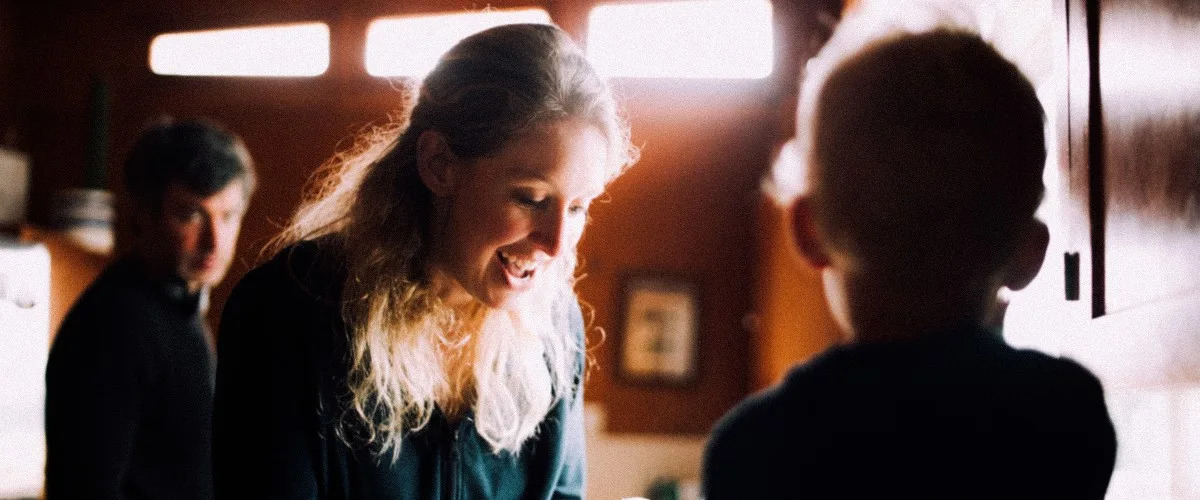
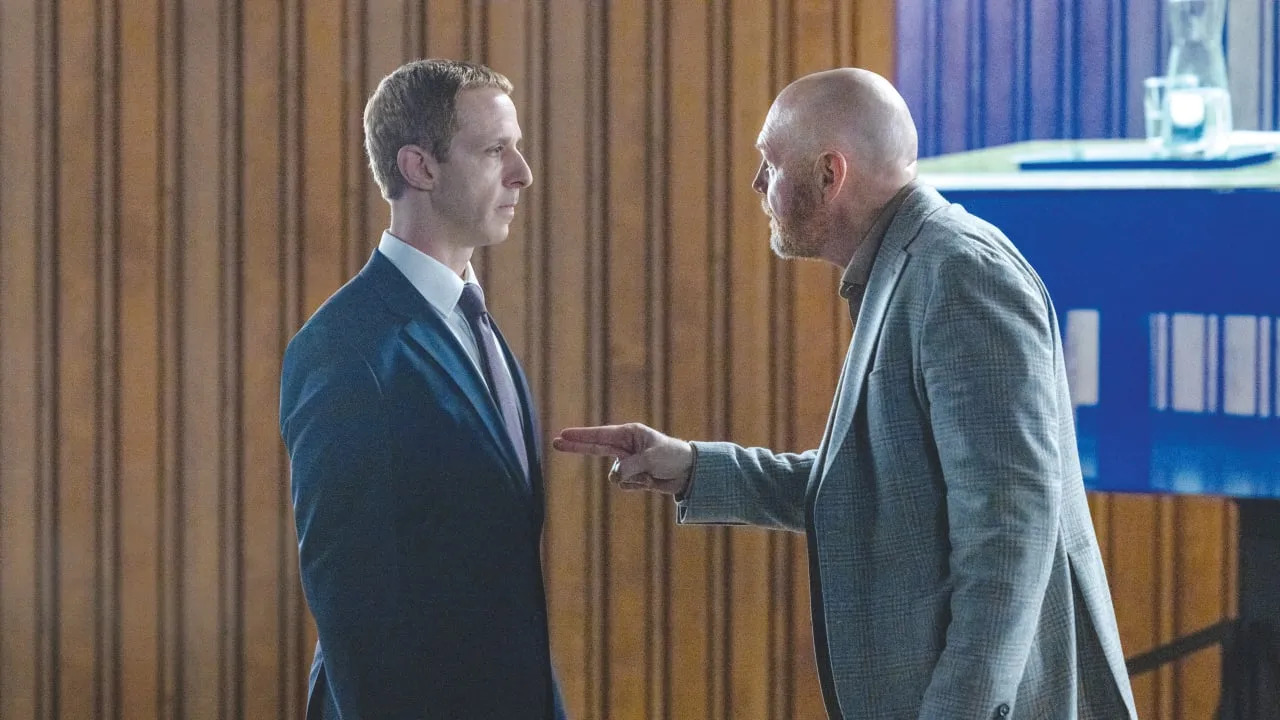
It begins in a car, as the two passengers are driving in the rural countryside in New York. They are a brother and a sister named Jeff (Adam Driver) and Emily (Mayim Bialik), and they are on their way to visit their estranged and reclusive father (Tom Waits). Both Emily and Jeff are very concerned about their father’s well-being. They have had to send him money for house repairs, and they worry about their father’s financial state. He still drives a very old pickup truck in the entrance, the house is messy, and he only offers water to drink. The father is also wearing a Rolex that catches Emily’s attention, who is surprised he can afford one. He quickly states that it’s a replica even though it’s not. He seems forgetful about Jeff’s recent divorce and seems disconnected.
This vignette is the sharpest of the three. Wait’s is outstanding as usual, and the story holds the most pathos as you feel the estrangement and familial disconnect. The story also has a hilarious payoff that I won’t reveal, but it’s the smaller moments that come prior that deliver the human pathos and deadpan hilarity that Jarmusch is often celebrated for. The three actors of Driver, Bialik, and Waits hold an inordinate and restrained number of emotions towards each other in their brilliantly scripted and staged exchanges with each other.
 Courtesy Mubi
This momentum is carried through in the second vignette, called Mother, as we are now in a neighborhood outside of Dublin. The mother character (Charlotte Rampling) is a renowned writer and published author that has tea and sweet treats waiting for her two daughters, Timothea (Cate Blanchett) and Lilith (Vickie Krieps). Their reunion is the only time they see each other all in a day, even though they all live in and around Dublin. On the way, Timothea’s car malfunctions in a neighborhood on her way. As she waits for a tow, she notices a group of skateboarders that bring her some ease for her stress. Suddenly, he attempts to start the vehicle again, and it ignites again with no issue. Lilith is driving in with a friend, Jeanette (Sarah Greene), in which Lilith requests that she ride in the backseat to sell the illusion she doesn’t have financial issues.
The mother and sister end up meeting at the house, all dressed in red, and they all catch up about their endeavors. Timothea announces that she has been promoted in her city council job to help lead the preservations for historic buildings. Lilith, who you can sense holds some inferiority and envy towards her older sister, states that she is representing online “influencers,” although neither her mother nor Timothea are too familiar with what influencers are or do. Lilith is also wearing a Rolex, but she insists that it’s a replica. The encounter also gives Lilith deep anxiety as she dismisses herself from the dinner table where they eat delicious desserts.
This segment in the story is the most fraught. There is certainly some disquieting tension in the family, certainly some emotional frailty that the two sisters hold. It is certainly implied that the mother character is very particular, high-maintenance, and has a history of begrudging her daughters. Lilith still shows those vulnerabilities, and this possibly contributes to her ongoing financial stress because she must find a clever way to find an Uber out of the house. It’s a subtle and tragic juxtaposition to some of the quirkiness the women were having with their desserts that is certainly a facade of the wounded emotions that are fermenting beneath.
 Courtesy Mubi
These sibling emotional wounds carry through in the final chapter in Paris, where we are introduced to Skye (Indya Moore) and her brother Billy (Luka Sabbat), who reunite at a coffee shop. Like the two other chapters, Jarmusch stages the scenes like a perp walk to their parents’ home. Only in this one, the parents aren’t there, as it is revealed they recently passed away from a tragic plane crash in the Azores. They visit the now empty apartment to clear out small things, where they discover some Rolex watches, some old photos, and multiple fake IDs, passports, and birth certificates. They were certainly revolutionaries on the run from some sort of espionage, and Skye and Billy ponder and contemplate how they never really knew who their parents really, they were as contemplate other fond memories. Their visit is disrupted by the landlord, Madame Gautier (Françoise Lebrun), who informs them that they prevented the insurance companies from seizing all of their parents’ belongings, even though they owed her months of rent. Their belongings end up being held at a local storage unit, where Skye and Billy have one last look at their shared memories. This is certainly the most poignant segment of the film.
The main theme here is certainly the facade of family. Even though they are our own blood and DNA, and we certainly keep in touch, people tend to keep many secrets away from family to protect themselves from scrutiny, judgment, and the reality of being disowned, which ironically creates its own estrangement. Jarmusch explores how these are universal truths and how these are just a few stories out of many more that take place in various parts of the world. Yet, three times in the film we hear discussions about the importance of water, we see skateboarders skating by, and Jarmusch slows the frame rate down to examine how we must allow time to slow down so we can appreciate the ordinary things that we take for granted, and a Rolex watch is used as a prop as a metaphor of authenticity, hidden wealth, and how family members can remain a mystery to us, no matter how long we have known them. Despite not having a continuous narrative flow, there is just enough complexity and genuine emotion to be found in each story. This is another triumph by Jim Jarmusch that is patient and observational on family dynamics that is quite admirable.
GRADE B+
FATHER MOTHER SISTER BROTHER IS NOW PLAYING IN LIMITED THEATERS. IT WILL BE OPENING AT THE DETROIT FILM THEATER ON FRIDAY, JANURARY 9th, 2026

Sounds promising
I only liked the first segment with Tom Waits and Adam Driver. The next two for me were pedestrian and tedious. Your review, however, was terrific, a real treat to read.