

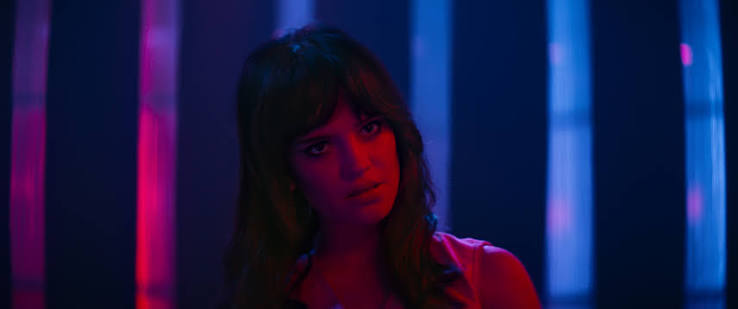

With Her Private Hell, Danish visionary director Nicolas Winding Refn continues the slow-burn, neon-bathed, abstract genre filmmaking he began shaping with 2013’s polarizing Only God Forgives. Marking his long-awaited return to feature cinema—his first film in a decade following 2016’s The Neon Demon—Refn bridges the gap after his extended dive into television, where he crafted the underseen, sprawling masterpiece Too Old to Die Young and Netflix’s ethereal Copenhagen Cowboy. His latest feature feels woozy, airless, and hypnotic, carrying over the hallucinated, episodic sensibilities of his small-screen experiments and compacting them into a fascinating, trance-inducing theatrical experience.
In true Giallo fashion, the plot hinges on a sinister, shadowy killer—known here as “The Leather Man”—who stalks the neon-lit city corridors clad in black leather and razor-sharp embellishments. The narrative follows a troubled young actress named Elle, played with incredible range by Sophie Thatcher, who finds herself caught in a psychodramatic web of vanity, mystery, and family trauma.
Elle’s lothario father, played by Dougray Scott, finances her new film while dragging her into an unsettling atmosphere of passive aggression. At the center of this tension is the toxic dynamic between Elle and her stepmother, Dominique, played by Havana Rose Liu, who happens to be her former best friend and ex-lover. Their icy, volatile interactions form a deeply fractured core that mirrors the film’s oppressive themes.
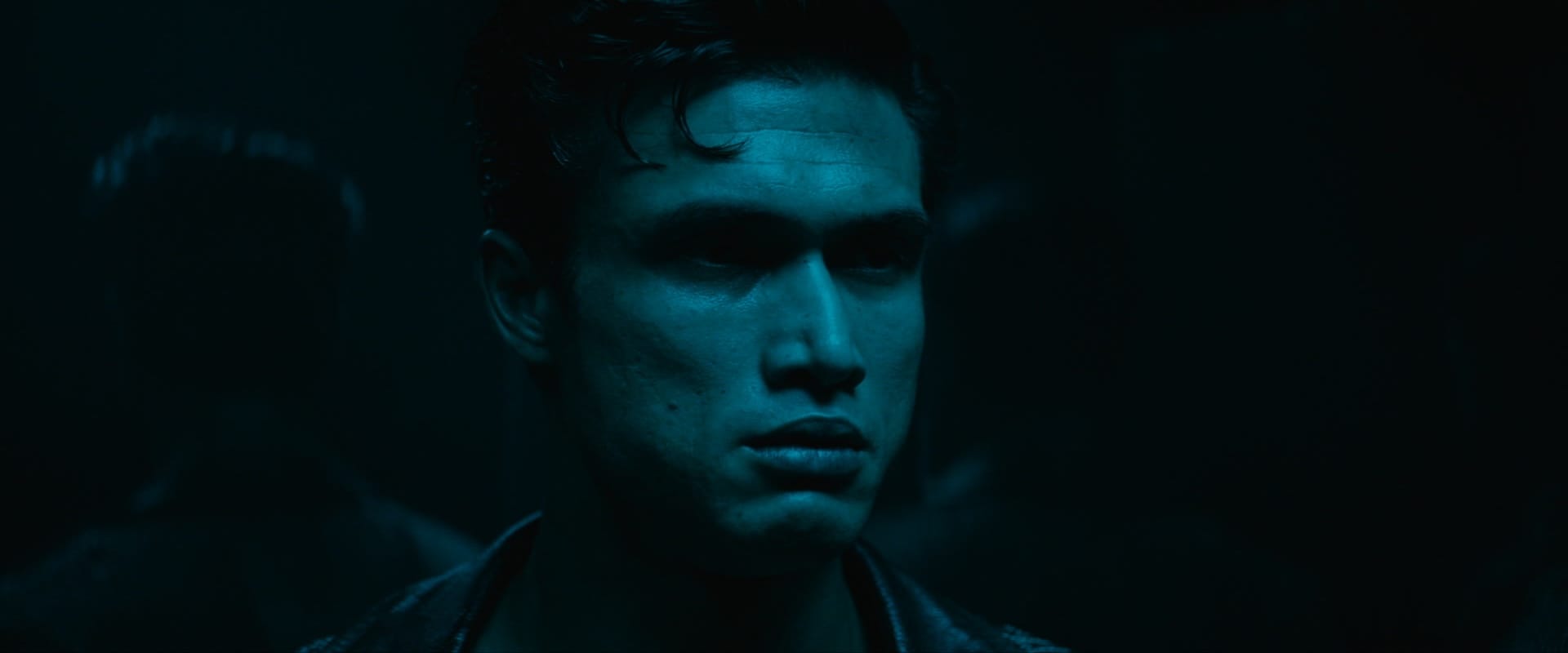
Meanwhile, Elle’s nightmare intersects with Private K, an American G.I. played by Charles Melton, who is on a harrowing odyssey of his own. Visually and stylistically, Her Private Hell echoes the thematic obsession with modeling, artificial beauty, and surface vanity found in The Neon Demon, while inheriting the claustrophobic atmosphere and mythic vengeance of Only God Forgives.

Courtesy Neon
Her Private Hell stands out as perhaps Refn’s most hermetic work to date—a atmospheric, neon-soaked chamber piece largely confined to sparse apartments and vacant nightclubs. While the film occasionally stumbles as it swings between hypnotic stillness and brilliant, unforgettable set pieces, its ambition is undeniable. The Japanese storyline is easily its strongest anchor, evoking the dark, ritualistic pull of Only God Forgives at its best.
The lush cinematography by Magnus Nordenhof Jønck deserves immense praise for painting every frame in suffocating, vibrant neon hues, capturing quiet corridors and violent outbursts with painterly precision. Donaggio’s score weaves through this soundscape like a dream, directly evoking the melodramatic audio landscape of peak Italian thrillers to heighten the film’s haunting, melancholic tone.
The standout set-pieces take place in Japan, featuring stunning, expertly staged sequences where Charles Melton’s soldier character takes on a ruthless crime syndicate. In one particularly bone-crunching highlight, Melton goes toe-to-toe against a towering sumo gangster in front of a glowing jukebox, taking a brutal thrashing before spitting blood out of his mouth in a visceral beat that echoes Miles Teller’s character in Too Old to Die Young.
Courtesy Neon
Nicolas Winding Refn has carved out a singular space in modern cinema by prioritizing pure sensory mood over traditional storytelling. His signature style is defined by a hypnotic, glacial slow-burn—trapping the audience in long, silent pauses and neon-drenched tableaux where characters feel like statues in a hyper-stylized dream. By dousing his frames in high-contrast primaries and locking them to pulsing synth scores, Refn turns cinematic pacing into an act of hypnosis, creating an intoxicating atmosphere where sudden explosions of violence feel less like plot developments and more like vivid, nightmare disruptions.
Much like David Lynch, Refn seamlessly merges this raw, shocking violence with surreal horror, turning physical confrontations into avant-garde performance art. While narrative purists may argue that certain plot threads remain underwritten and not fully cohesive, the film operates far more as a sensory, mood-driven exercise in pure genre style than a standard narrative piece. As cliché as it might sound, Her Private Hell demands that you surrender yourself entirely to its mood, music, and madness; it is a polarizing, mesmerizing film that offers a strong closure and will linger with you long after the credits roll.
HER PRIVATE HELL is now playing in limited theaters



Leave A Comment