



An impressively skillful performance by both Bradley Cooper and Carey Mulligan provides some riveting emotional depth for Maestro, a stylized, conventional, and uneven biopic of the late Leonard Bernstein. While showcasing some orchestral scenes with Bernstein’s music, Cooper’s (A Star is Born) sophomore, which he also co-wrote and directed, provides some dramatic insights into Berstein’s emotional journey and brings plenty of marital drama in which Bernstein’s music mostly gets sidelined and isn’t given enough insights. Fittingly, the film does a better job at exploring Bernstein’s sexuality than Bohemian Rhapsody, which shyly danced around it, but Cooper fails to bring enough emotional clarity to what defined Leonard Bernstein’s passions as a conductor, composer, and humanitarian. While Maestro delivers some artistry and appeal with some wrenching performances, stellar cinematography, and some dramatically satisfying scenes, it still feels slight, and Cooper doesn’t quite reach the potency the biopic strives for.
Perhaps fears of being labeled “Woke” (being liberal-minded and caring about civil rights makes one “woke” now), Cooper leaves out so much fascinating content of Bernstein’s political activism and humanitarianism. With just brief interludes of West Side Story and a few sequences of Bernstein conducting some ballets and live concerts. The film takes more of the Scenes from a Marriage approach as it explores Bernstein’s interpersonal relationships and martial relationship with Chiilian actress Felicia Montealegre (Mulligan), which chronicles their first encounter at a party in 1946 to their marriage with children up to her shattering death from lung cancer in 1978.
The film examines the joys and agonies of their marriage—how Felicia stayed devoted to Leonard as he committed adultery with other men. The film pivots more as a portrait of Felica’s agony from the marriage, which includes a few standout scenes involving a static, long take of Felicia confronting Leonard about his whereabouts as the Macy’s Day parade with floats passes by their Central Park West Manhattan apartment. Felicia also walks in on Leonard flirting and kissing other men, and her character becomes the archetypal long-suffering wife character. Though Mulligan’s performance is undeniably engaging and deserves high praise.
 Courtesy Netflix
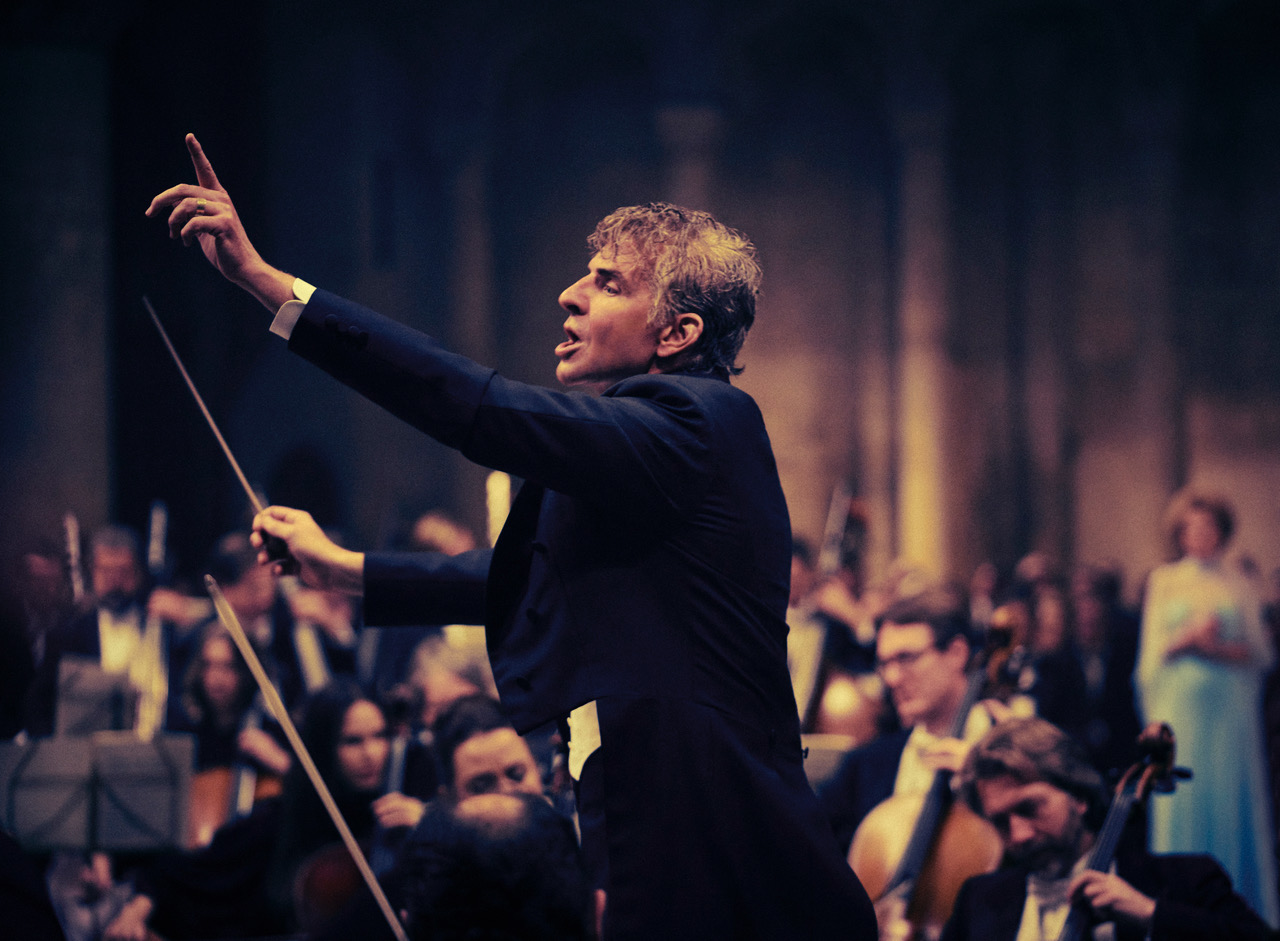
Cooper’s film is produced both by Martin Scorsese and Steven Spielberg and co-written by Cooper and Oscar winner Josh Singer (Spotlight), and it’s commanding how they don’t whitewash Leonard Bernstein for being gay. Right in the beginning, we see Leonard in bed with clarinetist David Oppenheim (Matt Bomer), who gets called up to fill in for Philharmonic conductor Bruno Walter, who gets ill from the flu. He becomes an instant sensation, and from there, the narrative introduces Felice, whom he encounters at a party. They soon date, and there are some beautiful Malickian images from cinematographer Matthew Libatique of Leonard and Felicia sitting down, leaning their backs against each other in luminous compositions in a park, as they puff cigarettes under a massive tree. Eventually, they fall in love, get married, and have three children together. Cooper’s switches the coloring from black and white scenes as well as the aspect ratios from 4:3 to color and 16:9, we enter the 1960s. We hear glimpses of the West Side Story score, and Leonard is at his peak. The style here is rich and echoes the work of a 90s Oliver Stone film.
We follow Lenny’s successes as he becomes a renowned pianist and hosts his own TV show. We see Lenny and Felcia become socialites and host parties, and tensions arise. Sarah Silverman delivers a There is a lot of verbalizing and very little inner emotion or internalization. A much different approach than Sofia Coppola’s Priscilla, which is a far stronger biopic yet isn’t getting as much award love. It appears critics and audiences do not appreciate the understated and subtle nuances as much anymore, as many believe the more dramatic and dialogue-driven the better. As Sofia Coppola used longer stretches of silence and didn’t verbalize every conflict, Cooper’s approach is much different, as much of the drama occurs with telling instead of showing. Only in the third act does the story become more dramatically charged once Felicia is diagnosed with cancer. Mulligan’s performance is quite gripping and sorrowful; there is a moment of Felicia looking out the window as she takes deep breaths in Lenny’s arms that feel artistically rich and in the vein of Bergman’s Cries and Whispers. Only if Cooper was more observational earlier in the film this probably could have been extraordinary.
 Courtesy Netflix
While the film doesn’t fully satisfy, there are things to behold. Even when the “visual poetry” style feels glossy and doesn’t quite match Cooper’s grueling marital drama, but Cooper deserves some marks here for not making his film visually bland the way many other biopics have been in the past. While we never get the exhilarating highs from Leonard’s music or artistry, we never really comprehended his passion for music. At least not in the same way that was expressed in Todd Field’s Tar, in which Bernstein is referenced throughout that film. Ultimately, I felt like I got a better understanding of his love for music in that film than I did with Maestro. While there are lows in the film where you feel sorrow for Felicia and Lenny, you eventually find more empathy for Lenny as the film goes on, even though you never understand his cultural significance.
Eventually, the story ends up feeling refined, and it eventually becomes hindered by some familiar conventions. Perhaps Cooper wanted the material to feel unconventional by not focusing too much on his musical achievement, or it also deserves marks for not getting bogged down by familiar historical figures that feel like caricatures, but many surfaces feel unexplored. There is certainly something commanding about Cooper’s approach where it’s not all homage, but even when some of the melodrama in Maestro feels overblown and exhausting, much of the narrative is emotionally stirring enough to lift itself out of its trappings and detours.
Maestro is now playing in theaters. It will be streaming on Netflix on Wednesday, November 20th, 2023.


Not a big fan of Bradley Cooper in general
Really looking forward to this one. Was a big fan of “A Star is Born”
“ Even when the “visual poetry” style feels glossy and doesn’t quite match Cooper’s grueling marital drama, but Cooper deserves some marks here for not making his film visually bland the way many other biopics have been in the past.”
I have not seen it yet, but the visuals may bring me into its web.
Really looking forward to this one! I like Coopers style so far from what I’ve seen from him. Glad you mainly liked it!
I have had little interest in this since it was announced. I still have little interest, but I’ll see it when it hits Netflix.
Great review, I am huge fan of Mulligan, and the storyline of Bernstein’s personal life seem gripping. Great review, Robert. Will watch this one.
This type of films has its audiences. In order to bring major box office success, it has to be original from both sides, the screenplay or the actors. If this film was made 20 years it would have been something special.
Good review in pointing out some of the basic flaws in the film. Finally watched it last night and felt it was a fascinating exploration. I agree that it was a bit flat in giving us a fuller picture of who Mr. B really was. They glossed over his serious political activism and bi-sexuality. The script had some good dialogue and scenes. One the plus side, too, were his visuals and composition. Interesting camera angles and placement. A bit odd when the actors were, like 30 feet away, yet, we heard their almost whispered dialogue. But I am officially a huge fan of Carey Mulligan. What a great role and a powerful performance. I thought Mr. Cooper purposely put so much attention on her that it seemed like it was HER story. With a performance like hers, he would have been crazy to ignore it.
My first reaction was how strikingly similar to Michelle Williams is Carey Mulligan. My second reaction was the heretofore unknown knowledge of “Lenny’s” bisexuality. My third reaction was how powerful those two performances were. We thought overall it was an interesting, thought provoking endeavor that could warrant some Oscar conversations. I give it ***1/2.