

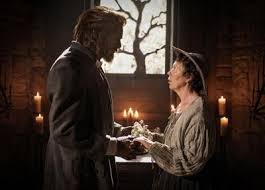

At the center of this uniquely twisted story is a first-rate cast led by Olivia Colman, alongside stellar turns from Peter Dinklage and Alexander Skarsgård. Colman delivers a compelling performance as an isolated, perpetually lonely fisherwoman living on the outskirts of a medieval village. In a tight-knit community where marriage rituals are heavily embraced and social status is tied to having a partner, her character feels the deep sting of solitude and outsider status.
Desperate for a companion, she visits a local woodmaker and basket weaver, played by Peter Dinklage, and commissions him to craft a man strictly made of wicker. What follows is wonderfully bizarre: the wicker man comes to life, brought to screen through impressive physical prosthetics and played with complete physical commitment by Alexander Skarsgård.

Courtesy Black Bear
The film leans into this premise with hilarious and tender moments. Through a series of funny montages, the wicker man fulfills her physical and emotional needs with unexpected intimacy, while also pitching in around the house which includes fixing her roof, repairing her bed, and handling strenuous chores while she gathers fish for the village. Watching her character finally find genuine fulfillment and comfort in his company is immensely rewarding.
Naturally, the town begins to talk. Gossip spreads, and the local women develop a rising curiosity about the wicker man, triggering a subtle ripple effect across the community. Where another film would turn this setup into a predictable tale of pitchfork-wielding persecution, Wicker pivots into something much cleverer. It becomes a story about a town undergoing its own quiet sexual awakening, collective curiosity, and self-discovery. The village women harbor hidden fascinations with the wicker husband, yet they refrain from acting on them, allowing the narrative to steer clear of cheap melodrama.

Courtesy Black Bear
This village dynamic takes a dark, absurdist turn in a memorable subplot involving one of the local townswomen. After observing his wife’s obvious fascination with the wicker creation, her husband attempts a stoic display of masculine pride by trying to repair their own roof himself. The gesture goes catastrophically awry when he crashes through the ceiling, shattering his leg and foot, before tragically dying from his injuries. Left alone and grieving, the widow turns to Dinklage’s craftsman to commission a wicker baby—fulfilling a longstanding desire to have a child. When Colman’s character catches wind of the infant, it sparks a wave of bitter jealousy and paranoia, as she begins suspecting her wicker companion of having an affair.
It is precisely these narrative turns that elevate Wicker. The film blends folkloric fable logic with grounded emotional stakes, balancing laugh-out-loud physical comedy with sharp observations on human desire and solitude. By refusing to follow standard genre blueprints, the directing duo delivers a movie defined by its absolute singularity. It leaves you genuinely eager to see what creative vision this filmmaking pair decides to tackle next.





Leave A Comment