



Praise the stargazers, because Nathan Fielder and Lance Oppenheim (Primetime) have crafted an absolute marvel with You Can See Everything, easily standing as one of the most cinematic documentaries that you will ever see. The visual language is astonishingly stylized, utilizing sweeping, deliberate wide shots that feel genuinely Kubrickian for a documentary, evoking the measured composition of a 1970s Stanley Kubrick film, only to snap into tight, unblinking close-ups that carry the tense, psychological claustrophobia of Ingmar Bergman or Paul Thomas Anderson.

Courtesy A24
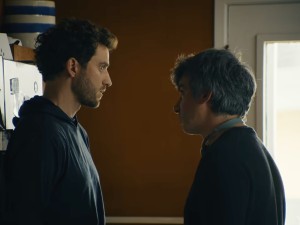
At its core, the film dives headfirst into the fascinating, bizarre dynamic between Elizabeth Holmes, her husband Billy Evans, and Fielder himself. Evans emerges as a deeply controlling, narcissistic presence with a dark side, deeply embedded in right-wing circles like Charlie Kirk and managing her digital footprint while sitting on an estate that feels worlds away from reality. Meanwhile, Holmes herself moves through the documentary leaning entirely on her innocent aura and a carefully constructed facade of naive vulnerability. Yet, underneath that gentle surface, a profound dishonesty pulses, and Fielder expertly exposes it, repeatedly calling her bluff as the film unfolds in the tense weeks right before she reports to prison.
The movie brilliantly explores the slippery boundaries of truth and deception, examining how Holmes meticulously words things to mislead people with a childlike innocence. A standout, darkly comedic moment occurs when Fielder confronts her by showing a clip of the classic “Who’s on First?” comedy routine. Holmes completely misses the point, failing to grasp the linguistic irony while mirroring precisely how she used to pitch her fraudulent medical technology to investors using convoluted jargon that nobody actually understood.
Courtesy A24
Despite the stark manipulation, the film forces a complex emotional response out of you; you genuinely feel for her as a mother of two young children who is about to be torn away from her family. But as soon as she goes behind bars, the documentary takes a staggering, unexpected turn inward as Fielder’s own depression kicks in, revealing him to be isolated in a hotel room and dealing with a painful breakup. Then comes the biggest, most jaw-dropping surprise of the entire project; actress Amanda Seyfried, who famously played Holmes in the Hulu miniseries The Dropout, shows up as both herself and in uncanny reenactments, eventually meeting face-to-face with Billy Evans, who harbors intense bitterness over how Hollywood previously dramatized their lives. Defying all categorization, You Can See Everything exceeds every expectation, going in wildly unexpected directions while cementing itself as a towering exploration of authenticity, performance, and deceit.
As the narrative deepens, the film transforms into a profoundly meta-textual meditation on the documentary form itself, raising piercing questions about the boundaries of objectivity and the ethics of non-fiction storytelling. By weaving together the unvarnished timeline leading up to Holmes’ incarceration with Fielder’s own unraveling personal life, the documentary forces the audience to question who is truly driving the narrative. Oppenheim and Fielder dismantle the traditional construct of the neutral, detached observer, presenting a director who is actively shape-shifting, getting manipulated by his subject, and subsequently re-manipulating the frame to process his own grief and isolation.

Courtesy A24
The story continually shifts its footing, asking whether a documentary filmmaker can ever capture an authentic truth when both the subject and the storyteller are masters of performance. Holmes uses the camera as a platform for self-preservation, while Fielder uses it as a mirror for his own melancholia, blurring the line between authentic human connection and theatrical exploitation. By the time Seyfried enters the fold to dramatize and re-contextualize these real-life interactions, the narrative explodes into a fascinating commentary on how media shapes memory and perception. Ultimately, the documentary suggests that every lens carries a bias, and that the search for genuine truth in non-fiction cinema is itself a brilliant, captivating illusion.
You Can See Everything is now playing in theaters.




Leave A Comment