

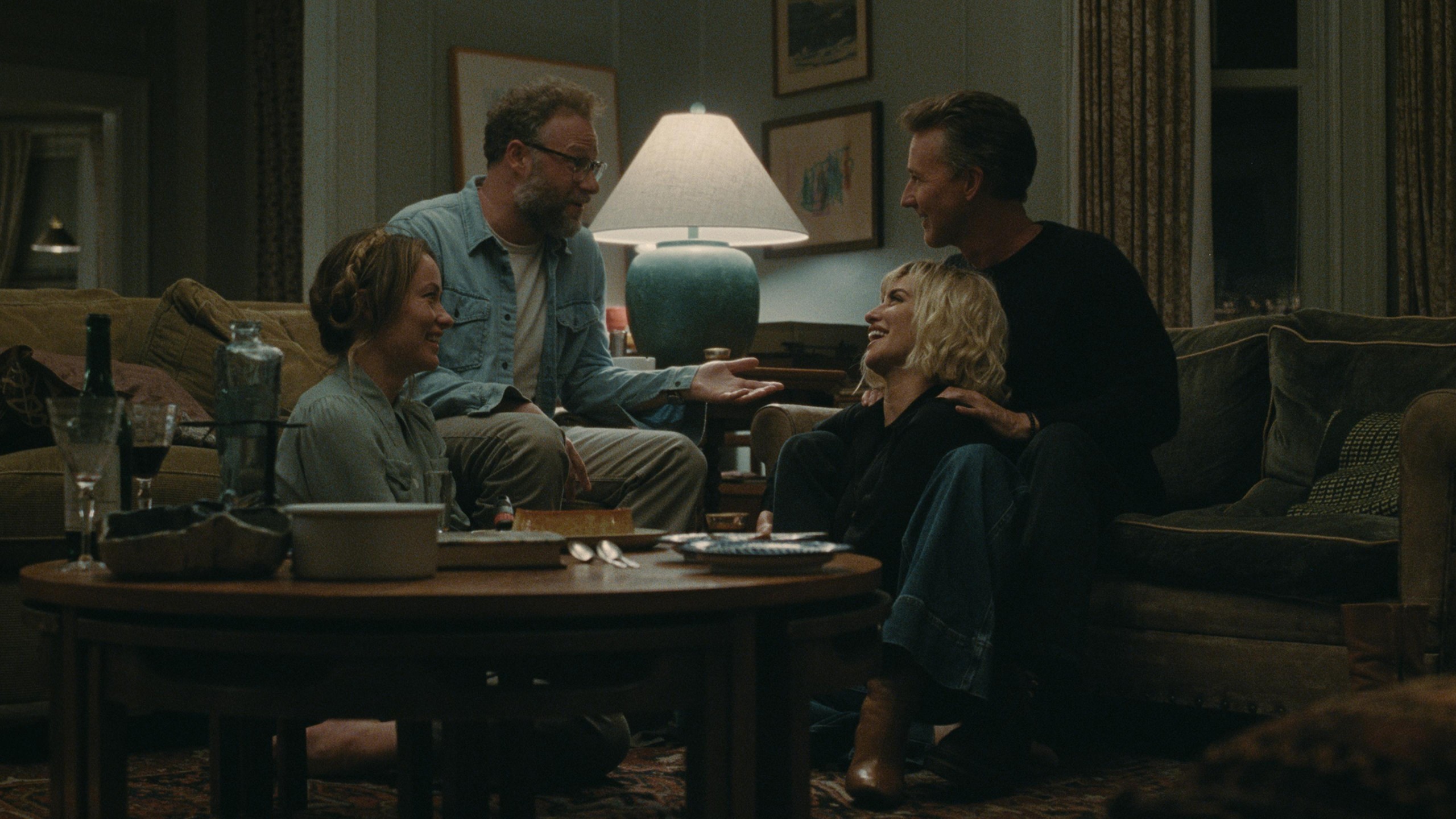

Four people—two couples who happen to be neighbors in the same apartment complex—finally meet one night in one of their living rooms. They gather and discuss everything from hobbies and careers to health and sex. The husband is incredibly uptight and isn’t keen on having the neighbors over at all. In contrast, his wife is eager for the gathering; you can sense she desperately needs some relief and joy from her normal routine. The get-together appears to be abrupt and spontaneous, so much so that the husband doesn’t even recollect it being planned. Once the neighbors arrive, the couples try to find some comfort and escape in each other’s company, but as the night progresses, things go terribly awry.
This is the buildup to director and co-star Olivia Wilde’s third feature. Co-written by Rashida Jones (On the Rocks) and Will McCormack, the film is an American remake of the 2020 Spanish comedy-drama The People Upstairs. It is highly reminiscent of Mike Nichols’s Who’s Afraid of Virginia Woolf? and Roman Polanski’s Carnage, while also holding shades of Woody Allen’s most mature works, such as Husbands and Wives.
The players include Joe (Seth Rogen), a music instructor and former musician, and his wife, Angela (Olivia Wilde), a stay-at-home mother. They share a teenage daughter whom we never see, as she is spending the night at a friend’s house. The neighboring couple consists of Pina (Penélope Cruz), a sex therapist, and her cheery boyfriend, Hawk (Edward Norton), a retired firefighter with a passion for antiques and rugs.
Courtesy A24 Films
The foundation of this tense evening rests entirely on the fracturing dynamic between the hosts. Joe has weaponized his frustration into a rigid, defensive uptightness; and we find out he is a failed musician and is bitter about being an instructor, his current obsession is the raucous, late-night sex sounds bleeding through their thin apartment ceiling from the floor above. To Joe, the noise isn’t just a nuisance—it’s an offensive reminder of a passion he no longer possesses. Meanwhile, it is discovered that Angel is quietly drowning in a heavy, internal depression, suffocated by the monotonous routine of her stay-at-home existence.
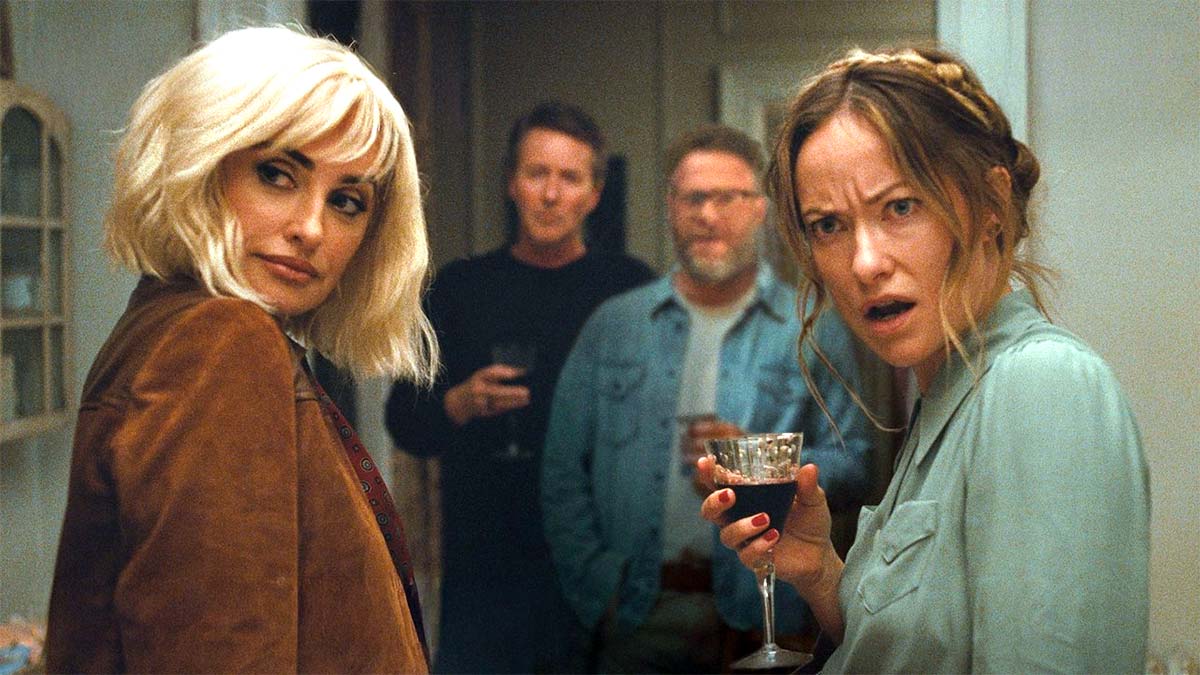
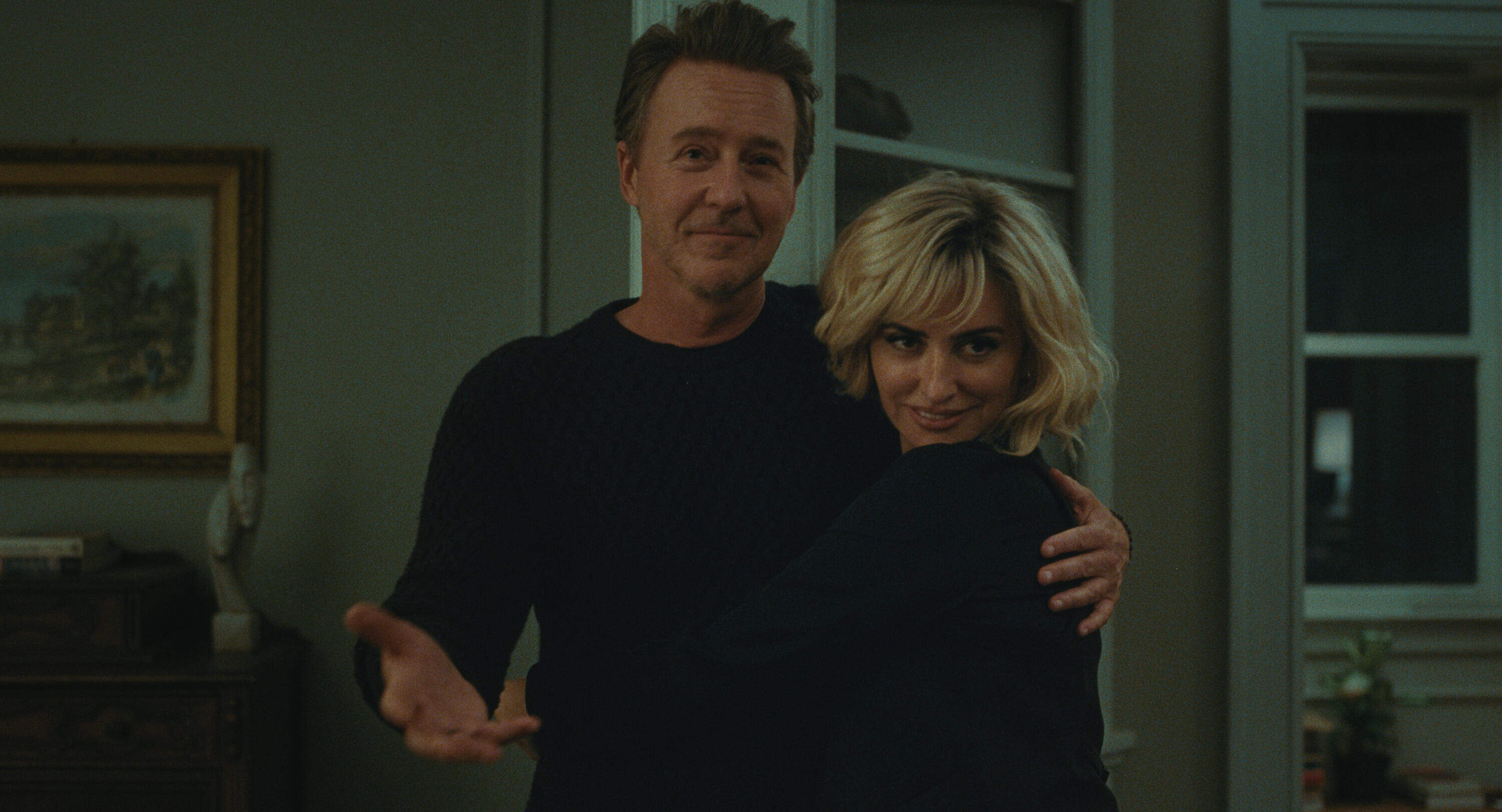
For her, the impending gathering isn’t just a social obligation; it is a desperate lifeline for connection and joy. Pina and Hawk finally step across the threshold, they bring an entirely different, dizzying energy. Radically liberated and fiercely unapologetic, the neighbors carry themselves with the effortless ease of people who hide nothing. The central, ticking time bomb of the evening is primed when it is casually revealed that Pina and Hawk are in a fiercely active open relationship—a stark, polarizing mirror that forces Joe’s simmering resentment and Angela’s emotional starvation into a breathtakingly awkward collision. Joe holds deep-seated resentment quickly curdles into a mean-spirited, crass passive-aggressiveness directed squarely at Hawk, as he frequently uses thinly veiled barbs to mock the retired firefighter’s masculinity, open lifestyle, and eclectic passions.
Yet, beneath Joe’s brittle, defensive armor lies a buried kindness that only Pina manages to coax to the surface. Their friction dissolves during a remarkably beautiful, quiet sequence where the two characters sit down and discuss the stories behind their tattoos. As Joe opens up about the ink on his skin, his mean-spirited façade completely drops, revealing the vulnerable, passionate artist he used to be before bitterness took over. Pina’s innate empathy as a therapist allows her to see right through his hostility, transforming what could have been another explosive confrontation into a rare moment of genuine, tender human connection that shifts the entire emotional weight of the film.
Courtesy A24 Films
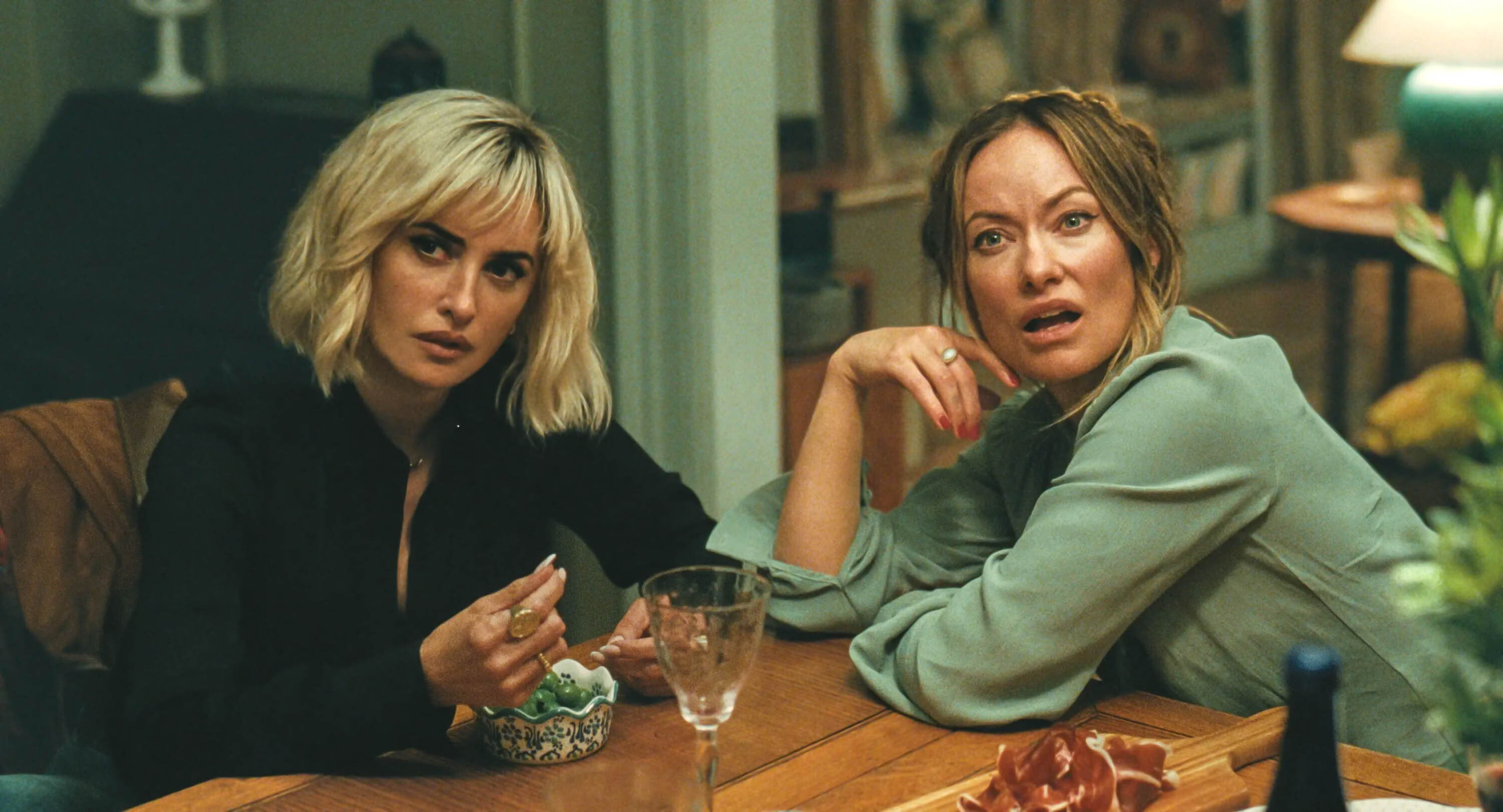
While Pina subtly disarms Joe, a parallel, highly charged current of attraction sparks between Hawk and Angela. For Angela, drowning in the grey static of her routine and her husband’s neglect, Hawk’s vibrant, uninhibited masculinity acts like a mirror to a part of herself she thought was long dead. Hawk recognizes her emotional starvation instantly, responding not with predatory intent, but with an open, magnetic fascination that leaves Angela utterly breathless. This unspoken, simmering chemistry hangs heavily over the living room, manifesting in lingering glances and loaded pauses that charge the single-location setting with an extra layer of dangerous anticipation—making the inevitable collision of these two couples feel all the more volatile.
Operating within the razor-sharp confines of a single-set premise, the film thrives on the meticulous precision of its execution. Olivia Wilde’s direction transforms the singular living room location from a simple backdrop into a psychological pressure cooker, utilizing tight framing and claustrophobic blocking that forces the audience to endure every ounce of mounting discomfort. The brilliant screenplay by Rashida Jones and Will McCormack is a masterclass in pacing; conversations start as polite, casual musings on everyday life before subtly mutating into biting, deeply personal arguments.
Every line of dialogue acts as a domino, tipping the characters closer to a total emotional unraveling. This nuanced material is elevated by a powerhouse ensemble. Rogen delivers a career-best turn, trading his trademark affability for a brittle, defensive bitterness, while Wilde provides the film’s aching heartbeat as a woman quietly suffocating in plain sight. Opposite them, Cruz and Norton exude a magnetic, bohemian friction that keeps the hosts—and the audience—utterly off-balance. It is the kind of rare, performance-driven piece where the blocking tells a story of its own, turning a simple neighborhood get-together into an unforgettable, high-wire act of domestic warfare.
Courtesy A24 Films
Ultimately, the film acts as a grueling psychological gauntlet, leaving all four characters completely mentally drained by the time the sun rises. Through a series of agonizingly awkward confrontations and deeply embarrassing revelations, the central couples are thoroughly torn apart, only to be meticulously rebuilt from the ground up. Beneath the sharp-tongued barbs and dark comedy, this is fundamentally a story about marital healing—a painful but necessary shedding of old skin. Wilde grounds this emotional turbulence beautifully, culminating in a wordless final scene that is undeniably tender, leaving a lingering, poignant reminder that true connection often begins only after everything else has been stripped away. Uproariously funny yet deeply filled with raw emotional truths, poignant sadness, and ultimate tenderness, this stands as one of the sharpest, most piercing films of the year.
THE INVITE IS NOW PLAYING IN THEATERS!






Saw this today, some amusing scenes, but tries to be a cross between Who’s afraid of Virginia Wolff and Bob & Ted& Carol & Alice. Thought Seth Rogan was all wrong in the role. Paul Giamatti, playing his usual zlubby loser would have been better, but he is too old. 2 of 4 stars